
 English
 Français
 Deutsch
 Italiano
 Turkish
 Greek
 Serbian
Lonely Planet Spotlights Tirana’s Cultural Revival




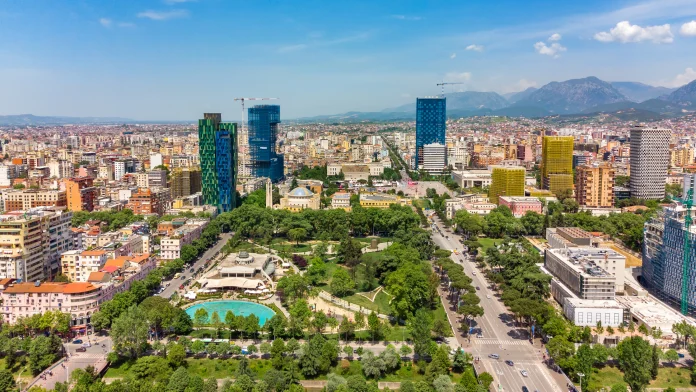
The capital of Albania, Tirana, like the rest of the country, remained isolated from the world for decades under communist rule, writes Laura Millar on lonelyplanet.com.
Tourism has only recently started to grow in the city. Over the past decades, Tirana has become more cosmopolitan. Visitors now experience unique cultural adventures for the first time.
Many attractions in Tirana focus on its history, both ancient and recent. The city features impressive monuments, avant-garde art, and modern architecture. Most sites relate to Albania’s former leader, Enver Hoxha.
So, what can you see in Tirana?
Here are 20 of the most fascinating sights and experiences in and around the city.
1. Namazgjasë Mosque – Ottoman Style
This mosque covers 10,000 square meters and is the largest in the Balkans. Its design echoes classic Ottoman architecture and reminds visitors of Istanbul’s Blue Mosque.
The four minarets reach 50 meters. The central dome rises 30 meters. After communism fell, the mosque became a needed addition, as there was no central mosque for Albanian Muslims. Construction began in 2015, and the mosque opened in 2024. It can host 10,000 worshippers.
2. Stroll Skanderbeg Square
Skanderbeg Square spans 3,700 square meters. It is a popular spot for meetings, walks, and conversations. Friends and families gather here daily. The square is surrounded by important buildings, many from the communist era.
It is named after Gjergj Kastrioti Skanderbeg, a 15th-century military commander who led a rebellion against the Ottoman Empire. Skanderbeg remains a symbol of Albanian resistance.
3. Admire Et’hem Bey Mosque Frescoes
The 18th-century mosque in Skanderbeg Square features vivid frescoes. They remain as vibrant today as when first painted.
The walls and dome display deep orange, green, bright blue, and dark blue patterns. The frescoes depict trees, waterfalls, bridges, and landscapes. A plaque reads: “The mosque has given eternal beauty to the city, just as Hagia Sophia did for Istanbul.”
Closed during Hoxha’s rule, the mosque now welcomes the Muslim community again.
4. Visit Tirana Castle
Known as Justinian’s Castle, this Byzantine structure dates to the 13th century. Thick stone walls and watchtowers once protected the city center.
Only parts of the original walls and foundations remain. The small bazaar inside sells crafts and features a few traditional-style restaurants.
5. Explore the National Historical Museum
At the entrance, a stunning mosaic by five local artists greets visitors.
The mosaic “Albanians” depicts figures from the country’s history: Ottoman soldiers, a communist worker, and Mother Albania in traditional dress. The style is social realist.
Artifacts cover Roman times, the Middle Ages, the Renaissance, and modern history. Exhibits include independence, communism, and national liberation.
6. Check the Time at the Clock Tower
Built between 1822 and 1830 by poet Haxhi Et’hem Bey, the tower followed the construction of the mosque by his father, Molla Bey.
The tower rises 35 meters and was Tirana’s tallest structure until the 1970s. Visitors can climb 90 steps for panoramic views of Skanderbeg Square.
7. Picnic at Tirana Lake Park
The artificial lake gives the park its name. Yet the scenery remains beautiful. The park sits in a large green space in southern Tirana. It’s perfect for a sunny day outdoors.
Locals jog in the morning, relax after work, or meet friends in the evening. The park hosts landmarks like St. Procopius Church and the Presidential Palace, as well as pools, a zoo, and a botanical garden with over 120 plant species.
In summer, an amphitheater hosts cultural events. Bring a picnic and find a shady spot.
8. Enjoy Dajti National Park Views
Located 25 km east of Tirana, the park offers a refreshing escape from the city.
Walk on pine and oak trails at ground level, or take the cable car for an exhilarating experience. The 15-minute Dajti Express ride rewards you with unparalleled views of Tirana and the Adriatic Sea.
At the top, find a small adventure park and a mini-golf field. Stop at Ballkoni Dajti, a wooden chalet-style restaurant serving traditional dishes and wines. Energetic visitors can hike back down.
9. Take a Photo at Skanderbeg Statue
This bronze statue shows the national hero on horseback, sword raised, leading troops against the Ottoman Empire. It symbolizes pride, resilience, and Albania’s historical continuity.
Three master sculptors created the monument, unveiled in 1968, three centuries after Skanderbeg’s death.
10. Explore Albania’s Past at Bunk’Art 1
Hoxha obsessed over building bunkers. He feared an attack by Cold War enemies.
By his death in 1985, over 750,000 bunkers existed.
Bunk’Art, built underground for the political elite in the 1970s, covers 275 square meters. Visitors explore damp, dark tunnels combining communist-era history with contemporary art installations.
Don’t miss the Assembly Hall and private chambers. Exhibits display documents, photos, and a video of Hoxha’s state funeral.
11. Visit Bunk’Art 2
A few minutes on foot from Skanderbeg Square, this former bunker feels eerie.
Labyrinthine corridors and multi-level concrete tunnels house dozens of rooms. Exhibits show tools used by the secret police (Sigurimi) to spy on citizens, the interior of the Interior Minister’s apartment, and even a decontamination area for radioactive materials in case of nuclear attack.
12. Attend a Show at the Palace of Culture
Tirana’s cultural hub, the white low-rise building hosts the National Historical Museum, the National Art Gallery, the National Library, and the National Theatre of Opera and Ballet.
The foundation stone was laid by Soviet Secretary Nikita Khrushchev in 1959.
13. Visit the Orthodox Cathedral of Christ’s Resurrection
Opened in 2014, this cathedral blends Byzantine and modern architecture. It hosts some of the largest contemporary Orthodox mosaics in the Balkans. Both inside and out, it impresses visitors with its unique style.
14. Admire Tirana Pyramid
The pyramid stands out in the city. Designed by Hoxha’s daughter, architect Pranvera, it opened in 1988 as a museum honoring the former leader.
After communism fell in 1991, it served as a conference center, then a NATO base during the Kosovo War in 1999. Now it hosts TUMO, a creative technology hub focused on coding, robotics, and startups. Glass panels flood the interior with light.
15. Walk Near Hoxha’s Residence
Hoxha’s former home, Villa 31, is surprisingly modest.
The three-story house in the Blloku district featured luxury details like marble floors and ornate corridors. Palms grew in manicured gardens. The basement included a pool and a secret tunnel leading to an underground bunker.
Today, Arts Explora runs it as an art space.
16. Spend an Evening in Blloku
Blloku was once reserved for communist elites. It was gray, restricted, and off-limits to ordinary citizens.
Since the 1990s, it transformed into a trendy area full of boutiques, bars, cafés, and restaurants. Narrow streets feature street art and colorful foliage, making it one of the city’s most attractive districts.
Relax with a sophisticated drink at Colonial, then enjoy local cuisine at Era. Try dishes like Elbasan yogurt lamb stew or fërgesë (ricotta with peppers and olive oil).
17. Visit the National Archaeological Museum
The museum showcases treasures from prehistoric times. Exhibits cover Illyrian Bronze Age tribes, classical antiquity, the Middle Ages, and modern history.
Over 2,000 artifacts from archaeological digs across Albania are on display, including jewelry, Roman statues, ceramics, mosaics, and coins.
18. Shop at Pazari i Ri
This lively covered market is perfect for souvenirs and fresh produce. It hosts dozens of stalls selling local specialties: chestnut honey, pine and wildflower honey, homemade ajvar (roasted red pepper paste), and bottles of rakia, a spicy Albanian grape brandy.
You can also find handmade crafts like wool slippers, handwoven rugs, traditional hats, and carved wooden objects. The market buzzes day and night as locals shop for fruits and vegetables and socialize.
19. Discover Secrets at the House of Leaves
Despite its innocent name, this quiet building was Hoxha’s secret police headquarters.
Now a museum, it reveals all their surveillance tricks—from bugs in broom handles to hidden cameras in suitcases.
It can be thrilling, yet chilling. The secret police made life difficult, often painfully, for innocent Albanians through detention and torture.
20. Cross the Tabakëve Bridge
Named after local tanners, this 18th-century stone pedestrian bridge linked the old eastern road to the city market.
It spans the Lana River and once carried traders with livestock and goods. Today, it stands as one of the few Ottoman-era structures surviving in Tirana.
/a.c/
Të ngjashme




Latest News










Most read










 RTI