
 English
 Français
 Deutsch
 Italiano
 Turkish
 Greek
 Serbian
Tirana Hosts CEFTA Workshop to Align Rules of Origin with EU Standards




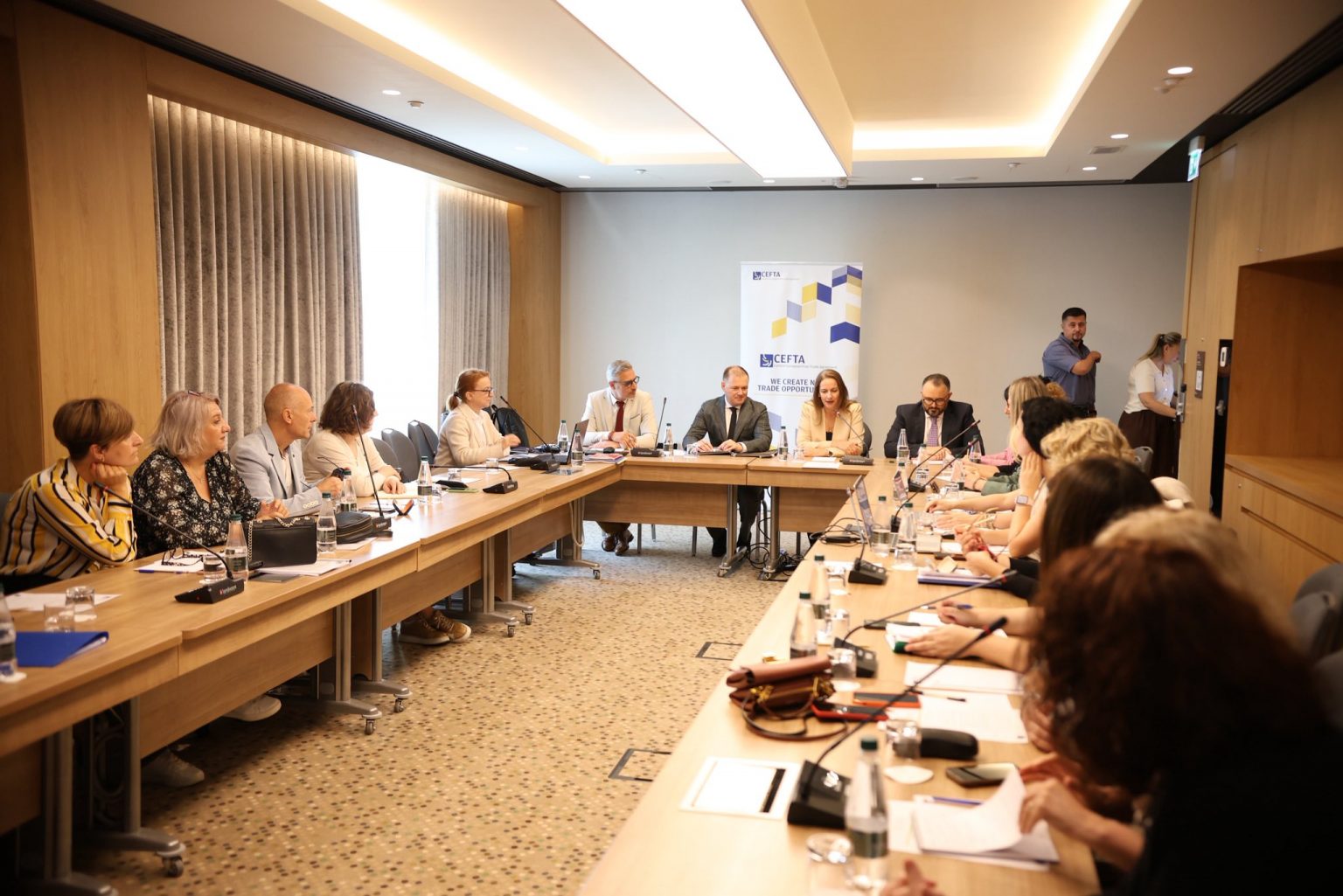
CEFTA member states are working to align rules of origin with EU standards. Consequently, the process aims to simplify customs procedures, strengthen regional cooperation, and prepare countries for full participation in the EU Single Market.
Today, Tirana opened a two-day workshop on Rules of Origin. Albania chairs the CEFTA Subcommittee on Customs and Rules of Origin.
The event gathered representatives from the European Commission, Albanian Customs, CEFTA, and industry experts. Therefore, the goal is to boost regional cooperation and support alignment with EU trade standards.
Albanian Customs Director General Genti Gazheli said rules of origin are crucial for integrating the Balkans into the European market. Moreover, he stressed that customs modernization requires ongoing cooperation and experience-sharing among regional partners.
Gazheli also reported recent developments, including a Brussels meeting with Matthias Petschke, Director for Customs at the European Commission. There, they discussed Albania’s EU accession progress, particularly Chapter 29 on the customs union.
During Albania’s CEFTA chairmanship, Gazheli highlighted key achievements. These include creating an advisory body on goods classification and rules of origin. In addition, Albania set up a working group for Authorized Economic Operators (AEOs), granting customs advantages to trusted companies.
Another major development is the new Customs Risk Management Strategy 2025–2028. Along with its action plan, the strategy seeks to improve customs control and reduce processing times.
Gazheli praised the European Commission’s support. He emphasized that cooperation with EU institutions is essential to meet European standards. Importantly, he noted that rules of origin are not merely technical procedures. Instead, they directly facilitate trade and benefit Albanian exporters.
He also highlighted Pranvera Kastrati, the new CEFTA Secretariat Director, as a key partner for Albanian Customs.
On the first day, the workshop covered regional cumulation, practical textile cases, rules for labeling products “made in” a specific country, and challenges in tracing goods’ origin. Furthermore, participants discussed cooperation with Turkey and new rules to ease regional trade flows.
The workshop continues tomorrow with technical sessions to help CEFTA states harmonize customs and trade practices according to EU standards.
CEFTA, the Central European Free Trade Agreement, is a core part of the EU pre-accession agenda. Its members include Albania, Bosnia and Herzegovina, Croatia, North Macedonia, Kosovo, Romania, Bulgaria, Moldova, Serbia, and Montenegro.
So far, CEFTA has successfully created a free trade zone in Southeast Europe. In 2024, Albania exported over 2 million tons of goods to CEFTA countries, worth 68.2 billion ALL.
/a.c/
Të ngjashme



Latest News







Most read










 RTI