
 English
 Français
  Deutsch
 Italiano
 Turkish
 Greek
Greek Serbian
Albin Kurti Presents Kosovo’s Strategy for Global Economic Challenges in the U.S.




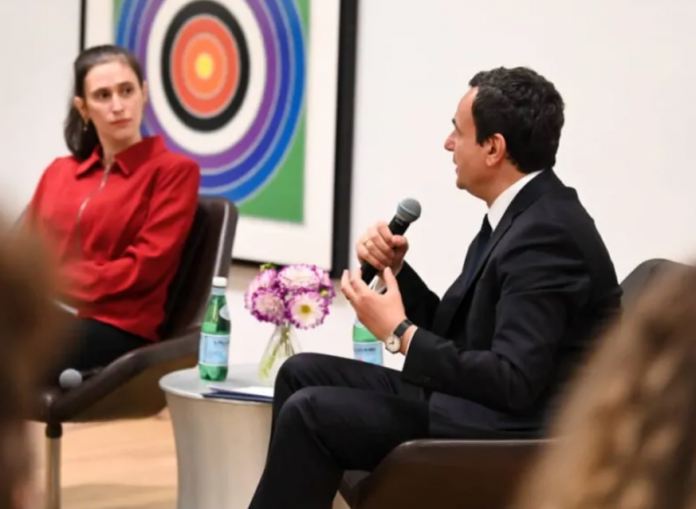
Acting Prime Minister of Kosovo, Albin Kurti, spoke at the Zolberg Institute discussion on Migration and Mobility at The New School in the U.S. During the event, he focused on supporting ordinary citizens during a global economic crisis. Specifically, Kurti presented Kosovo’s government approach. He showed how it channels aid to those who need it most. Moreover, he suggested this model could help other countries facing similar challenges.
Kurti emphasized, “We helped Kosovo’s citizens during these challenging times. Importantly, we did it without raising taxes or public debt.” He also noted that many economies suffer under creditor obligations. Governments must support citizens without entering a dangerous debt spiral.
Regarding inflation, Kurti stressed the need to stop price increases. He called for controlling import costs and curbing corporate profiteering. Companies were hiking prices and profit margins unfairly. As a result, citizens and consumers suffered.
To respond quickly, Kosovo encouraged local farmers and small producers. It doubled financial support to increase domestic production. Consequently, citizens gained access to cheaper local goods. At the same time, the state subsidized electricity price differences for families and businesses. Additionally, it launched a small and medium enterprise support program. Producers received grants for automated machinery to boost production. Diaspora members accessed credit to invest at home.
Kosovo also controlled profit margins for fuel and key goods. Authorities set a gross profit limit, avoiding price spikes. Thus, the measure prevented inflation from spiraling. Similarly, the government regulated pharmaceuticals and essential food products. However, the law on basic goods was blocked by the Constitutional Court. Kurti criticized the decision, highlighting its harm to vulnerable citizens.
Furthermore, the government supported families directly. It made public universities free for Bachelor and Master students. It expanded scholarships for women in STEM. Healthcare coverage grew for cancer, diabetes, and other patients. Pension payments were split bi-monthly to help household cash flow. Families received electricity subsidies for lower consumption. Additionally, they gained incentives for energy-efficient investments.
Kurti raised the minimum wage. He prioritized anti-corruption and rule of law. As a result, transparency improved significantly. Registered businesses increased, expanding the tax base. Consequently, unemployment dropped from 25.8% to 10.9%. Public debt remained low at 17% of GDP. Average private-sector salaries rose 57%. Total paid wages increased by 62%.
In conclusion, Kurti stated that Kosovo’s experience provides lessons for the world. He emphasized that the fight against inequality is ongoing. Citizens still need strong government support. Therefore, Kosovo plans to expand its social programs in the next four-year term.
/a.c/
Të ngjashme

Latest News





Most read





 RTI
RTI