
 English
 Français
 Deutsch
 Italiano
 Turkish
 Greek
 Serbian
Albanian Jubleta handicraft file under UNESCO protection




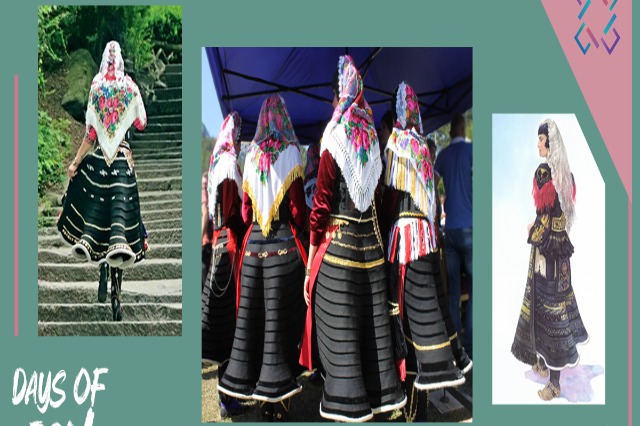
Jubleta is now part of the World Heritage of Humanity, protected by UNESCO. The rare Albanian jubleta handicraft file has been accepted today in the list of Intangible Cultural Heritage. The news was announced by the Minister of Culture, Elva Margariti, from Rabat, the capital of Morocco, where the meeting of the Intergovernmental Committee for the Protection of Cultural Heritage was held.
“An extraordinary news for our cultural heritage, as a gift on the 110th anniversary of Independence! After a long work, full of dedication of a large group of collaborators, the Jubleta handicrafts file was accepted in the list of Intangible Cultural Heritage under the protection of UNESCO. Albanian Jubleta, ancient 4 thousand years, is already the wealth of all humanity!” writes Margariti.
Xhubleta is a handmade corrugated bell-shaped clothing. It is considered an identity element of highland women in Northern Albania. The particular morphology and semiotics of jubleta reveal the admired craftsmanship reflected in this garment.
It involves specific skills in preparing the felt, cutting, stitching, and embroidering symbolic figures as well as assembling all pieces that make up xhubleta. Nowadays, it mostly comes in black with colorful embroidered motifs.
Jubleta is a typical garment for women and girls, with some specific features distinguishing the social status of either group. Unmarried girls wear thick, stiff, white wool garments with horizontal black stripes. Married women wear a bell-shaped skirt, typically corrugated and accentuated at the back. It is made up of a variety of intricate components and narrow felt strips laid horizontally and interlaced by layers of spiku – a special type of thread made from a complex braid of sixteen separate strands of wool. Xhubleta is hung from the shoulders by two wide straps. The main component of Jubleta is the felt.
The semiotic dimension of xhubleta already inherited is reflected today in wearing this costume in important events such as weddings, and festivities (especially Logu i Bjeshkëve, a social event serving as a meeting platform and revived in the 1990s), and death rituals.
In the past, all knowledge and skills surrounding the xhubleta were passed down from mother to daughter for generations of women as girls aimed to prepare their dowry. Today, few women have knowledge of the whole process and moreover, family-based transmission is rarely seen. Also, the lack of organic wool suitable for manufacturing felt has led to the use of new types of wool. However, this suitability allowed for transmitting the xhubleta craftsmanship, providing a sense of continuity without changing its significance to the community.
Manufacture of the Jubleta goes through these processes: Shearing cattle, carding the wool, spinning it with a spindle, dyeing the wool thread, weaving spiku, working of certain pieces on the loom, stitching the pieces with wool thread and metal thread, making the ornaments with silver and gold, embroidery of pagan elements, embroidery of decorative elements.
When girls got married, they took with them up to five Jubletas ranked as:
“The best”, which was held for up to five years.
“The good”, there was very little difference with the first one.
“After the good” most of the iva-s (horizontal strips) were unadorned.
“Before the bad” and “The bad” were daily used and had no embellishments.
The parts of the Jubleta dress: the xhubleta, which comes in a wide and bell-shaped skirt, kraholi (jacket), sleeves, neckband, girdle, postava (belt), pështjellaku (apron), woolen socks “kallcet”, jeleku (bodice), the scarf or headdress, the waist scarves, kapica (headpiece), ornaments and jewelry of silver.
/a.p/
Të ngjashme













Most read










 RTI