
 English
 Français
 Deutsch
 Italiano
 Turkish
 Greek
 Serbian
Rutte: NATO Cyber Defense Forum in Tirana Offers Exceptional Knowledge Sharing




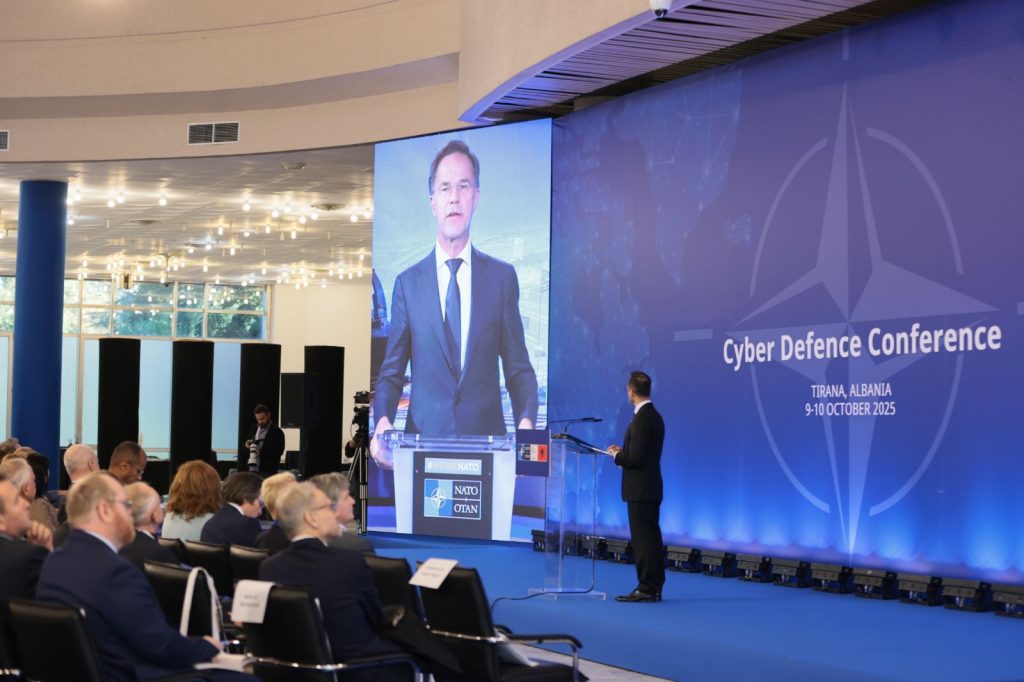
Tirana, October 9 – NATO Secretary-General Mark Rutte delivered an online address at the 3rd NATO Cyber Defense Conference in Tirana. Although he could not attend in person, he highlighted the importance of collective action.
He explained that today, keyboards act as weapons targeting societies daily. Moreover, state and non-state actors attempt to breach defenses, disrupt infrastructure, spy on citizens, and interfere with government services. Consequently, NATO has reinforced its digital capabilities. Ten years ago, cyberspace became an operational domain. Since then, NATO has trained personnel and conducted cyber operations. As a result, adversaries understand that cyber incursions can trigger Article 5.
Rutte also pointed out that Belgium is creating an integrated NATO cyber center. This center will inform all NATO commands about cyber threats and risks, including critical civil-military infrastructure. In addition, civilian staff, allied governments, and industry experts collaborate there to improve readiness.
Furthermore, NATO allies are increasing investments in cyberspace. In The Hague this summer, they agreed to allocate 5% of defense spending for core capabilities and other strategic investments. This approach will strengthen defenses and make societies more resilient to cyber threats.
While countries remain responsible for their own protection, NATO provides a unique network for coordinated responses. Therefore, the Tirana forum serves as an exceptional platform to share expertise, best practices, and knowledge.
Rutte added that NATO remains an alliance of shared values. Consequently, all members act immediately and based on norms in cyberspace. No one stands alone; together, NATO members counter anyone seeking to harm them digitally.
Albania hosts delegations from 32 NATO member states. They are represented by foreign ministries, defense ministries, and cyber ambassadors (official cyber representatives). In conclusion, this high-level event allows participants to exchange knowledge, strengthen cooperation, and develop joint strategies to protect against evolving cyber threats.
/a.p./
Të ngjashme

Latest News










Most read










 RTI