
 English
 Français
 Deutsch
 Italiano
 Turkish
 Greek
 Serbian
Arberesh and Arvanit dances




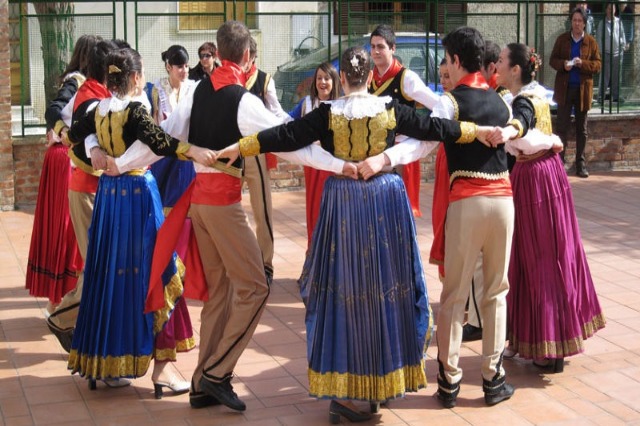
The first Albanians who came from Arberia settled in Calabria and Sicily. In 1461 George Castriot Skënderbeg, a feudal lord of Arberia and military leader, with a large and strong body of Albanian warriors, would fight in support of Ferdinand, the son of King Alfonso, and for this help and military support as a reward he was given two fiefs in Apulia Italy.
Over 52 villages are registered and institutionally recognized by the Italian state as an Albanian and bilingual minority.
They preserve the culture, language, customs of the Albanians. Folk costumes have been fanatically preserved from generation to generation. But also songs and dances. The people of Arbëresh are fighting, until today successfully to keep alive their language, culture and traditions.
Arberia dances are generally lyrical and occupy a large place in choreographic folklore. They are mainly played by women, or women and men together. Viddhaneddha is a typical folk dance, it has a rhythm characterized by a “three plus three” sequence.
The first steps of the dance are slow, the man looks the woman in the eyes, she lowers her eyes, holds her hands back in the shade but moves her arms out and puts her chest forward. After some movements, the couple goes to the center, the man claps his hands according to the rhythm and tries to go behind the woman. She removes the scarf and wraps it around her neck and then waves it in front of the man. Sometimes the man dances shoulder to shoulder with the woman, then the man invites another to continue dancing with the woman. The legs move very quickly while the upper body is static. The duel continues imitating holding a knife. In the past, this dance was called dangerous because the dancers used sticks in the duel.
While the Arvanite song and dance has attracted the attention of many Greek and foreign researchers and musicologists.
Arvanite dances have been passed down from generation to generation along with the folk dress, especially the dress. Arber songs have been fanatically preserved by the Arvan people to this day and are often sung at weddings.
Thus the Arvanite people chose the path of singing to preserve their Arvanite language.
The Arvanitas men’s dance has great emotional power and aesthetic value, and has attracted the attention of many researchers. Even when dancing in pairs or in a group, the main role is played by the first dancer. One of his most original figures is this: he walks lightly, stands on one leg, spins and at this moment bends his body backward, touching the floor or the ground with his head, while other dancers pass over his body.
This dance is performed in the south of Albania by cham minority. The main instruments used by Arvanitas musicians are pipes, drums, fiddles, bells, lutes, mandolins, etc.
/Klara Ruci/
Të ngjashme


Latest News
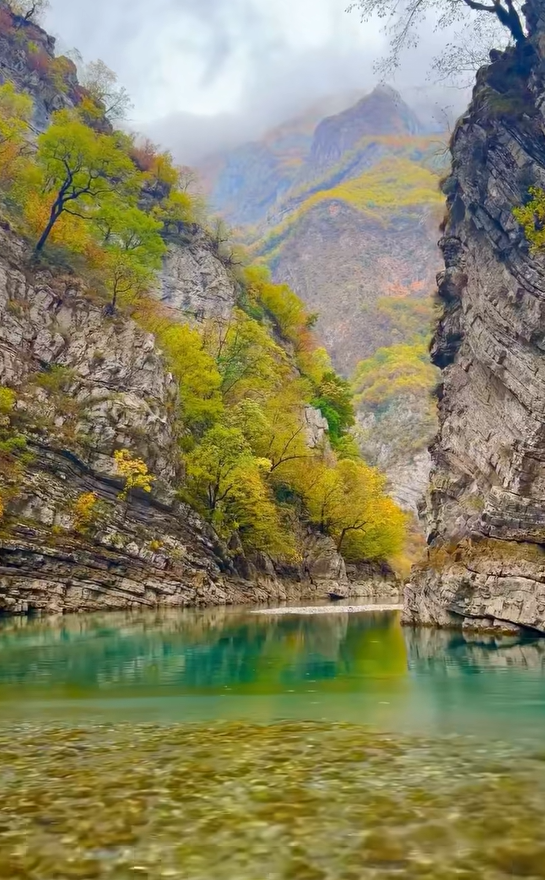
Shala River in Autumn: Crystal-Clear Waters and Mountains Create a Breathtaking Landscape
Vlora Defies November Chill as Tourists Enjoy Beach and Sea in Autumn






Most read










 RTI