
 English
 Français
 Deutsch
 Italiano
 Turkish
 Greek
 Serbian
Albania Marks 67 Years as a UNESCO Member




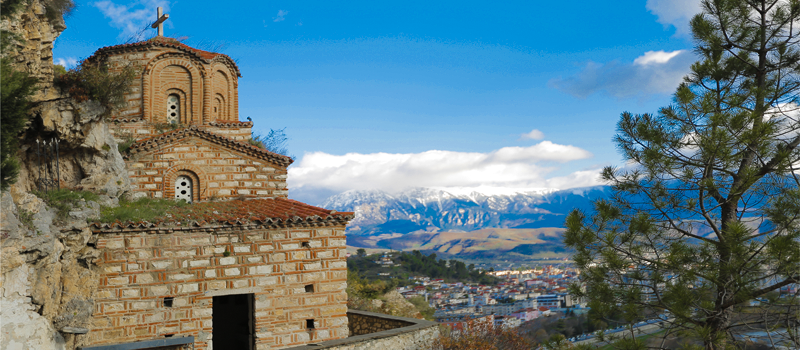
On October 16, 1958, Albania became a member of UNESCO.
UNESCO, with 193 member states, protects priceless world treasures that reflect human life through the centuries. Eight Albanian sites, both tangible and intangible, are listed as World Heritage, representing the essence of local culture and nature.
Among Albania’s tangible World Heritage sites are:
Butrint, known for its rich landscape and Greco-Roman artifacts.
Berat, the “city of a thousand windows,” famous for its unique architecture.
Gjirokastra, the “stone city,” a masterpiece of traditional architecture.
Other UNESCO natural heritage sites include Lake Ohrid, the deepest in the Balkans, and the Gashi River and Rrajca, home to ancient beech forests.
Albania’s intangible heritage on the UNESCO list includes Albanian iso-polyphony, the Xhubleta (traditional bell-shaped skirt), and the Purple Codex of Berat, which preserves the ancient Gospels Beratinus I and II in the National Archives.
UNESCO continues to recognize and protect these treasures as symbols of Albania’s cultural and natural heritage.
/a.c/
Të ngjashme



Latest News










Most read










 RTI