
 English
 Français
 Deutsch
 Italiano
 Turkish
 Greek
 Serbian
Sadushi: Justice Reform Has Not Failed—Time for Consolidation and Institutional Integrity





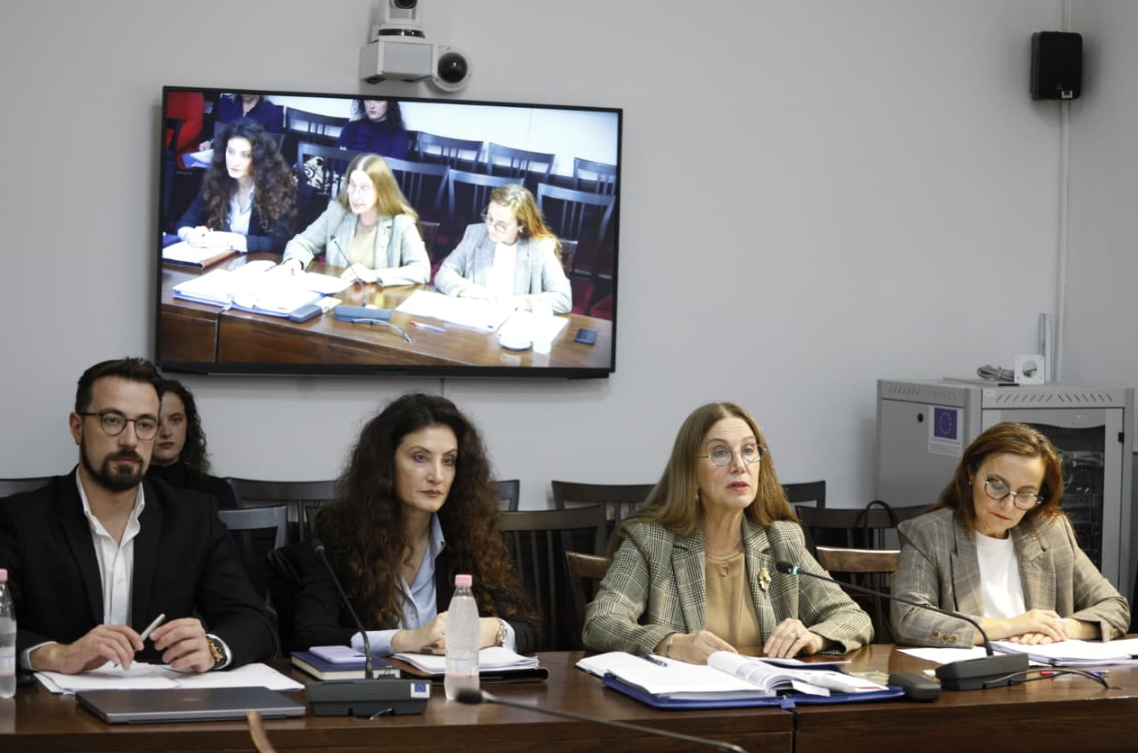
At the conference marking Albania’s 30th anniversary in the Council of Europe, Supreme Court President Prof. Sokol Sadushi reflected on the justice system’s journey. He highlighted the challenges of reform and the process of institutional consolidation.
He stressed that the justice reform has not failed but has slowed due to a lack of will to implement it with the same dedication and integrity with which it was built.
“The justice reform has not failed. It has slowed because people have not applied it with the idealism and honesty with which it was built,” Sadushi said.
He recalled the reform’s broad political support, calling it “the strongest moment of political unity in Albania’s pluralist history, with 140 votes in favor and full backing from the Venice Commission, which gave it international legitimacy.”
Sadushi emphasized that the reform is a national challenge, not just a justice project. Politics, administration, and all institutions accountable to citizens must participate.
“Reform is not only the task of the judiciary. Politics must show responsibility. Only a mature political system, together with a judiciary of integrity, can ensure a stable and independent system,” he said.
He urged the judiciary to enter a phase of self-improvement and consolidation. Citizens do not seek perfect justice, but a system that strives every day to be fairer. Trust grows through actions and decisions, not words.
Sadushi highlighted the Venice Commission’s historic role as a moral guide. He said international cooperation is key, but the system’s maturity depends on turning cooperation into internal responsibility.
He added that after 30 years of European support, Albania now faces a new challenge: transforming reform results into sustainable institutional consolidation. The reform broke political dependence, ended impunity, and placed integrity at the center of public debate.
“Albanian justice gained a new moral status. Citizens now see it as hope rather than disappointment,” he said, while warning that the reform spirit must guard against distortions and protect the independence of new institutions.
Sadushi stressed that leaders in judicial governance must combine professionalism, integrity, and vision. “Only leaders with a state-minded culture can protect and advance the reform’s spirit,” he said.
He noted ongoing challenges: a shortage of judges, heavy caseloads, and delays in decisions. Vetting achieved moral cleansing, yet problems like inconsistent decisions remain.
“Justice requires oversight, a culture of responsibility, and self-regulation,” he said. “If vetting purified the system, today’s task is to build a lasting culture of trust and responsibility.”
He concluded: “Reforms succeed only when they change behaviors. The Venice Commission can provide models, but ethics, courage, and commitment grow from within, through responsibility and personal example.”
Finally, he called on institutions to keep the reform spirit alive with integrity, courage, and humility:
“Let us make justice a mirror of the best in our nation, with integrity that cannot be bought, dignity that does not bow, and ethics that cannot be compromised.”
Të ngjashme










Most read










 RTI