
 English
 Français
 Deutsch
 Italiano
 Turkish
 Greek
 Serbian
Fun facts about Tirana




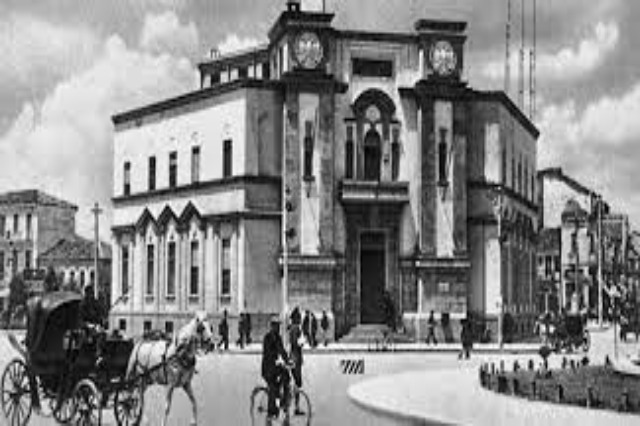
-The first neighborhood of Tirana was that of Bami.
-The mosque in the center of Tirana, called the Ethem Bey Mosque, began to be built in 1789, by Molla Bey, who came from Petrela, and was completed in 1821 by his son, Haxhi Et’hem Bey, the great-grandson of Sulejman Pasha. The best craftsmen of Albania worked for him.
-The Clock Tower started to be built by Haxhi Et’hem Bey, around the year 1821-1822 and was completed with the help of rich families of Tirana. The assembly of the clock was done by the Tufina family. In 1928, a modern clock was bought in Germany, from the Albanian state, and the tower was raised to a height of 35 m. During the Second World War the clock was damaged, but was restored to work in July 1946.
-Tanner’s bridge (in front of the Parliament) dates back to the 18th century.
-Kapllan Pasha’s Mausoleum (near the “Unknown Soldier” monument) was built in 1816.
-Petrela Castle is located 12 km from Tirana and dates back to the 4th century BC. It took its current form in the 13th century, under the rule of Topiaj and later, it became the property of the Kastriot family.
-Dajti Mountain, east of Tirana, is 1,612 m high.
-Tirana was declared the temporary capital, on February 8, 1920, by the Congress of Lushnja and finally received this status, on December 31, 1925.
-Tirana has been the world capital of the Bektashi since 1925, the year when the Bektashi were banned and expelled from Turkey.
-Durrës Street was built in 1922 and was called “Queen Mother”. For its construction, many houses and gardens were demolished.
-The existing Parliament building was constructed in 1924 and initially served as the Officers’ Club. There, on September 1, 1928, Ahmet Zogu proclaimed the monarchy.
-The center of Tirana was designed by the famous Italian architects of the Mussolini period, Florestano de Fausto and Armando Brasini. The Palace of the Brigades (former royal palace), the buildings of the Ministries, the National Bank and the City Hall are some of their works.
– The “Martyrs of the Nation” boulevard was built in 1930, under the name “Zogu I” Boulevard. During the communist period, the section from Skënderbeg Square to the train station was called Stalin Boulevard.
-The Palace of Culture, which houses the Opera and Ballet Theater and the National Library, was built in 1963 at the former old bazaar of Tirana and the first brick was laid by Khrushchev in 1959.
-The Skanderbeg monument, erected in 1968, is the work of Odhisa Paskali in collaboration with Andrea Mano and Janaq Paço. It was erected on the occasion of the 500th anniversary of the death of the national hero.
-The “Mother Albania” monument, 12 m high, was inaugurated at the “Nation’s Martyrs” cemetery in 1971.
-The Academy of Sciences was build in April 1972.
-The Gallery of Figurative Arts was constructed in 1976 and includes about 3,200 works by Albanian and foreign authors.
-The National Historical Museum was built in 1981 and the mosaic on its front is titled “Albania”.
-In the century XVII, Tirana had about 4,000 inhabitants. In 1920 – 17,000 inhabitants, 1938 – 25,000 inhabitants, 1945 – 40,000 inhabitants, 1990 – 250,000 inhabitants. Currently, the massive influx of residents from all other parts of the country towards the metropolis has brought the population of Tirana to over 1,000,000 residents.
/Klara Ruci/
Të ngjashme









Most read










 RTI