
 English
 Français
 Deutsch
 Italiano
 Turkish
 Greek
 Serbian
Kuwaiti newspaper ‘The Times’: Albania has been a crossroads of cultures and civilizations for centuries




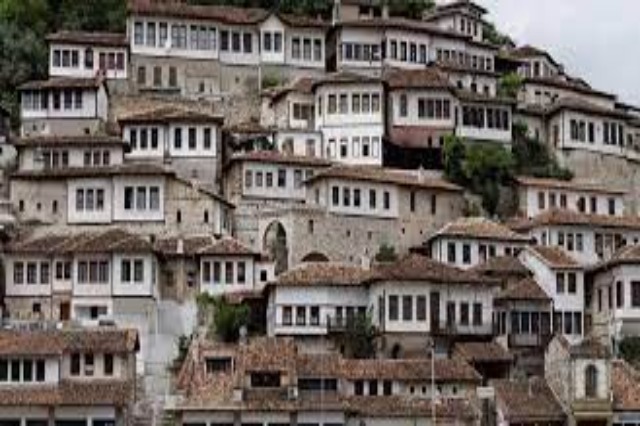
Located on the Balkan Peninsula, Albania has been a crossroads of cultures and civilizations for centuries, writes the largest Kuwaiti newspaper “The Times”.
Surrounded by the waters of the Adriatic and Ionian Seas, to the west, and the Alps, Albania borders Montenegro, Kosovo and North Macedonia to the north and east, and greater Greece to the south.
This territory of less than 29,000 km2 and a population today of nearly four million inhabitants, can be considered a non-rich neighbor compared to other larger, richer and more powerful European countries, but still boasts a rich and brilliant culture steeped in history and heritage. And, like many of its European neighbors, today’s Albania was forged in the fires that have engulfed Europe over the past centuries.
History is a silent witness to the invasions that have marked this small country during its turbulent past. First from the Roman Empire and then from the Byzantine, Venetian and Ottoman Empires, the country since the declaration of independence in 1912, has been in different periods an independent state, a principality, a kingdom and a Republic until the invasion in 1939 by Italy and later Germany. After the end of World War II, Albania became an isolated and repressive communist state until 1991, when it again became a democratic Republic.
Despite its rich past and history, Albania today offers much more than historical objects and archaeological artifacts. It is also one of the best places to visit.
The home of the charity icon and Nobel Peace Prize winner, Mother Teresa and the legendary 15th century Albanian hero Skanderbeg, who resisted the Ottoman occupation, Albania is a place you can visit at a leisurely pace and take time to fully assimilate its rich culture and history.
Equipped with a tranquil Mediterranean climate along its coastline boasting blue and turquoise seas and beautiful beaches and an alpine climate in its snow-capped mountain villages, visitors to Albania can enjoy one of the wider regions climatic. Visitors can dive into the warmth of the Mediterranean waters, stroll along the ancient streets and alleys in its many cities and towns or walk through the many mountain trails for stunning views, all unspoiled by globalization and for the most part unpolluted by commercial tourism.
Blessed with over 300 sunny days a year, the country is estimated to have more sunny days a year than any other European country. The place can be a pleasure to visit at any time of the year, but more so in autumn and spring. In the fall, orchards glow from the bright orange of the dates and the cooler citrus colors, while in the spring, apple and cherry blossoms cover the side streets with their pastel toned flowers. While September and October is still warm enough to swim on the south coast, long spring evenings are a good time to enjoy the terrace cafes and sidewalks that are ubiquitous across the country.
Beaches, bays and harbors
Coastal Albania lies along a narrow strip of about 10 to 30 kilometers wide along the entire Albanian coast of more than 600 kilometers opposite the Adriatic and Ionian Seas. The coastline bordering the Adriatic Sea is about 450 kilometers long, interspersed with many attractive beaches, while the rugged coastline facing the Ionian Sea with its high cliffs offer secluded bays and coves that are difficult to reach, but that offer a privacy and solitude, that is disappearing widely elsewhere.
Lakes and parks
Ancient lakes with unique species that have been around for millions of years, and extensive park areas that offer unparalleled views and tranquil seclusion, emphasize any visit to this place.
Shkodra Lake
The largest lake in the Balkans, Lake Shkodra lies on the border between Albania and Montenegro. It is relatively shallow and feeds on many different rivers as well as springs, making it quite diverse in its aquatic life, with different species of carp and trout in its waters.
Lake Ohrid
Divided between Albania and Macedonia in the southeastern part of Albania, Lake Ohrid is extremely deep and is fed mainly by springs around the lake shore and on its floor. Lake Prespa lies above Lake Ohrid, which is known for its solitude and beautiful landscapes. These two lakes are almost four million years old and unique species of fish have evolved in them, among them the delicious koran and belushka.
Llogara National Park
This park is located 40 kilometers southeast of Vlora on the border between the Adriatic Sea and the Ionian Sea. The park is 470 meters above sea level and climbs 2018 meters. Near the top of the Llogara Pass, visitors can notice beautifully shaped trees formed by air currents. Look for the tree known locally as the “Flag Pine” located by the roadside. The Ionian Sea can be clearly seen from the Llogara Pass. The park is considered one of the most valuable tourist attractions in Albania and offers eco-tourism opportunities, air sports, walks and picnics.
With over a third of the territory of Albania, approximately one million hectares, under the forest, the country is very rich in flora. In Albania grow about 3,000 different species of plants, many of which are used for medicinal purposes.
Cities and castles
Immersed in a centuries-old history, Albania is rich in ancient cities, castles, archeological remains and artifacts.
Antigonea
The ancient city of Antigone was founded in 295 BC by Pyrrhus, king of Epirus, and was built in the following century where it had a former Illyrian settlement.
It is named after Pyrrhus’s first wife, the daughter of the king of Egypt. Objects found in the ruins of the ancient city testify to its richness and ancient history. Here was also found a small beautiful bronze statue of Poseidon, currently on display at the National Historical Museum of Tirana.
These objects testify to the connection of the city with the sea and with Amantia and the cities of the Gulf of Vlora. Excavations at Antigonea have uncovered several small temples dating to the sixth century BCE
Butrint
The ancient city of Butrint is one of the main archeological centers of Albania and the Balkans and is protected by UNESCO as a World Heritage site. It is located on the shores of Butrint Lake, south of Saranda, on the border with Greece.
The name of the city derives from a legend, according to which the city was founded by the Trojans fleeing after the burning of Troy by the victorious Greeks. King Priam’s surviving son, Aeneas, sacrificed a bull to the gods, but the animal did not die quickly and ran to the sea before it died. This was interpreted as a good omen and the place was called Buthrotum or “wounded”.
The city of Butrint was most likely built in the 3rd century BC, on the south side of the hill. The city is surrounded by a wall built in the IV and III centuries BC, with an area of 11 hectares including a theater, shopping malls and temples.
The wall is almost never straight, but zigzagging revolves around the city, perhaps a way to increase its defensive value.
Bylis
Founded in the 3rd century BC as an Illyrian city, Bylis flourished as the political, economic and cultural center of the community. The city was governed by an annual council of civil servants. In 230-146 BC he introduced bronze coins, which along with other handicrafts produced by Bylis workshops were popular throughout the region.
The city cathedral is one of the most important monuments of the ancient city and has undergone several reconstructions. The floor before the entrance is arranged in mosaics which constitute the largest mosaic surface discovered to date in Albania.
It displays various motifs and scenes that reflect the daily lives of shepherds, fishermen and others.
Korca
The main city of southeastern Albania, Korça is an interesting historical city with rich cultural traditions and fascinating buildings from the Ottoman period. Archaeological remains from the Neolithic era suggest that the area has been continuously inhabited for the last 6,000 years, with significant cultural progress from one period to the next.
The region played an important role in the expansion of Byzantine Christianity in Albania. Today Korça represents one of the most pleasant and unspoiled cities of Albania with a unique tradition.
Kruja
This is one of the cities with the richest history in Albania. It is easily accessible from the capital as it is only 32 kilometers away. The name and meaning of Kruja are related to the actions and activity of the Albanian national hero, Gjergj Kastrioti (Skanderbeg), who led the fight against the Ottoman invaders in the 15th century.
Kruja was the capital of Skanderbeg and its fortress turned into an invincible fortress of resistance against the Ottoman threat, repelling Turkish attacks for most of 25 years thus becoming famous in Europe.
Vlora
The second main port of the country after Durrës, the city of Vlora is located in the southwestern part of the country, in a picturesque area along the sea shore. In the Middle Ages, the Vlora region became the subject of debate between various international powers that wanted to maintain control over Albania.
During the Ottoman occupation it represented a center of that power. This is evidenced by the numerous Ottoman buildings of the city, such as the Great Mosque in the city center, built in 1542 by the famous Turkish architect Mimar Sinan.
The Castle of Berat
This is one of the most massive historical monuments in the Balkans, a large fortress overlooking the Osum River. The castle is triangular in shape. When viewed from below, the castle looks like part of a hill. The inner entrance tower is built of stone blocks belonging to the Illyrian fortifications dating to the IV-II century BC.
The top of the hill is surrounded by an outer perimeter wall of twenty-four towers. Inside the castle there are 14 churches which have contributed to make this castle very famous.
Gjirokastra Castle
The castle is a large castle with a fantastic location, overlooking the entire Drino valley. Inside the castle are the National Weapons Museum, a prison and the execution court. From the excavations were found various ceramic and household items, such as plates and cups, as well as an ancient wall, which testifies to the settlement that belonged to the IV and III centuries BC.
After leaving the castle, visitors walk along a road on either side of which there are 200 stone houses. Inside the castle is the Pajazut Khan Mosque. To the north is the old market, called the Castle Market, with 40 shops. The market has two gates, which close in the evening.
Castle of Ali Pasha Tepelena
Tepelena Castle is an ancient Illyrian settlement strategically located at the crossroads of the Vjosa and Drino rivers. The castle was destroyed during the Turkish siege in 1492 and only a few ruins remain in the northern part.
The castle was later rebuilt by the Turks and is currently in good condition.
/Klara Ruci/
Të ngjashme








Most read










 RTI