
 English
 Français
 Deutsch
 Italiano
 Turkish
 Greek
 Serbian
Sejko Highlights Growth in Exports and FDI, Foreign Reserves Reach 7 Billion Euros




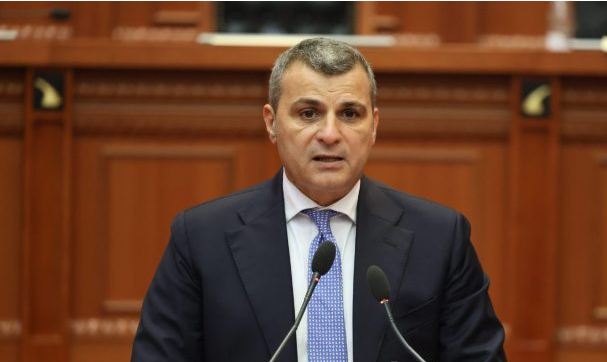
Tirana, October 31 – Governor of the Bank of Albania, Gent Sejko, presented the annual report to Parliament. First, he said positive trends in the economy and financial markets during 2024 and the first half of 2025 reflected in the banking sector.
Regarding the banking sector, Sejko noted that it experienced growth. He explained that rapid credit expansion and a broader deposit base supported this growth. In addition, financial health indicators improved.
He also emphasized that credit quality continued to improve. Non-performing loans fell to 4.0%. Sejko stressed that this is the lowest level since 2008. Moreover, periodic analyses show controlled systemic risks. Consequently, stress tests indicate banks can withstand possible macro-financial shocks.
Turning to Albania’s external position, Sejko emphasized that it strengthened. He noted that higher exports, remittances, and foreign direct investment (FDI) contributed to this improvement.
Specifically, he reported that total exports in 2024 reached 9.1 billion Euros, up 11% from 2023. Tourism alone contributed 5 billion Euros. Furthermore, remittances reached 1 billion Euros. FDI inflows totaled 1.6 billion Euros.
Looking at the first half of 2025, Sejko added that these indicators continued rising. Exports grew by 6.1%. Remittances increased by 4.3%. FDI rose by 1.1%.
Overall, he said the trade and financial balance remained positive over the past three years.
Regarding debt and reserves, Sejko reported that external debt fell to 40.5% of GDP in the second quarter of 2025, down from 46.2% at the end of 2023. At the same time, foreign reserves of the Bank of Albania approached 7 billion Euros. He stressed that this strengthens guarantees for foreign investors.
On fiscal performance, Sejko highlighted improvements. The budget deficit declined to 0.7% of GDP. Public debt fell to 53.8% of GDP by the end of 2024.
Concerning the banking system, Sejko noted that it improved stability indicators. As a result, banks consolidated their intermediation role. This means that banks can supply the economy with stable and low-cost funds. In addition, they expanded the use of modern payment instruments.
Turning to labor market trends, Sejko observed that higher labor demand and worker shortages increased private-sector wages. Wages rose by 8.6% in 2024. Meanwhile, in the first half of 2025, wages grew by 9.5%.
Finally, regarding inflation, Sejko reported that it declined. It fell from 4.8% in 2023 to 2.2% in 2024. Moreover, it remained at 2.2% during the first three quarters of 2025. He explained that international price drops, a stronger exchange rate, and proactive monetary policy contributed to this decline.
In addition, imported inflation fell sharply. At the same time, domestic inflation pressures stayed in line with the Bank’s price stability objectives.
/a.p./
Të ngjashme


Latest News









Most read










 RTI