
 English
 Français
 Deutsch
 Italiano
 Turkish
 Greek
 Serbian
Bank of Albania Hosts IMF Mission




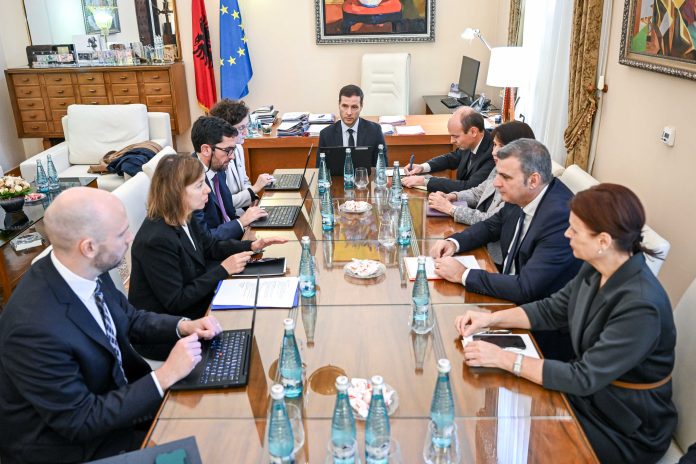
The Governor of the Bank of Albania, Gent Sejko, recently met with the IMF mission, led by Anke Weber, Head of the IMF Mission to Albania. The purpose of the visit was to maintain dialogue on economic, monetary, and financial developments. Additionally, it aimed to support sustainable growth and preserve financial stability.
Focus of Discussions
During the meeting, participants focused on recent economic and financial developments and their future outlook. Moreover, they discussed the Bank of Albania’s monetary policy. In addition, they reviewed measures to maintain banking sector health and financial stability.
Economic Performance
Governor Sejko first briefed the mission on the latest economic developments. Albania has shown resilience to global challenges. Consequently, the country has maintained steady growth, low inflation, and a sound financial system. As a result, international agencies Moody’s and S&P have improved their ratings of Albania.
“In the first half of 2025, the economy grew by 3.6%, driven mainly by domestic demand and tourism,” Sejko said. “Unemployment fell to a historic low of 8.5%, while real wages rose sharply. Meanwhile, inflation is gradually approaching the 3% target. Furthermore, our monetary policy remains accommodative to support this process.”
Banking and Fiscal Stability
Regarding the banking sector, it remains stable, liquid, and well-capitalized. At the same time, lending to the private sector continues to grow strongly. Fiscal consolidation has placed public debt on a declining path, thus strengthening fiscal resilience. Looking ahead, expectations remain positive. Economic growth is projected to remain steady, and inflation should stabilize near the target by mid-2026. Therefore, the Bank of Albania will continue a cautious, data-driven policy to preserve price stability and economic resilience.
IMF Support and Observations
IMF representatives expressed support for the Bank of Albania’s monetary policy. They also praised its role in maintaining monetary and financial stability. In particular, the accommodative policy has supported credit growth and economic activity without causing inflationary pressure. Moreover, they highlighted the Bank’s initiatives to maintain macroeconomic stability, control inflation, and respond carefully to currency movements.
Additionally, high foreign exchange inflows, driven by tourism and foreign direct investment, strengthened the Lek. IMF experts emphasized that a free exchange rate helps maintain economic, monetary, and financial stability. Overall, they described it as the best approach for Albania.
Integration with the EU
IMF representatives noted that Albania’s SEPA membership, effective October 2025, will strengthen financial integration with the EU. Consequently, it will also formalize cross-border transactions.
Future Cooperation
Finally, participants confirmed strong cooperation between the Bank of Albania and the IMF. This includes IMF missions, technical assistance, and broader collaboration. They also highlighted the importance of implementing the Financial Sector Assessment Program (FSAP) next year.
Të ngjashme


Latest News









Most read










 RTI