
 English
 Français
 Deutsch
 Italiano
 Turkish
 Greek
 Serbian
World Radio Day/ The story of Radio Tirana, the first radio station in Albania




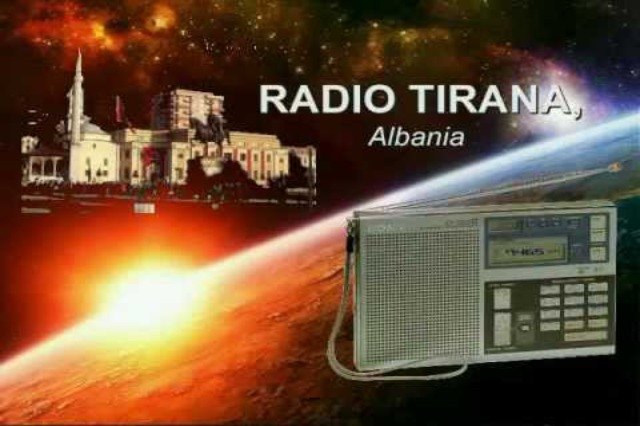
Radio is a powerful medium. It remains the most widely consumed and trusted medium because it reaches out the widest audience and creates the opportunity to all voices to speak out, be represented and heard. Many of you may have heard “This is Radio Tirana”, and some may have experienced it with emotion every time the first radio in Albania, Radio Tirana started its broadcasts.
On the world Radio Day, we are bringing the history of Radio Tirana to all those who have not heard of it or for those who have nostalgia about it.
Radio Tirana, for the first time in its history, started broadcasting on November 28, 1938, five months before the invasion of Albania by Italy. Initially, Radio Tirana had its residence in one of the premises of the then Municipality, but since the end of 1939, it was transferred to a new building on Kont Urani Street. The news of the opening of a radio station in the Albanian capital was received with great enthusiasm by the people. In King Zog’s Tirana, the idea of a radio was one of the great chances of spreading an emancipatory spirit for the backward Albanian society. Evidence shows that King Zog himself and Queen Geraldine participated in the inauguration ceremony of Radio Tirana, giving respective speeches. This radio initially broadcasted patriotic and popular Albanian music and mainly gramophone records donated by citizens.
At the time when Albania was invaded by fascist Italy, on April 7, 1939, there were calls everywhere for the people to rise up against this invasion. The call coming from Radio Tirana made a great echo. At the end of 1939, Radio Tirana was transferred as a building and from 1940, it started publishing a fortnightly magazine, which was first called “Radioprogram”, then “Radiorevista Tirana” and “Vatra shqiptare”.
The German occupation marked the most serious incident with radio people. On November 17, 1943, all the radio staff was called to a meeting, which was in fact a trap of the Gestapo. However, the radio fell into the hands of the Germans and it took a single night, that of November 17, 1944, the liberation of Tirana that Radio Tirana was recaptured again.
On November 27, 1944, Radio Tirana resumed its tradition. Partisan music, folk instruments, music performed by artists present in the studio, accompanied by Italian pianist Mario Etore and Albanian Lola Gjoka. Every night was like a premiere. Artists coming and going, live emotions, loudspeakers placed in the key points of the capital and the crowds of people listening through them.
The lyrical singers who debuted after the war were Tefta Tashko Koço, Kristaq Antoniu, Marie Kraja, and many others. Then there were shows with patriotic songs, reports from the railways, from life in the city, followed by shows “Women’s Hour”, “Children’s Hour”, “Village Hour”, “Medical Advice”, etc. From the first days after the war, Radio Tirana broadcast news in foreign languages,thus continuing the experience started in April 1939. Radio Tirana began broadcasting programs in foreign languages, mainly in Serbo-Croatian, Greek, Bulgarian, Romanian, Turkish, English and French.
In 1945, Radio Tirana started for the first time in its history, a cycle of sports shows, hosted by Anton Mazreku. In 1946, the dramatization of different parts began, with the participation of the best actors of the Albanian stage.
The love with the Yugoslavs, the Russians and the Chinese and then the broken friendships with them, was significantly reflected in the programming of Radio Tirana. Later, a large orchestra was created, known as the “Radio and Cinema Orchestra”, while in 1962, the first Albanian Light Music Festival, known as the “Radio Festival”, came to life, to continue a many years of tradition. In 1972, with the beginning of the liberalization of life in the country, it tried to introduce foreign music, such as the Beatles. Everything liberalizing that had begun to flourish was interrupted and Radio Tirana continued with its propaganda ritual.
The ’90s found Radio Tirana with almost the same staff. The era of change brought more freedom for journalists, but also more space and truth for the listeners, who saw RTSH as the only means of information about the violent events that accompanied Albania. In this difficult path, the veterans of Radio Tirana, are the most precious part of the memory, which we do not want to change or modernize, but to keep in the archives and always in our mind. It is precisely these people who have fed the troubled souls of the Albanians, amid the waves that arrived in every home.
Radio Tirana is a witness, but also a protagonist of Albanian history. It is its employees, all passionate, courageous and professional people, all lovers of radio and its fascination, who today inspire the listener of Radio Tirana, glorifying its name as the temple of culture and human emancipation.
Radio Tirana began broadcasting a regular international radio program on November 22, 1964.
During the Cold War, when Albania was internationally isolated, Radio Tirana International broadcast in up to 23 languages. At that time, the programs consisted of propaganda by the communist government of Albania, which was directed both against the West and against the states of the Eastern Bloc, with whom Albania had largely broken its relations. There were broadcasts in German as early as the 1950s, but regularly only since 1964. The transmitter systems were in Flaka near Shijak (medium wave) and in Cërrik and Shijak (short wave).
Broadcasting on medium and short wave was discontinued at the end of March 2017, sometimes because the transmission systems were in very poor condition. All language programs are now broadcast via the Internet through the RTSH website, rti.rtsh.al and through Kall (Germany) Mon-Sat 1930-2000 UTC on 3985 & 6005 kHz with a relay of Tirana’s German service.
Happy World Radio Day!
/Klara Ruci/
Të ngjashme








Most read










 RTI