
 English
 Français
 Deutsch
 Italiano
 Turkish
 Greek
 Serbian
New Year’s Day celebration during dictatorship




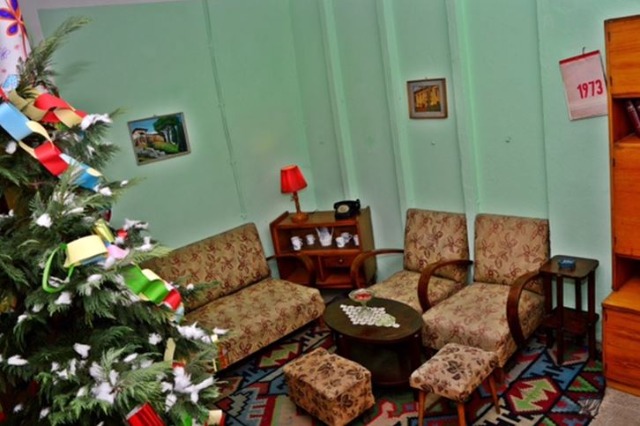
New Year was the holiday that everyone was looking forward to. In the poor Albania of the dictatorship, it seemed as if everything was forgotten that night. A step back in time brings to mind the traditional way of celebrating in every Albanian house.
Small rituals, parties in bars and the most famous hotels of the time. Menu, music and prices.
Today, it may seem like a routine holiday. You can celebrate when you want and what you want, but at that time, this was the only holiday that was not related to the Party of Labor of Albania.
The ban on religion in Albania limited the year-end holidays simply to the night of the change of years, or the New Year. Christmas was no longer celebrated, so all the attention was focused on December 31st. The heaviest burden fell on the housewives, who, in addition to having to work on the 31st, had to start cooking for dinner.
And to them it seemed like there was no party, just a rush through the kitchen. In the last days of the year, a big reception was organized in the Palace of Brigades by Enver Hoxha with distinguished pioneers, while Christmas Day was not celebrated after ’67, when the religion was banned. Families of the Catholic and Orthodox faiths celebrated it in secret, without fuss.
Small financial rewards were given to the distinguished ones, while on New Year’s Eve, as well as on January 1st and 2nd in the company, the departments were on duty every two hours by employees, who alternated according to a schedule made by the directorate.
The televisions of the brands “Butrinti”, “Iliria” or “Dajti” have been the only means of communication that has accompanied the Albanians on New Year’s Eve, as well as those onwards. Sitting at the tables, and waiting for the midnight, everyone was watching the “Great New Year Concert” a program with songs, dances and humor from all over Albania prepared by the Albanian Television.
There was no greeting speech from the head of state at midnight. The next day, the Italian channel “Rai 1” was opened just to watch at 12 o’clock in the morning the Vienna Concert and in the evening, again with Albanian Television in the program almost identical to that of the night before, everything within the allowed frame. The end of the year night was celebrated in military units, dormitories, etc. of course with TV, radio, or any tape recorder, even in hospitals, orphanages, and with the simplicity and modesty of the time that these institutions did have.
New Year’s Eve has been almost the same for everyone. A chicken, or turkey with bread crumbs, salads with mayonnaise and baklava or kadaif. Raki and Permeti wine, “Riesling”, “Tokai”, or “Black Square” or “White”wine, “Merlot”, “Kallmet” wine were traditional drinks on that night.
Preparing for New Year’s Eve was extremely tiring for women, who cooked non-stop all day in not at all comfortable conditions of the apartments built during socialism. On many occasions there were groups of young people, friends and acquaintances, who gathered that night at someone’s house, to go out to the square after midnight.
Tirana has always given a different rhythm to the eve festivities, especially the moments before the change of years. The night between the two years, for those who remember it, especially the mid-’60s-’70s, had been special. At midnight, you could find hundreds of young people in the square in front of the Grand Palace of Culture (built in 1964), celebrating, imitating and singing popular, mostly foreign, songs. Everything spontaneous, not organized, but invented by some enthusiasts, who lived mainly in the center of Tirana, as other areas were a little far and difficult to come when the means of transport were not available in those hours.
New Year’s Day was celebrated at home or restaurants. The preference to spend New Year’s Eve in a public place with company, orchestra, music and dance, began before the ’50s, to continue in the’ 60s, and beyond, especially in the ’80s. In many cities in Albania, but especially in Tirana, it has been different. It was mainly celebrated in the famous center, the giant halls of ” Dajti Hotel ” or in “Vollga” (Drini today), which, on New Year’s Eve were filled with rulers, senior officials, artists and athletes, but also with many foreigners, sailors, students and mostly embassy staff, who sang and danced to all kinds of music until dawn.
It was also celebrated at the Writers ‘and Artists’ League Club, at the headquarters next to the People’s Theater, at the Army Central House on Kavaja Street, where senior officers had fun with their families, then at what it is today.. Very special was the “Vollga” or “Adriatic” in Durres, where not only Durrës residents, but also foreigners, captains and sailors of ships that had been on the New Year’s Day in the port of Durres. While in Shkodra north western city, people celebrated at well-known restaurants “Grand cafe”, “Old Tourism”, ” Moska Cafe” or “Adriatik” Hotel.
Although there was a slowdown in this kind of public entertainment, especially in the mid-’70s-’80s, as a result of tense political-economic situations and limited social life, the return to the fun end-of-year night at the restaurant came naturally from the desire for something different that of staying, cooking at home day and night for December 31st. This was the motive that pushed the Albanians to start organizing again in bars on the last night of the year, not only in Tirana, but also in other cities.
But to spend this night in a bar was considered a great privilege, as not everyone had the opportunity. To secure a table for New Year’s night , you had to make a family booking from the first days of the month December at the hotel administration. The 15-storey Hotel, newly built and inaugurated in 1979 was greatly frequented on New Year’s Day. Everyone ran there first. If you could not book, you had to hurry to other places like “Volga” (Drini), “Arbana”, “Arbëria”, or “Rinia”, where New Year’s night was accompanied by light music, dancing and fun within limits of time. The orchestra (mainly that of the 15th floor tavern, or others composed of well-known instruments of the capital), knew the repertoire well and did not pass any target, always in tune with what was allowed in the previously controlled program, but never music and songs dedicated to the Party.
The festive evening started at 21:00. The price varied from 600 lek per person and 1200 lek per couple on the 15th floor, to go down to 450 lek in the others with a menu with the usual aperitif, drink and appetizer chips, salads, meatballs turkey cooked with crumbs of bread, traditional even today in Albania, steak accompanied with a bottle of wine or beer and dessert at the end. The cigarette was smoked endlessly. When the clock struck exactly midnight, the lights went out, the glasses slammed and a kiss on the cheek, then everybody went outside to see the fireworks. Afterwards, lottery games were organized with presenters and actors, where the winners received a gift from the organizers. Staying in the restaurant continued almost until the early hours of the morning, as there was no time limit.
Everyone can remember the exhausting family visits that started at noon on the 1st, to continue for a few days. The person, who stepped first into the house of the first of January, was very important.
For many decades “Hotel Dajti” has served as the only government and diplomatic hotel in Albania, but also to accommodate world famous personalities who came to Tirana, well-known western teams such as the German RF, Ajax, well-known artists, etc., etc. Immediately after the war, it was used as a working, government residence, and even Enver Hoxha and some high government officials of the time held their weding ceremonies there.
Being in the center, “Dajti” Hotel was extremely popular, as its interior structure with giant luxury halls, with space and height and excellent function, the popular tavern in the basement, created a great opportunity to foreign specialists to get entertained, initially Yugoslavs, those of eastern countries present in Albania, diplomats, but also to Albanians.
Before the break-up with the East, around the year 61 ′, it was frequented by rich people, civilized ones, educated in the west, families of doctors, intellectuals, famous athletes, children of senior leaders, artists, etc. They gathered in the big hall and in the modern lobby-salon, which accommodated over 250 people during the New Year’s night. They used to cook very well and the food was of high quality.
New Year in the Block (area where the families of the political Bureau used to live) has been special, this also related to time. Initially, in the post-war period, and after the ’50s and’ 60s, the New Year celebration was organized as a family by all the members of the bureau who gathered in the Chamber and Palace of the Brigades, the place where they spent the change of years.
After the 1970s, exactly after 1973, when the crackdown on groups in the arts, the military, the economy began, friendships, ties, and preferences were broken, each family gathered at home, within the limited Bloc guarded by soldiers, quietly passing the New Year’s Day.
The next day continued the traditional visits. A change in mentality was seen in the late ’70s, when the children of a few senior officials began to go to “Hotel Dajti”, banned for Albanians, or even go abroad for the holidays, something that had never been done before.(Panorama)
/Klara Ruci/
Të ngjashme







Most read










 RTI