
 English
 Français
 Deutsch
 Italiano
 Turkish
 Greek
 Serbian
Durres–Rrogozhina Railway: A Strategic Investment for International Connectivity




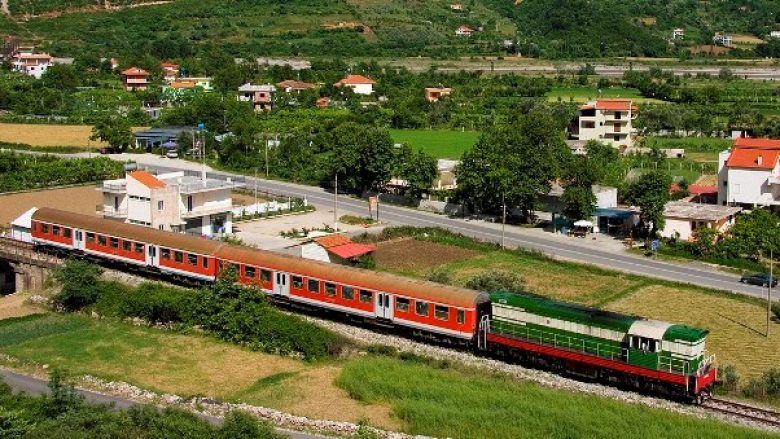
Parliament recently approved two loan agreements and one grant to fund the rehabilitation and modernization of the Durres–Rrogozhina railway, one of Albania’s most important transport projects. Moreover, this project marks a crucial step for regional development.
Finance Minister Petrit Malaj presented the agreements and emphasized that the project represents the first phase of Railway Corridor VIII. This corridor connects East and West Europe and drives economic movement. In addition, he noted that the investment not only improves technical standards but also strengthens national and international connectivity. Furthermore, it supports sustainable and green growth.
The project costs €120.5 million. Together, international financial institutions and the European Union provide the funding. Specifically, the package includes:
-
A €30 million loan from the European Bank for Reconstruction and Development (EBRD);
-
A €30 million loan from the European Investment Bank (EIB) for the “Railway Infrastructure of Corridor VIII – Phase I” project;
-
A €60.5 million grant from the EU via the Western Balkans Investment Fund (WBIF).
This railway plays a vital role in integrating Albania into the Trans-European Transport Network (TEN-T). Corridor VIII links the Adriatic Sea with the Black Sea through Albania, North Macedonia, and Bulgaria. As a result, it creates an efficient route for international freight and passenger transport and enhances regional competitiveness.
The 34-kilometer Durres–Rrogozhina segment will become a modern railway line built to European standards. Consequently, it will allow higher speeds and smoother connections with regional and international networks.
Through this rehabilitation, Albania will:
-
Strengthen the link between Durres Port and key industrial and logistics centers;
-
Connect with the Durres–Tirana line and Tirana International Airport, enabling integrated transport of goods and passengers;
-
Link to the Vore–Hani i Hotit segment, part of the EU’s Flagship 3 Investment Plan;
-
Support economic development in Rrogozhina, Kavaja, Golem, and Lekaj;
-
Encourage a shift from road to rail transport, reduce carbon emissions, and advance EU Green Agenda goals.
In addition, the project will create new jobs, lower transport costs, and boost tourism in connected regions. Each year, the line will carry around 170,000 passengers and 480,000 tons of freight.
The EBRD loan of €30 million has a 17-year maturity with a 5-year grace period and an interest rate based on the six-month Euribor plus 1%. Meanwhile, the EIB loan carries a 25-year maturity and the same grace period, with a choice of fixed or variable interest rates. Importantly, the EU grant fully covers loan interest costs.
Ultimately, the Durres–Rrogozhina railway sets a new model for public infrastructure investment. It combines technical advancement, strategic importance, and European standards. Moreover, it demonstrates Albania’s commitment to rail transport as essential for sustainable economic growth and European integration.
Të ngjashme

Latest News









Most read










 RTI