
 English
 Français
  Deutsch
 Italiano
 Turkish
 Greek
Greek Serbian
122nd death anniversary of Odhise Paskali, the sculptor who carved Albanian history




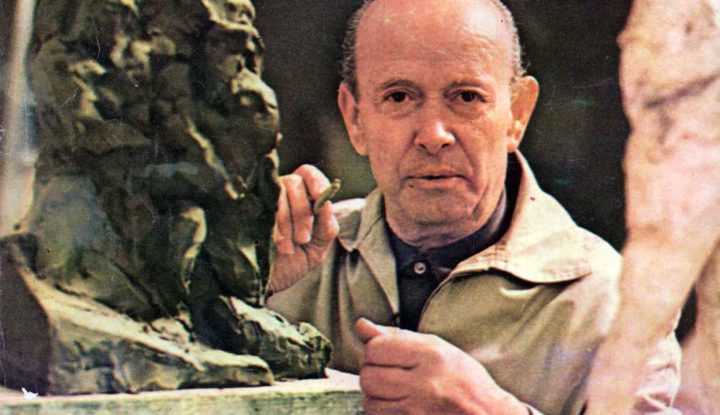
Odhise Paskali was born in Përmet on December 22, 1903. He is widely regarded as the founder of Albanian sculpture and one of the country’s most important artists.
He grew up close to his family. Later, in 1919, he moved to Italy. By 1923, he completed high school and enrolled in the Faculty of Literature and Philosophy in Turin. Then, in 1927, he graduated with a degree in art history. After that, in 1931, he founded the society “Friends of Art.”
Between 1932 and 1937, he created several sculptural monuments across Albania. In addition, he initiated the “Albanian Student” society in Turin and published a magazine for Albanian students abroad during the 1920s. Moreover, in the 1930s, he helped establish the association “Friends of Arber,” organized the first exhibition of visual arts in Albania, and contributed to the opening of the Drawing School in Tirana.
Paskali began his career in journalism. At the same time, he wrote articles on art aesthetics and criticism for local and international press. If we look at his writings from the 1920s, we can see their relevance even today. Furthermore, he adapted his ideas cleverly to suit the context of each period.
Seeing a lack of sculptors in Albania during the 1920s and 1930s, he focused on plastic arts after completing his studies. Specifically, he trained in the studio of a realist and monumental Italian sculptor in Turin. As a result, he became the first professional Albanian sculptor.
During the fascist occupation, Paskali joined the Institute of Studies. However, due to limited commissions, he opened a workshop to produce plaster figures for schools in Albania. After Albania’s liberation, he continued creating sculptures of national figures. Additionally, he honored heroes and martyrs of the Anti-Fascist National Liberation War.
Although he spent only 14 years in Përmet, he maintained strong ties with his hometown. For instance, he created works there such as the sculpture “Liberation Partisan,” the group work “Comrades” in the Përmet martyrs’ cemetery, and busts of Naim, Nonda Bulka, Fanjo Çiçako, and the Frashëri brothers. He also honored three of his cousins with figures in the cemetery complex.
Paskali became a member of the Academy of Sciences. Consequently, he was the first from the arts field and among the first artists to receive the title “People’s Sculptor.”
Scholars divide Paskali’s work into two main periods. During the first period, before 1945, he produced statues, busts, and bronze figurines. These works demonstrate high artistic value, deep psychological interpretation, and classical sculptural harmony. Therefore, Paskali is recognized as the founder of Albanian realistic sculpture.
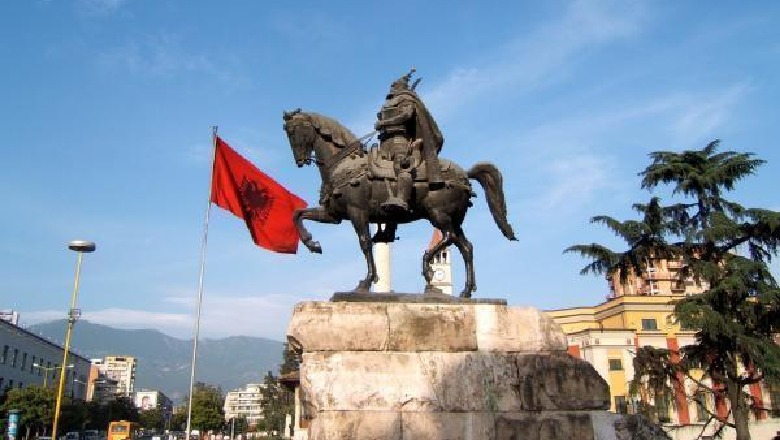
In the second period, after 1945, his work shows enriched artistic expression and occasionally incorporates the grandiose forms of socialist realism. Among his masterpieces is the monument “National Fighter” in Korçë, celebrated as one of the most beautiful statues in Albanian sculpture. Its dynamic pose, flowing cape, and detailed features convey life, strength, and heroism.
Originally moved in 1986 to make room for the Enver Hoxha monument, the statue returned to its original location after 1990, where it remains today.
Paskali’s works are preserved in the National Gallery of Arts, the National History Museum, and other museums across Albania. After his death, his studio became a museum containing original works, plaster replicas, and an extensive archive of notes and documents on Albanian art history.
Following the unrest in the 1990s, the studio suffered damage. Nevertheless, some of the archive is now preserved by the Paskali Foundation, created by his daughter, art historian Floriana Paskali.
Paskali received the titles “People’s Sculptor,” “Academician,” and “Honor of the Nation.” Moreover, a school of art in Pejë and a square in Përmet bear his name. He passed away in Tirana on September 13, 1985.
He created approximately 600 sculptural works, leaving a lasting mark on Albanian art. Overall, his life and work continue to inspire generations of artists.
Të ngjashme
Latest News
Most read




 RTI
RTI