
 English
 Français
 Deutsch
 Italiano
 Turkish
 Greek
 Serbian
Albania in 2025: A Year of Progress, Reform, and International Recognition




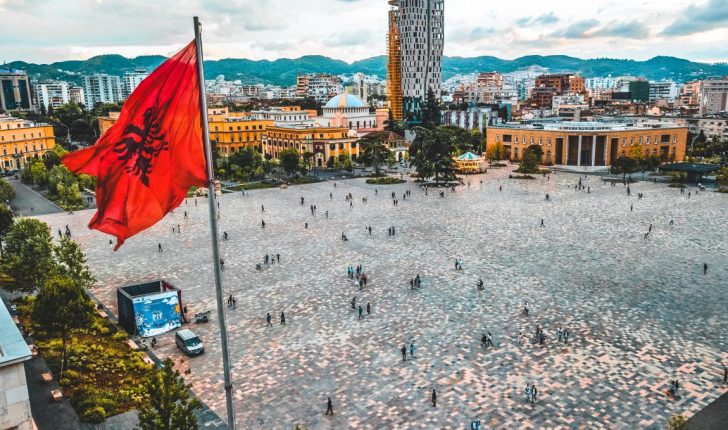
The year 2025 marked a decisive chapter for Albania.
The country advanced steadily toward European Union integration, strengthened democratic institutions, expanded its economy, and gained international visibility in culture and sport.
From diplomacy to digitalisation, Albania positioned itself as a stable and reliable partner in the Western Balkans.
Politics: A Key Year for European Integration
In November 2025, Albania opened the final chapters of negotiations for EU membership.
After this phase, the country entered the political approval process, which requires ratification by the parliaments of all 27 EU member states.
The European Union expressed optimism that Albania could complete accession by 2030.
Tirana hosted the Sixth European Political Community Summit and the SEECP Ministerial, welcoming leaders from 47 countries.
These events placed Albania at the centre of European diplomatic attention and underlined its commitment to regional cooperation.
On 17 December, the annual EU–Western Balkans Summit took place in Brussels.
Albania and Montenegro were identified as the countries with the most progress in the enlargement process, particularly in reforms and alignment with EU standards.
For the first time in history, Albania and Italy held a joint government meeting.
The two sides signed 16 agreements and memoranda, covering health, energy, environment, security, education, and innovation.
Elections and Democratic Standards
Parliamentary elections were held on 11 May 2025.
The Socialist Party won 53.2% of the vote, securing 83 seats in Parliament.
For the first time, Albanian citizens abroad voted directly.
International observers assessed the process as professionally managed but highlighted the need for improvements in political equality and the use of public resources.
The Central Election Commission received positive evaluations for transparency.
OSCE/ODIHR issued 25 recommendations, calling for a depoliticised election administration and stronger sanctions against misuse of state resources.
Rule of Law and Institutional Reform
Albania adopted the Public Administration Strategy 2025–2030 and the Anti-Corruption Strategy 2024–2030.
The Special Anti-Corruption Structure (SPAK) delivered visible results in fighting corruption and organised crime, while strengthening cooperation with European agencies.
Albania improved its score in the Corruption Perceptions Index, gaining five points to reach 42/100.
Economy: Stability, Investment, and Digital Growth
Albania recorded solid economic performance throughout 2025.
The European Commission disbursed €99.3 million through the Reform and Growth Facility, ranking Albania as the best performer in the region.
In October, SEPA euro payments became operational, easing cross-border transactions for citizens and businesses.
Foreign direct investment helped keep the current account deficit stable at around 2.4% of GDP.
Moody’s confirmed Albania’s sovereign credit rating at “Ba3”, with a stable outlook.
Air transport continued to grow, with 3.89 million passengers recorded in the third quarter alone.
Agricultural exports reached 260 billion lek, entering 80 international markets.
More than 95% of public services are now available online through the e-Albania portal.
The World Bank ranked Albania among the top three global examples of GovTech use in environmental protection.
Culture: International Visibility and Heritage
The year 2025 was historic for Albanian culture.
Tirana held the title of Mediterranean Capital of Culture and Dialogue.
The Fourth Season of International Cultural Weeks featured artists from 20 countries, with events held across the country.
The village of Lin was declared an Urban Architectural Ensemble and included in UNESCO World Heritage.
The National Opera and Ballet Symphony Orchestra performed for the first time at the Teatro Auditorium Manzoni in Bologna.
Albania gained global attention through major events, including international festivals, large-scale concerts in Tirana, and participation in major cultural forums.
The group “Shkodra Elektronike” qualified among the top ten acts of the first Eurovision 2025 semi-final in Basel
At the year-end festival on RTSH, Arlis won with the song “Nan.”
He will represent Albania at Eurovision.
Sport: A Historic Year of Success
Albanian sport achieved landmark results in 2025.
The national football team recorded five consecutive victories for the first time in history and qualified for the 2026 World Cup play-offs.
In weightlifting, Enkileda Carja won three gold medals at the European Championships and later became World Champion at the U17 World Championships in Lima, Peru.
Boxer Jurgen Uldedaj claimed the IBO Cruiserweight World Title, while Albanian athletes excelled in taekwondo and winter sports.
A historic moment came on 9 May, when Giro d’Italia 2025 started from Durrës, placing Albania on the world cycling map.
Conclusion
In 2025, Albania consolidated reforms, expanded its international role, and strengthened its economic and democratic foundations.
The year confirmed a clear trajectory:
a more integrated, more modern, and more confident Albania—firmly oriented toward Europe.
/a.c/
Të ngjashme



Latest News







Most read










 RTI