
 English
 Français
  Deutsch
 Italiano
 Turkish
 Greek
Greek Serbian
HISTORY – Mulaomerović, the Bosnian cameraman who documented killings in Kosovo




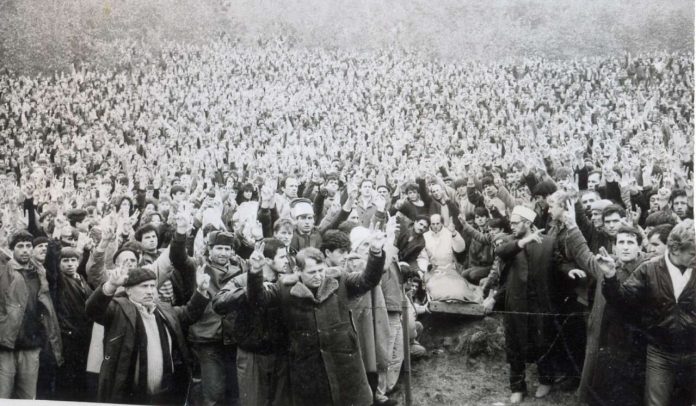
As a cameraman in Bosnia and Herzegovina, Sulejman Mulaomerović filmed the siege of Sarajevo from start to finish. For him, however, Yugoslavia’s violent collapse began two years later, in a village in northeastern Kosovo, writes Balkan Insight.
In late January 1990, Mulaomerović received a call to go to Kosovo. Socialist Yugoslavia was already unraveling. Slobodan Milošević consolidated power in Serbia. Slovenia and Croatia intensified calls for independence.
In 1989, Milošević revoked Kosovo’s autonomy. Authorities removed ethnic Albanians from public-sector jobs. Protests erupted. Serbian police responded with force.
“Outside the court in Pristina, thousands chanted for democracy,” Mulaomerović recalled from his home in Sarajevo. Protesters demanded the end of the state of emergency, the release of political prisoners, and an end to political trials.
Mulaomerović worked for Sarajevo Radio Television. In Bosnia, calls for independence also grew. Unrest in Kosovo signaled rising hostility from Belgrade.
On February 1, 1990, after filming in Pristina, his team headed to Podujevë. Along the way, they encountered tanks, police vehicles, and hundreds of protesters in the village of Lower Lupç.
Police let their car pass. They warned them not to film. When police used tear gas, Mulaomerović found a safe position and kept recording.
“Police fired tear gas at the crowd,” he said. “They then ordered demonstrators to lie down and fired above them.”
Tear gas reached him. He could not see clearly. The camera kept rolling. He heard screams and gunfire. He then saw people carrying a girl.
The girl was Ylfete Humolli, 16. She had left school to join the protest with her younger brother. Mulaomerović said she was fatally shot.
“I remember she wore a grey jacket,” he said.
Reviewing the footage, he identified a police car and two officers aiming at the crowd. “The shots came from them,” he said.
Dozens died during the unrest that followed the loss of Kosovo’s autonomy. Humolli’s death shocked many.
That afternoon, the team edited the footage at Radio Television Pristina, which still broadcast in Albanian. They sent the signal to TV Sarajevo. A German broadcaster offered to buy the footage. They refused.
The images had immediate impact. International media reported that police had opened fire on children.
In the following months, Serbia imposed harsher measures. Authorities enforced night curfews. In July 1990, they shut down Radio Television Pristina and dismissed all Albanian staff.
The footage aired in Sarajevo, Pristina, Ljubljana, and Zagreb.
“Then I understood something,” Mulaomerović said.
“That day, the war began.”
/a.c/
Të ngjashme
Latest News
Most read




 RTI
RTI