
 English
 Français
 Deutsch
 Italiano
 Turkish
 Greek
 Serbian
Gjirokastra stands as a rare example of ethnic and religious harmony in Albania.




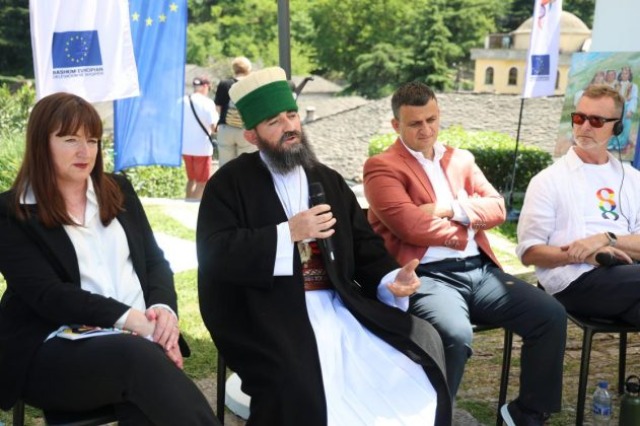
Gjirokastra, a rare example of ethnic and religious harmony in Albania, showcases how we can live and work together regardless of how we pray. The EU Delegation to Albania highlighted Gjirokastra, where churches, mosques, and tekkes give the city an image of coexistence. During Europe Week 2024, discussions underscored the importance of passing on the spirit of unity to future generations.
In Gjirokastra’s Varosh, visitors can still see the Church of the Holy Apostles, with its white stone walls. Inside, biblical scenes from icons welcome Christians and tourists alike. A magnificent arcade rises as one of its entrances, with a southern gate inscription stating it was built in 1777.
A story dating back over two and a half centuries emphasizes the church’s unique significance for the city’s communities.
“When the church was being built, the walls erected during the day were destroyed at night by those dissatisfied with its presence. Baba Mustafa from the Shtufi Tekke pitched a tent near the construction site and stayed there to protect it for nearly a year until the church was completed. All we need to do is continue what our ancestors started. That’s harmony,” said Baba Myrteza Shehu, a representative of the Bektashi Order, during discussions on ethnic and religious harmony in Gjirokastra on Europe Day.
Baba Myrteza recalls an almost forgotten story to illustrate the values that have shaped the city’s communities, where different religions and ethnicities live, work, and coexist harmoniously.
Considering Gjirokastra’s unique religious harmony, Muslim community representative Ndriçim Gjika emphasized necessary steps for the future.
“With everything happening around the world, we too must prepare because prevention is better than cure. As we know, there can be no peace among nations without peace among religions, and achieving religious peace requires dialogue,” he said.

Highlighting Albania’s rare example of religious harmony, EU Ambassador Silvio Gonzato stressed the importance of dialogue in transmitting religious harmony to future generations.
“We have something very rare that we must promote and export within the region, which unfortunately has been destroyed by people using religion for nationalist interests. Religion has no connection with violence. It would be very valuable if these dialogues were to reveal the common values of all religions: human dignity and compassion. We need to discuss how to preserve these values and demonstrate them to other countries. Religion should not be a barrier; it should unite us. Traditional diplomacy does not deal with religion as we are secular, but we have understood that it must be considered to build bridges and promote peace. Conversations with religious leaders can be decisive in promoting peace, solidarity, and conflict resolution,” Ambassador Gonzato emphasized.
Representing the Orthodox community, Metropolitan Dimitri appreciated the initiative to organize the discussion, emphasizing that coexistence and religious harmony come only through dialogue.
“The only way for our region to live in peace is for religious communities to accept and respect existing diversity, individual conscience, and minority rights. What is required is not just tolerance but also mutual respect and understanding,” he said.
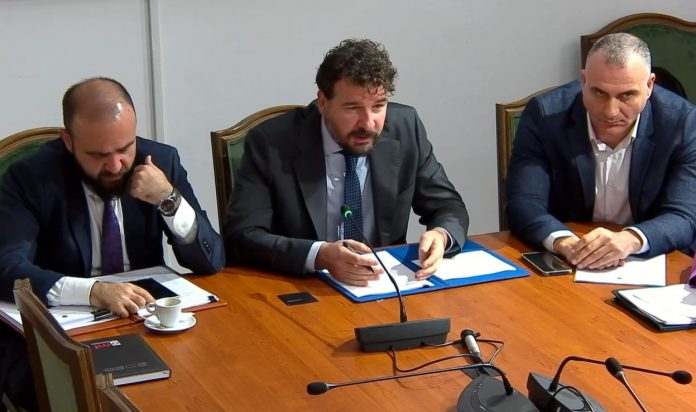
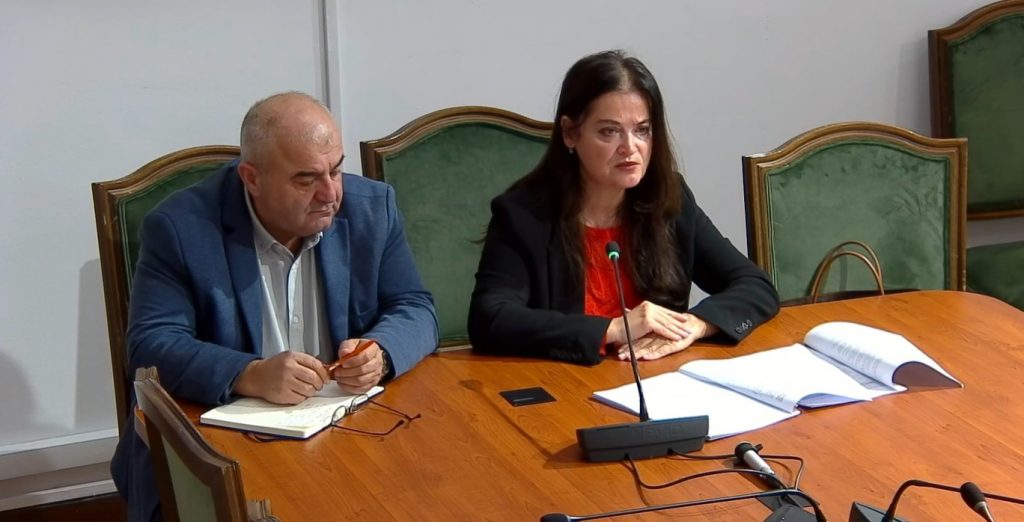
During the discussion held at “Obelisk” in Gjirokastra, ideas and suggestions were put forward on how dialogues could cultivate tolerance and avoid conflicts.
The mayor recalled the old town, suggesting the rebuilding of what the past had destroyed.
“Here where we are today, we had the Catholic church. Perhaps the community should consider the possibility of rebuilding the church destroyed in the 1980s. It doesn’t matter to us whether the majority are Muslim, Orthodox, or Catholic; we are all one. One of the values we have inherited is interfaith marriage, a value that we all have a duty to preserve to maintain harmony,” said Flamuri Golemi.
Almost simultaneously with the Church of the Holy Apostles, the Pazar Mosque was built in Gjirokastra, a cultural monument. They stand in different places, “guarding” Gjirokastra and showcasing its diversity, heritage, and history.
/k.s/
Të ngjashme

Latest News

Most read










 RTI