
 English
 Français
 Deutsch
 Italiano
 Turkish
 Greek
 Serbian
Eid ul-Adha Celebration in Albania




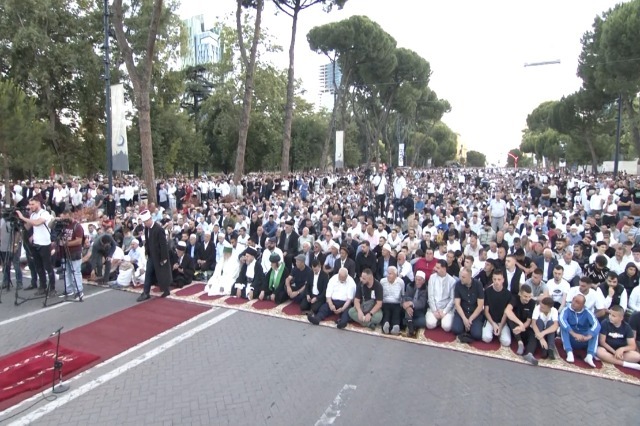
Eid ul-Adha, also known as ‘Festival of Sacrifice,’ is one of the most significant festivals in the Muslim calendar. According to Islamic tradition, it honors Ibrahim’s willingness to sacrifice his son, Ismail, as an act of submission to God’s command. However, before the sacrifice is carried out, God intervenes through his angel Gabriel and informs Ibrahim that his sacrifice has already been accepted.
The name “Kurban Bajrami” in the Albanian language is borrowed from Turkish – Kurban Bayram, which means “Festival of Sacrifice.” To sum it up in a few words, Eid al-Adha is the celebration of defeating ego, the ego that always wants to be ahead.
Muslims commemorate this occasion by sacrificing a sheep or goat, and the meat is shared equally among family, friends, and the poor. Eid usually begins with Muslims attending prayers at the Mosque, dressed in their best clothes, and thanking Allah for all the blessings they have received. It is a time for visiting family and friends, and Muslims also give money to charity to ensure that poor people can celebrate too.
The meat from the sacrificed animal is divided into three parts: one third is kept by the family, another third is given to relatives, friends, and neighbors, and the remaining third is distributed to the poor and needy.
The main ingredient featured on the Kurban Bayram celebration table is the meat from the sacrificed animal. Several traditional dishes are prepared, including:
– Soup: A simple soup made with meat broth, eggs, lemon, a little flour, and spices is a staple.
– Pies:Pies with herbs or a combination of eggs and cheese, or eggs with yogurt, are commonly served.
– Meat Dishes: Meat is a constant presence, often baked in the oven with potatoes or simply cooked to accompany rice.
– Salads: Various salads made with cooked or fresh vegetables are also part of the feast.
– Seafood: Recently, seafood dishes have become popular, adding a modern twist to the traditional menu.
Favorite desserts during Kurban Bayram include typical Turkish sweets such as baklava, revanija, sansallia, and sheqerparet. However, any purchased cake or preferred dessert can also be enjoyed.
It’s important to note that there should be no pork or alcohol on the Kurban Bayram table. The celebration emphasizes sharing, gratitude, and charity, reflecting the core values of the festival.
In Albania, Kurban Bayram is not just a religious event but also a time that strengthens community bonds. Families and friends come together, and the act of sharing meat with the less fortunate underlines the spirit of generosity and compassion. The festival is marked by a blend of religious devotion, cultural practices, and social activities, making it a multifaceted celebration that enriches Albanian Muslim identity.
Kurban Bayram in Albania is a vibrant and deeply meaningful celebration that encompasses religious, cultural, and social elements. It is a time for Muslims to renew their faith, express gratitude, and foster a sense of community through shared meals, charitable acts, and festive gatherings.
/k.s./
Të ngjashme

Latest News

Most read










 RTI