Parashqevi Qiriazi, a pioneer of Albanian education and women’s emancipation
Profile |Tirana,
04/June/2026
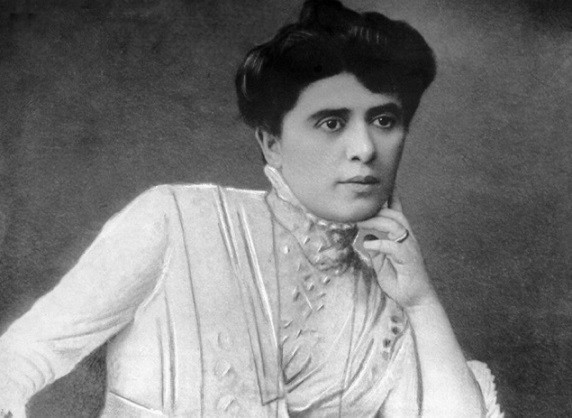
Parashqevi Qiriazi was a pioneering Albanian educator, intellectual, and activist for women’s rights. She played a key role in the Albanian National Awakening at the end of the 19th and the beginning of the 20th century.
Few women achieved what Parashqevi Qiriazi dedicated her life to and accomplished with determination. She was born on June 2, 1880, in Monastir. From an early age, she focused on education and the Albanian language. As a result, she became one of the key figures of Albanian enlightenment at the end of the 19th and the beginning of the 20th century.
Moreover, she followed the path of her sister Sevasti Qiriazi. She studied at “Robert College” for girls in Istanbul. There, she specialized in literature. In addition, she stood out for her academic performance and student activities. This period strongly shaped her future career in education.
Teaching Career in Korça
After her studies, she became a teacher. Soon after, she was appointed head of the Albanian Girls’ School in Korça. Consequently, she worked with strong dedication in this role. She promoted modern education for girls at a time of deep social inequality.
Furthermore, the Qiriazi sisters hold a respected place in Albanian cultural history. They founded a girls’ school during a very difficult period. At that time, society was marked by backwardness. In addition, women were often uneducated and socially marginalized.
Belief in Education and Women’s Role
Parashqevi Qiriazi strongly believed in education as the path to national awakening. In fact, she followed the ideas of Gjerasim Qiriazi. She argued that a nation cannot progress without educated women. In particular, she emphasized that mothers form the foundation of society.
Therefore, she devoted her life to educating Albanian girls. At the same time, she supported cultural progress through the association “Ylli i Mëngjesit.” Moreover, she contributed through her writings in the press. According to researcher Teuta Toska, she remained fully committed to education and social development throughout her life.
The Congress of Manastir and Alphabet Reform
In 1908, she represented the Girls’ School at the Congress of Manastir. There, she served as one of the secretaries among eleven delegates. In this role, they worked to standardize the Albanian alphabet. As a result, this became a major milestone in her public life.
Later, in 1909, she wrote an Albanian primer based on the new alphabet. In addition, she composed the “Hymn of the Albanian Alphabet.” Thus, she strengthened her influence in both education and national culture.
Women’s Movement and Public Work
Together with her sister, she became a leading voice for women’s rights. In 1912, they founded the women’s association “Ylli i Mëngjesit” in Korça. Consequently, the organization promoted education and awareness for women.
Meanwhile, she also contributed to the magazine “Shqiptarja,” published by “Gruaja Shqiptare” between 1928 and 1939. In contrast to conservative views, the publication strongly supported women’s rights and social change.
Studies in the United States
In 1913, she earned a master’s degree in education from Oberlin College in Ohio. Subsequently, she wrote a thesis that proposed a national education system for Albania. In this work, she focused on building a modern and structured system for the new state.
Exile, War, and Political Struggles
In 1914, she left Albania with her sister due to the Greek occupation of Korça. Initially, they moved to Romania. Later, she settled in the United States. There, she became active in the Albanian-American community.
Afterwards, she returned to Albania in 1921. However, during World War II, she opposed fascism. Following the Italian occupation in 1939, her political stance led to her arrest. Consequently, she and her sister were interned in the Anhalteleger Dedinje camp near Belgrade. Fortunately, she survived and returned to Tirana after the war.
Later Life and Legacy
Nevertheless, after the war, she faced further political persecution under the communist regime. This happened due to her family’s political associations. Despite this, her influence remained strong.
In conclusion, Parashqevi Qiriazi is remembered as a pioneer of education and women’s emancipation in Albania. Ultimately, her work shaped modern Albanian identity and inspired future generations.

 English
 Français
  Deutsch
 Italiano
 Turkish
 Greek
Greek Serbian
















 RTI
RTI