
 English
 Français
 Deutsch
 Italiano
 Turkish
 Greek
 Serbian
Exhibition in Shkodër: Leon Rey, the Frenchman who brought Apollonia to light




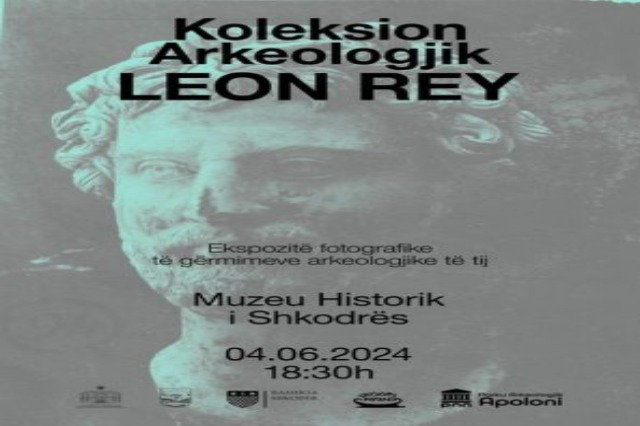
The archaeological photography exhibition “Archaeological Collection, Leon Rey” opened yesterday at the Historical Museum of Shkodër.
The exhibition showcases photographs from the Leon Rey collection documenting Apollonia from 1924 to 1938, offering a splendid opportunity to explore historical sources and promote Rey’s outstanding contributions to Albanian archaeology.
Selected images shed light on the archaeological research process, techniques, findings recordings, as well as the history and culture of Apollonia.
This exhibition is a collaboration between the Regional Directorate of Cultural Heritage in Shkodër and the Apollonia-Bylis Archaeological Park, supported by the Ministry of Economy, Culture, and Innovation and the Historical Museum of Shkodër, commemorating the 100th anniversary of the remarkable archaeologist’s research work, a source of inspiration for Albanian archaeology and history.
Leon Rey, the archaeologist who brought Apollonia to light, was born on August 27, 1877, in Formantier near Paris. He graduated in archaeology from the University of “Kortre,” one of France’s most renowned archaeological institutions.
In 1923, Leon Rey, together with the French senator Justin Gotard, visited our country, initially working as an archaeologist in Dyrrachium. However, after a few months, for reasons unknown, he left his work halfway to permanently move to Apollonia.
Once, the ancient city of Apollonia only attracted the attention of treasure-seeking enthusiasts, archaeologists, and local residents interested in the stones of ruins as building materials. The first digs by professional archaeologists were only made in 1916 by the Austrians Prashniker and Shober. Inspired by the successful discoveries of the Austrians during World War I, it would be the French who took over archaeological excavations in Apollonia.
For 14 consecutive years, the French Archaeological Mission was led by Leon Rey, the man for whom this city would become an “uninterrupted love” and the passion of his life.
For the first time in archaeology, he used the method of aerial photography of ancient ruins, utilizing French warplanes.

/k.s/
Të ngjashme


Latest News


Most read










 RTI