
 English
 Français
  Deutsch
 Italiano
 Turkish
 Greek
Greek Serbian
UK Warns Kosovo: Political Deadlock Risks International Support




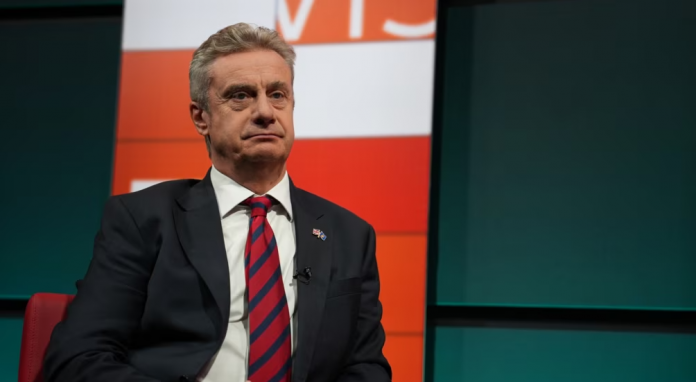
The United Kingdom warned that Kosovo could lose international credibility and support if political leaders fail to end the ongoing deadlock.
British Ambassador to Kosovo, Jonathan Hargreaves, stressed that Kosovo’s constitutional system promotes cooperation rather than political domination.
Speaking to Radio Free Europe/Radio Liberty after the June 7 snap parliamentary elections, Hargreaves congratulated citizens on their participation. He also praised the Central Election Commission for organizing the vote within a short period.
However, he warned that the political crisis is threatening Kosovo’s future.
“Kosovo should be proud of its democratic record since independence,” Hargreaves said. “Yet the low voter turnout shows that citizens are losing patience with politicians.”
The elections took place after the Assembly failed to elect a president, following a ruling by the Constitutional Court.
As a result, Kosovo held its third election in less than 18 months. The country previously organized regular elections in February 2025 and another snap election in December 2025.
According to preliminary results, Prime Minister Albin Kurti’s Vetëvendosje movement won around 42 percent of the vote. Meanwhile, the Democratic Party of Kosovo secured about 21 percent, while the Democratic League of Kosovo received roughly 17 percent.
Furthermore, Hargreaves said that 18 months of institutional crises have damaged Kosovo’s position on the international stage.
“These deadlocks weaken Kosovo’s credibility and slow its progress,” he said. “At the same time, they allow opponents to portray Kosovo as weak and unstable. Consequently, allies find it harder to defend and support the country.”
He emphasized that Kosovo urgently needs political stability and functioning institutions. Therefore, political parties must reach an agreement on forming the Assembly, establishing a government, and electing a president.
In addition, Hargreaves noted that the Assembly has operated fully for only about 10 weeks during the last 75 weeks.
“Therefore, leaders must quickly certify the election results, respect voters’ will, and agree on forming new institutions,” he said.
Moreover, he highlighted that Kosovo’s constitutional framework encourages cooperation and compromise. Nevertheless, its success depends on the willingness of political leaders to work together.
Following the election, Kurti left the door open for negotiations with other parties. However, he gave no clear indication that a deal is near.
At the same time, PDK leader Bedri Hamza said he remains open to cooperation with all parties. Meanwhile, LDK leader Lumir Abdixhiku called for the inclusion of President Vjosa Osmani in discussions about the presidency.
Earlier, the embassies of Quint countries, along with Germany and Italy, also urged political leaders to form institutions without delay.
The German Embassy stressed that Kosovo’s progress toward EU integration depends on political leaders putting aside their differences and working together. Similarly, the Italian Embassy encouraged all political actors to engage in constructive dialogue and cooperate for the benefit of the country.
Overall, international partners have delivered a clear message: Kosovo must end the political deadlock, strengthen its institutions, and restore stability to maintain international support and advance its European ambitions.
/a.c/
Të ngjashme

Latest News

Most read





 RTI
RTI