
 English
 Français
 Deutsch
 Italiano
 Turkish
 Greek
 Serbian
SportOutdoor24: Blue Eye amazes tourists from around the world




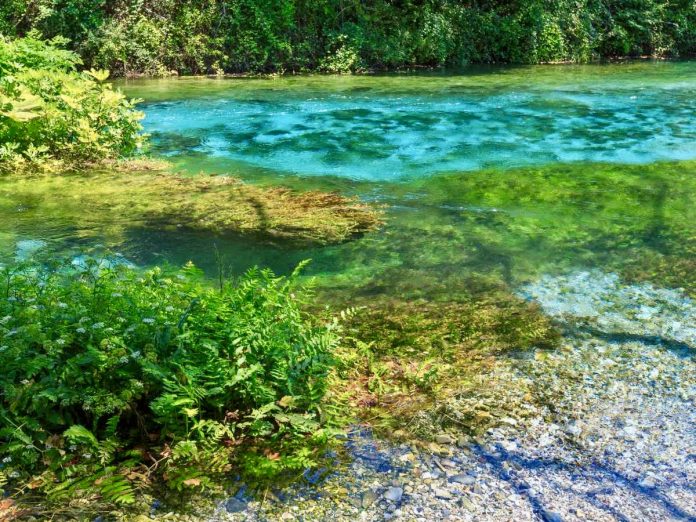
In southern Albania, a spectacular karst spring rises from deep beneath the rocks. Known as the Blue Eye, or “the Eye of a Dragon” according to local legend, the natural wonder lies just a short drive from Saranda.
Hidden in the forests between Saranda and Gjirokastër, the spring looks like a precious gemstone. Its deep blue center contrasts with a bright turquoise ring of crystal-clear water.
Italian media outlet SportOutdoor24 highlighted the Blue Eye as one of Albania’s most remarkable natural attractions.
However, the calm surface hides a powerful force beneath it. Thousands of liters of water rise from the depths every second. The spring maintains a temperature of around 10°C throughout the year.
The powerful current pushes water toward the surface with such force that divers cannot safely reach the bottom. In fact, the mountain itself seems to push back against anyone who tries to descend.
For centuries, local communities have created legends to explain the mysterious spring.
According to one Albanian legend, the spring represents the tears of a giant sea dragon. After the dragon fell in the heart of Albania, one of its eyes separated from its body and became embedded in the rock. Since then, the eye has continued to shed crystal-clear tears.
Today, the Blue Eye ranks among the most photographed natural attractions in the Balkans.
Authorities protect the area with signs that prohibit diving. These measures help preserve its fragile ecosystem. Nevertheless, the spring continues to attract visitors who want to experience its icy waters.
A crater of light in the forest
Visitors follow a trail through tall trees as the sound of running water gradually grows louder.
Then, the forest opens and reveals a remarkable sight. A circular pool stretches about 10 meters across, with an intense blue center that seems to pulse from below.
The color becomes darker in the middle and gradually fades toward the edges. Meanwhile, water spirals rise from the depths and create slow-moving whirlpools.
This movement does not come from an optical illusion. Instead, water rises under constant pressure and mixes layers with different temperatures.
The spring has a karst origin. Underground limestone formations filter the water before it reaches the surface.
During summer, temperatures in Saranda can exceed 35°C. Therefore, the Blue Eye offers visitors a cool escape from the intense Mediterranean heat.
Dense vegetation surrounds the spring. Oriental plane trees and oaks dominate the landscape, while ferns and other moisture-loving plants grow close to the water.
The air also feels noticeably cooler than along the coast.
The mystery beneath the surface
No one knows the Blue Eye’s exact depth. Several diving expeditions have tried to reach the bottom. However, strong currents have prevented them from succeeding.
As divers descend, the water becomes increasingly dark. At a certain depth, the conditions become too difficult and unsafe for further exploration.
Some estimates place the depth at more than 50 meters. However, experts have not confirmed an exact figure.
This mystery adds another layer to the spring’s natural appeal.
The water’s intense color also contributes to its legendary reputation. Scientists do not attribute the deep blue to unusual minerals. Instead, the depth and exceptional clarity of the water create the effect.
Clear, deep water absorbs more of the warmer wavelengths of light. As a result, it reflects more blue light.
Authorities have designated the spring a protected natural monument. They also regulate access around its edge.
Visitors cannot swim in the central pool. However, several points along the Bistricë River, which flows from the spring, allow people to swim in its cold waters.
A journey through southern Albania
Southern Albania remains less crowded than many other Mediterranean destinations. Consequently, travelers can enjoy a more relaxed experience.
Saranda provides a convenient starting point. Ferries connect the city with Corfu, while relatively affordable prices and a lively coastline attract visitors throughout the summer.
From Saranda, travelers can reach the Blue Eye in less than an hour. A two- or three-day itinerary can easily combine the coast with Albania’s inland attractions.
For example, visitors can explore the beaches of Ksamil and its small offshore islands before heading to the spring.
Gjirokastër lies around 40 kilometers away and deserves at least an afternoon visit. Stone houses climb the hillside, while the Ottoman bazaar preserves the atmosphere of another era.
Meanwhile, the city’s castle overlooks the valley and adds to the historic character of the destination.
Between Saranda and Gjirokastër, the Blue Eye offers a natural stop where the landscape shifts from the sea to a completely different environment.
Travelers with more time can continue to Butrint National Park, around 20 kilometers from Saranda.
There, Greek and Roman ruins sit beside a lagoon. History and nature come together in a remarkably peaceful landscape.
Late spring and early autumn offer some of the best conditions for visiting the Blue Eye. Temperatures remain milder, tourist crowds decrease, and morning light makes the water appear even more vivid.
Even during the height of summer, visitors can find a quieter atmosphere at dawn.
Ultimately, the Blue Eye leaves visitors with one unforgettable image: an extraordinary shade of blue that seems to pulse from the depths, as if the earth itself were breathing.
/a.c/
Të ngjashme









Most read










 RTI