
 English
 Français
  Deutsch
 Italiano
 Turkish
 Greek
Greek Serbian
Tedi Papavrami at TIFF: Violin Bow meets Japanese Brush in “The Bow and the Brush”




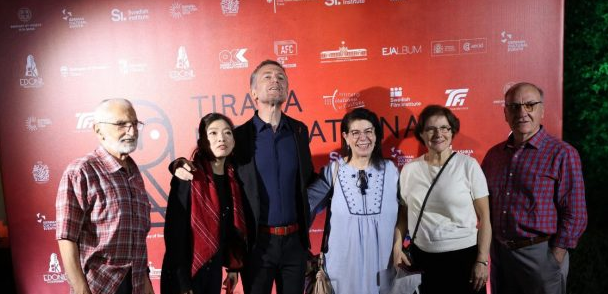
Swiss documentary “The Bow and the Brush” (“L’Archet et le Pinceau”) had its world premiere at the Tirana International Film Festival on Tuesday evening.
The film was directed by Franco-Swiss filmmaker Raphaëlle Régnier. It is part of the 24th edition of TIFF. The documentary brings Western classical music and traditional Japanese art together. Albanian violinist Tedi Papavrami and Japanese calligraphy master Kanshô Miyashita are at its centre.
Papavrami attended the premiere at Millennium Cinema with his wife, Japanese pianist Maki Okada.
After the screening, he spoke with the audience about his connection with Japan. He said cinema first sparked his interest in Japanese culture. In particular, he recalled the films of renowned director Akira Kurosawa. He described “Dreams” as a film that awakened his early curiosity about Japan. Over time, that curiosity grew into a deeper interest in Japanese culture. He also explored its discipline and way of thinking.
“It seemed as if the effort did not cost them anything,” Papavrami said, describing his impression of Japanese culture.
He also spoke about his meeting with calligrapher Kanshô Miyashita. Papavrami said he immediately noticed similarities between their artistic disciplines.
“I felt that we had many things in common: concerns, high standards, a kind of stubbornness to achieve something, dissatisfaction with ourselves, as well as techniques in movement,” he said.
This connection lies at the heart of the documentary. One of its most distinctive scenes features both artists working together. Miyashita creates Japanese calligraphy while Papavrami performs Johann Sebastian Bach’s “Chaconne”. As Papavrami moves his bow, Miyashita moves his brush. Their movements create a shared artistic dialogue.
The documentary also explores Japanese culture through poetry. It features three important works from Japan’s literary tradition. They include passages from “The Tale of the Heike”. The film also features Shimazaki Tōson’s “Hatsukoi” (“First Love”) and “Iroha uta”.
“The Tale of the Heike” opens with the sound of the bells of Gion Shōja. It introduces the Buddhist idea of impermanence. The bells, the flowers of the sāla tree and a spring night’s dream all evoke the temporary nature of life. Dust before the wind carries the same meaning. This idea also connects with the Japanese concept of “mono no aware”. The concept reflects an awareness of impermanence. It is an important element of Japanese aesthetics.
Tōson’s “First Love” was published in 1897. It appeared in his first poetry collection, “Wakana-shū”. The poem recalls first love through several vivid images. These include a girl with newly tied hair, an apple tree and a pink apple. The poem also describes a path beneath the tree. The apple carries additional symbolic meaning. It reflects cultural influences that emerged during the Meiji period. The third text, “Iroha uta”, also has a distinctive place in Japanese culture. The poem uses the 47 basic hiragana characters once each. It is often described as a poetic Japanese pangram.
For centuries, “Iroha uta” was also used to order the Japanese syllabary. Its origins date back to the Heian period. However, its authorship remains uncertain. Together, Bach’s music, Japanese calligraphy and poetry create bridges between the two cultures. The documentary explores several themes through this artistic dialogue. They include impermanence, love, beauty, discipline and the pursuit of perfection. The title “The Bow and the Brush” refers directly to this relationship. It evokes the movement of the violin bow and the calligrapher’s brush.
The documentary follows both artists closely. It shows their finished work as well as their preparation and concentration. It also focuses on their creative process. In this way, the film explores the discipline behind artistic creation. “The Bow and the Brush” is part of TIFF’s “Special Screenings” programme.
The 24th edition of the festival features 229 films from 71 countries in Tirana.
Të ngjashme

Latest News






Most read









 RTI
RTI