
 English
 Français
 Deutsch
 Italiano
 Turkish
 Greek
 Serbian
Rama Offers Dialogue to Student Protester, Says Violence Is the Enemy of Freedom




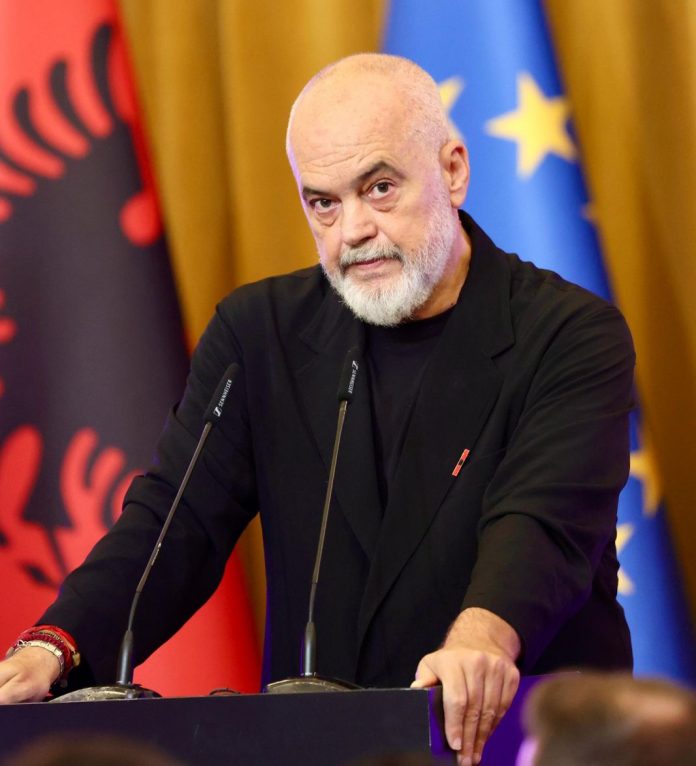
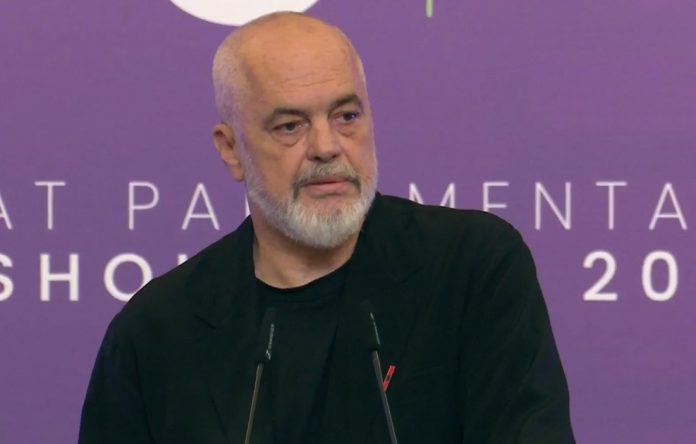
Prime Minister Edi Rama is traveling to Budva, Montenegro, to attend the Berlin Process Leaders’ Summit on October 21–22. The summit will bring together Western Balkan leaders and European partners to strengthen regional cooperation, advance economic integration and support the region’s European prospects.
During the journey, Rama held a virtual exchange with a student protester. He said he was ready to meet young people face-to-face and discuss their concerns. However, he stressed that violence undermines everyone’s freedom.
Rama’s video message
Q: Prime Minister, who do you want to engage in dialogue with?
I want to speak with anyone who believes I am a bad person. But violence remains an enemy of everyone’s freedom.
Q: Do you want to speak with the young people whom police hit with rubber bullets and tear gas, or with students you have kept waiting for promises since 2018?
Police officers faced stones, fire, metal objects, screws and even primitive slingshots. They responded with tear gas and water cannons. In some cases, they also used batons and rubber bullets, tools used by police forces in democracies worldwide.
The number of injured police officers was more than twice that of injured protesters. This differs from similar incidents in other countries, including those taking place in recent days. Therefore, claims that police targeted students with violence are malicious.
I am ready to review the commitments made in 2018, but we must do so face-to-face and based on facts, not rhetoric.
Q: Have you only now remembered to talk to the “flamingos”?
No. I reflected at length after following, listening to and analysing them. I called the protesters in June “flamingos.” One outcome of that reflection was the creation of flamingomirror.al, or the “Flamingo Mirror” website.
Q: Have you only now remembered dialogue?
Read the date on this short statement:
“I have nothing but sympathy for young people who genuinely believe they are making a revolution. I am always ready to talk if they want to, but I fully understand if they choose not to.” (June 12, 2026)
I have made several such statements. For four months, I listened to these protesters more than anyone else. I was upstairs in my office, while they stood below my window. Some began their mornings shouting that I should go to prison or be hanged. They ended their days with chants calling for my imprisonment, the fall of communism, insults, threats and oaths.
Q: Why do you still refuse to set arrogance aside? Are you trying to insult our intelligence and suggest that we cannot argue?
Arrogance means claiming that the people who elected me do not represent the public, while a group gathered below my window does. It means threatening to take Tirana hostage unless I leave office, despite my mandate from the majority of Albanians.
I have heard insults, not arguments. I have also heard threats against anyone who disagrees, both online and offline. Endless manipulation has further fuelled these attacks, often with the help of people who do not want Albania to progress.
Q: Let me give you three arguments: Belinda Balluku, Arben Ahmetaj and Erion Veliaj.
Are you prosecutors, judges or students? If you are students, be careful of professors who teach you to make collective accusations by listing names. Albania has suffered greatly from this professor’s “deadly” idols, and he is teaching you the wrong lessons.
Q: Would you like another 420,000 arguments, the number of Albanians who have left the country since 2011?
Yes, I would gladly hear all 420,000 arguments. But I want to hear them face-to-face, with patience and a willingness to listen, not simply with a rush to speak and spread propaganda.
Q: Do you want to know why we do not trust your dialogue? Because you showed us your word was worthless in 2018, when you promised students 5% and still have not paid the bill.
That is your interpretation. Read the University Pact, the document that formalised the student protests’ outcome. Do not confuse the many demands raised at the time with the government’s clear, written commitments.
Q: You protected Belinda Balluku when SPAK sought her arrest.
I do not shield anyone from justice, despite claims from people who do not understand the issue. On the contrary, in that case, we defended justice against bias.
Time proved us right, I believe. Parliament rejected another arrest without trial in a country that has become Europe’s embarrassment, with 63% of its prisoners held in pretrial detention. Yet our decision did not stop SPAK from deepening its investigation or expanding the charges.
Q: That is why we do not trust you.
In fact, you should trust me.
Q: We do not hate the police.
I believe you. You throw stones and Molotov cocktails in the name of what you consider a higher, principled and almost idealistic cause. But this is the hatred associated with Antifa, black bloc groups and others who have spread across Europe like a pack that does not know where it is heading but knows it wants to destroy.
The harshest violence and most inhumane consequences for societies have often come from this kind of hatred.
Q: How can we trust you when your former interior minister, Saimir Tahiri, was convicted and the court ruled that he helped a criminal gang infiltrate the police?
It saddens me to hear a young person repeatedly bring up someone who was convicted years ago and has since served his sentence and moved on with his life. I do not understand it. As I said, be careful of the professor who teaches you to approach these issues backwards.
Q: How can we trust you when police officers so readily pull the trigger against protesters, young people and minors?
My friend, when officers used to pull the trigger, as you imitate now without hesitation, people were killed and injured on this very boulevard. Yet nobody tore up a single paving stone, threw Molotov cocktails at police or destroyed ordinary people’s businesses.
Minors could not even approach those protests. Back then, protesters did not use children or pay hooded youths to attack and burn police officers. Nor did they hold an entire population hostage by reviving the ghosts of a past that will never return.
Q: That is our experience.
That is the experience shaped by your Instagram and TikTok feeds and amplified by compromised media outlets. They portray police as aggressors and students as victims.
However, doctors and nurses in Tirana’s hospitals report a different picture. They say the number of injured police officers is two and a half times higher than the combined number of injured protesters and bystanders. Genuine students account for an even smaller share of those injured.
Q: This distrust stems from your decision to appoint the wrong people to office, Prime Minister.
You have every right to distrust me. My appointments, however, are my responsibility. Over 13 years, I have appointed dozens of ministers, perhaps 60 or more. Some choices were certainly mistakes, and I cannot deny that.
Q: You bear constitutional responsibility for the ministers you appoint.
And?
Q: Criminal responsibility is individual. Agreed. But political responsibility cannot hide behind that principle.
Absolutely. My political responsibility is to ensure that neither I nor my government acts as a lawyer for anyone in our ranks who faces accusations from the justice system.
Show me a prime minister or president in a democratic country who bears a different form of personal responsibility from the one I have described. Then we can return to this argument.
Q: When will you take responsibility?
I will answer that when you come to dialogue. Do not be afraid to talk. Distance yourself from stones and fire. Leave the path of violence, my friend.
/a.c/
Të ngjashme
Latest News

Most read










 RTI