
 English
 Français
 Deutsch
 Italiano
 Turkish
 Greek
 Serbian
Kolkondas: Where History, Art and Faith Come Together




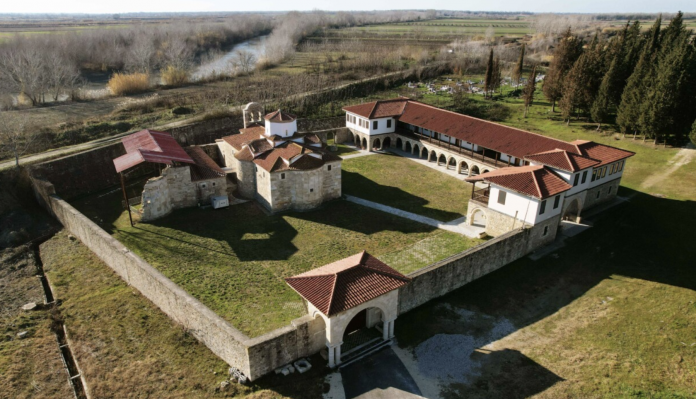
The village is historically known as the place where Saint Cosmas of Aetolia, a prominent monk and preacher, was executed and buried on August 24, 1779.
Kolkondas is home to the Monastery of Saint Cosmas, built in the early 19th century with financial support from Ali Pasha of Tepelena. The complex includes the Church of Saint Cosmas and the older Church of Saint Mary, which is renowned for its murals and frescoes. Authorities declared the site a First Category Cultural Monument in 1963.
Tourism, Culture and Sports Minister Blendi Gonxhja recently highlighted the mural paintings inside both churches. Built between 1814 and 1815, the monastery reflects the rich historical, artistic and spiritual heritage of the Myzeqe region.
Gonxhja stressed the site’s importance as a cultural destination. He noted that it enriches Albania’s cultural heritage and strengthens the country’s cultural tourism offer.
The complex combines the region’s post-Byzantine ecclesiastical architecture with the distinctive painting tradition of the Çetiri School.
However, the monastery suffered serious damage during the communist period. Authorities closed it after 1967, while floods from the Seman River severely damaged the older church. Following the fall of communism in the 1990s, restoration works brought the complex back to its former condition.
Stone walls surround the monastery, which centres on a spacious courtyard. Four main structures make up the complex: the Church of Saint Cosmas (Katholikon), the Church of Saint Mary (built in 1782), a small chapel and a cenotaph.
The chapel stands between the two churches and houses the symbolic tomb of Saint Cosmas. The monastery’s residential quarters, known as the Konak, also form part of the complex.
The mural paintings reflect the work of the renowned Çetiri family of icon painters from Grabova. The brothers Gjergj and Nikolla Çetiri, in particular, decorated many churches across Myzeqe in the late 18th and early 19th centuries.
Të ngjashme
Latest News
Kolkondas: Where History, Art and Faith Come Together
The UK iPaper highlights Tirana’s growing cocktail scene
Cosmopolitan UK features Albania in five-day summer trip for women

Most read










 RTI