
 English
 Français
 Deutsch
 Italiano
 Turkish
 Greek
 Serbian
OHCHR: Confronting the past is key to a sustainable future and human rights protection




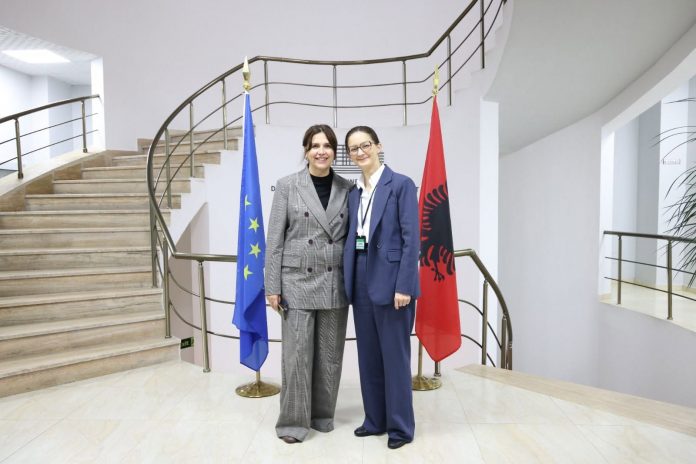
Representatives of the UN Office of the High Commissioner for Human Rights (OHCHR) have visited Albania’s Authority for Information on Former State Security Documents (AIDSSH). The visit focused on confronting the past, preserving historical memory and promoting human rights.
Elodie Cantier-Aristide, head of OHCHR’s Regional Office for Europe, praised the Authority’s work to document the past and raise public awareness. She also expressed readiness to explore opportunities for cooperation and support for its initiatives.
During a meeting with AIDSSH Chairperson Gentiana Sula and institutional representatives, Cantier-Aristide stressed the importance of involving society in preserving historical memory and addressing the legacy of repressive regimes.
“Your work forms part of the most fundamental efforts to protect and promote human rights,” she said. She also praised the Authority for taking its work beyond institutional procedures and reaching different segments of society.
Cantier-Aristide added that societies must address the historical causes and consequences of conflicts and repressive regimes. Broad public engagement, she stressed, is also essential to building a sustainable future.
Meanwhile, Sula highlighted the role of technology and artificial intelligence in studying archival documents. However, she warned that their use must not reproduce labels or stigmatise people persecuted under the communist regime.
She also called for greater professional exchanges and a regional memory network across the Balkans. The network would connect archives, research centres, historians and other professionals.
“Truth must meet academic standards and undergo verification through facts and sources,” Sula stressed.
During the visit, which took place as part of OHCHR’s mission to Albania from November 16 to 19, representatives examined the former State Security archives, persecution records, access procedures and services available to citizens.
Presentations also covered document management and declassification, efforts to trace people who disappeared during the communist regime, and AIDSSH’s research and educational initiatives. These include the “Learning from the Past” platform.
OHCHR and AIDSSH are expected to continue discussions on concrete cooperation opportunities. These could include professional exchanges, international events and support for research initiatives.
Të ngjashme
Latest News



Most read










 RTI