
 English
 Français
 Deutsch
 Italiano
 Turkish
 Greek
 Serbian
Tirana celebrates Liberation Day, marking the end of 19 days of fierce fighting




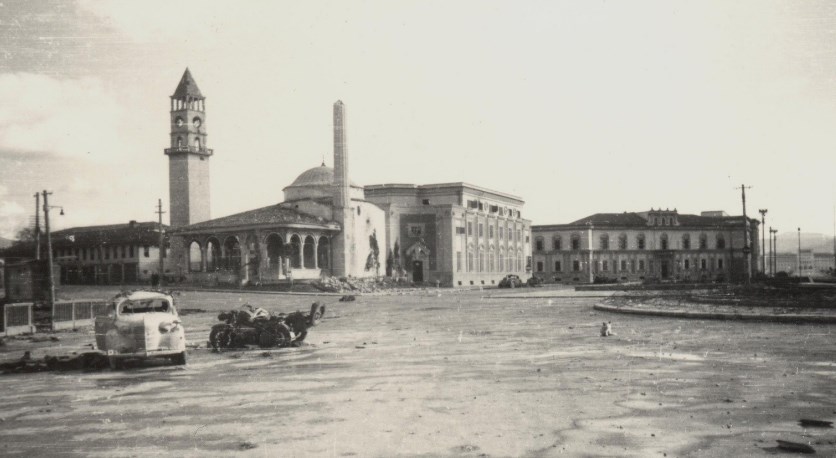
Tirana was liberated on November 17, 1944, after 19 days and nights of intense fighting between Albanian partisan forces and German troops. The battle marked a major turning point in Albania’s National Liberation War.
On the morning of November 16, partisan units launched their final offensive to capture the capital. The 1st Brigade took control of key positions, including the Officers’ House, the Clock Tower and the Theatre. Meanwhile, the 8th Brigade advanced along Kavaja Street and joined forces with the 1st Brigade. As a result, the partisans tightened their encirclement of German troops in the city centre.
German forces continued to resist in government buildings, banks, the City Hall and the former London Hotel, near the site of today’s National Historical Museum. However, the fighting left them with no clear escape route. During the night of November 16–17, German troops broke through the encirclement under cover of darkness. They regrouped at the former Aviation Field and withdrew towards Vora and Shkodra. Partisan forces attacked the retreating troops along the Tirana–Vora–Laç route.
The liberation of Tirana had major political and military significance. It marked a decisive victory for the National Liberation Army and disrupted German withdrawal plans. It also formed part of the wider offensive to liberate the entire country.
The operation involved extensive military coordination. Partisan commanders used radio communications, messengers and direct meetings to coordinate their units. They gradually concentrated their forces and deployed 11 brigades during the final phase. Local residents, including elderly people and children, also supported the liberation effort in various ways.
The battle came at a heavy cost. According to the figures cited in the historical account, partisan forces lost 127 fighters and suffered 290 wounded. German losses reportedly included 3,000 killed, many wounded and 300 captured. The account also lists the loss of 25 artillery pieces, four tanks, 100 machine guns and 200 vehicles.
The German forces failed to carry out their plan to destroy Tirana. The city’s liberation therefore marked a major milestone in the final phase of Albania’s National Liberation War.
*Editorial note: The supplied material also contains serious allegations of wartime killings of wounded German soldiers and prisoners by partisan forces. I have not presented these claims as established facts because they require careful verification against the original historical sources. They should be included in a separate, balanced section if the article aims to cover this disputed aspect of the battle.*
Liberation Day, marking the end of 19 days of fierce fighting
TIRANA, November 17 /ATA/ – Tirana was liberated on November 17, 1944, after 19 days and nights of intense fighting between Albanian partisan forces and German troops. The battle marked a major turning point in Albania’s National Liberation War.
On the morning of November 16, partisan units launched their final offensive to capture the capital. The 1st Brigade took control of key positions, including the Officers’ House, the Clock Tower and the Theatre. Meanwhile, the 8th Brigade advanced along Kavaja Street and joined forces with the 1st Brigade. As a result, the partisans tightened their encirclement of German troops in the city centre.
German forces continued to resist in government buildings, banks, the City Hall and the former London Hotel, near the site of today’s National Historical Museum. However, the fighting left them with no clear escape route. During the night of November 16–17, German troops broke through the encirclement under cover of darkness. They regrouped at the former Aviation Field and withdrew towards Vora and Shkodra. Partisan forces attacked the retreating troops along the Tirana–Vora–Laç route.
The liberation of Tirana had major political and military significance. It marked a decisive victory for the National Liberation Army and disrupted German withdrawal plans. It also formed part of the wider offensive to liberate the entire country.
The operation involved extensive military coordination. Partisan commanders used radio communications, messengers and direct meetings to coordinate their units. They gradually concentrated their forces and deployed 11 brigades during the final phase. Local residents, including elderly people and children, also supported the liberation effort in various ways.
The battle came at a heavy cost. According to the figures cited in the historical account, partisan forces lost 127 fighters and suffered 290 wounded. German losses reportedly included 3,000 killed, many wounded and 300 captured. The account also lists the loss of 25 artillery pieces, four tanks, 100 machine guns and 200 vehicles.
The German forces failed to carry out their plan to destroy Tirana. The city’s liberation therefore marked a major milestone in the final phase of Albania’s National Liberation War.
/a.c/
Të ngjashme
Latest News


Most read










 RTI