
 English
 Français
 Deutsch
 Italiano
 Turkish
 Greek
 Serbian
Hans Peter Jost, the Swiss photographer who captured communist Albania




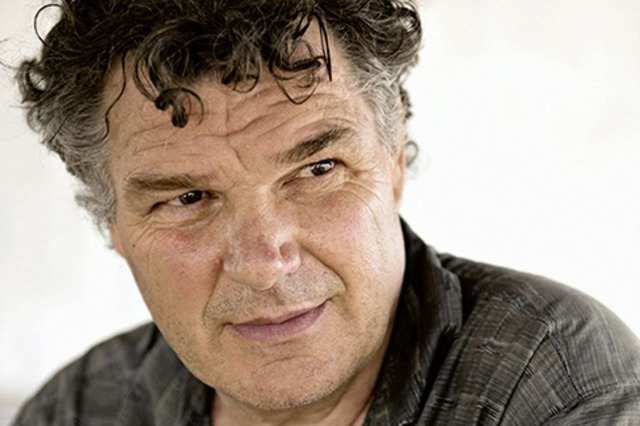
Hans Peter Jost is a Swiss photographer who, as a teenager, was intrigued by Radio Tirana and tempted to visit Albania. With his camera, he documented Albania as it emerged from the communist regime.
During an appearance on the show “Në radio” hosted by journalist Andri Xhahu, Jost recounts how he first tuned in to Radio Tirana in the 1970s.
“I was no more than 15 or 16 years old. Politically, I was a leftist and held idealistic beliefs, much like many other young people. I felt dissatisfied with the world around me. Then, one day, I stumbled upon Radio Tirana broadcasting in German on a shortwave radio, albeit with some interference. The message on the radio proclaimed that everyone was equal, received the same financial rewards, had access to effective healthcare, and received an education. It appeared to be a society without inequality. I believed this propaganda. However, when I attempted to visit this so-called ‘paradise’ and found it impossible, that’s when doubts started creeping in. I began to wonder how it was possible that I was not allowed to witness this paradise for myself.”
For Jost, this was his initial disappointment. He learned that individuals with long hair, beards, and printed T-shirts were not permitted to visit Albania. Consequently, he decided to abandon the idea.
Nevertheless, the photographer decided to give it another try, this time after the fall of the communist regime. With the assistance of a translator friend who provided him with the address and phone number of Justina Aliajt, I managed to visit in September 1991. My friend advised me to bring a bag filled with essential items such as food, rice, sugar, coffee, and soap because there was a shortage of everything in Albania.
During the interview, Jost recounts his first encounter with Albania.
“I was on a flight from Zurich to Tirana. As we were approaching the airport, the captain informed us that we needed to make another round over the runway because there were some cows on it.”
The early ’90s Albania became the subject of his camera, capturing the reality of that time on celluloid. When asked about the photograph that stands out the most, Jost introduces us to the story behind it.

“It’s a picture of seven children. They were five years old, yet they had the faces of adults.”
“However, the photographer’s curiosity was not satisfied, yet. He began to question where these children were and what had become of them, initiating a search.
“I knew I had taken that photo in Kelmend while I was on board a helicopter as part of a Swiss mission. I went in search of the missionary involved in that mission, and he had a book in which he had documented all the events that had occurred over the years. He showed me the places we had visited back in 1993.”
He later realized that the photo was taken not in Kelmend but in Dibër in 1992, making his research even more challenging.
“I found a teacher who informed me that she knew someone who had sought political asylum in Lille. Together with my friend Fatos Lubonja, I traveled to Lille. This person, named Afrim, informed me that he wasn’t one of the children in the photograph. However, he did point me in the direction of someone in Skavica who could assist me. I located this person, and he was able to identify the children in the photo and provided me with their whereabouts. Furthermore, an unexpected turn occurred when I was in Skavica. I received a message from an individual in London whom I didn’t know. He claimed to be the second person from the left in that picture. I traveled to London and met Edon Menaj. In the end, I managed to find all seven of them. Some now reside in Bathore, others in London, and Edon has returned to Germany.”
The story behind this photograph and the search for the seven children have inspired the photographer to create the film ‘Ku jeni ju,’ which is now being presented to the Albanian public.
/m.ll/

Të ngjashme
Latest News
Most read










 RTI