
 English
 Français
 Deutsch
 Italiano
 Turkish
 Greek
 Serbian
A new investment program introduced for the cultural and commercial revitalization of the Zdrale neighborhood in Shkodër




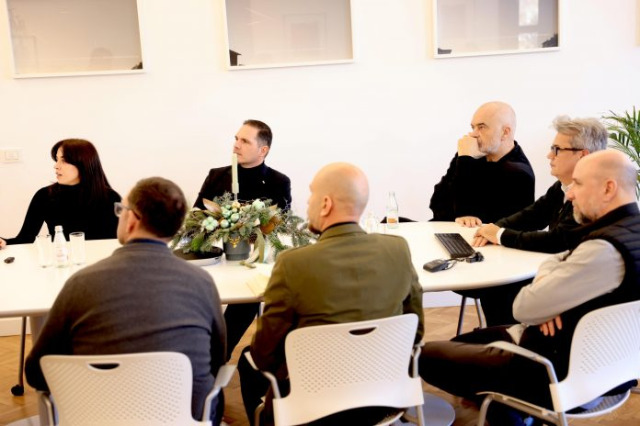
The urban transformation of Shkodra is currently underway and will primarily focus on the city’s main neighborhoods, particularly those with significant historical and architectural value. These areas have unfortunately suffered from unsystematic constructions and a lack of essential infrastructure, leading to their degradation.
The historical area of Zdrale stands out as one of the most renowned districts in Shkodra, characterized by its vibrant commercial activity. Recently, there has been increased attention towards the necessity of its transformation, emphasizing urban revitalization and the resurgence of the area’s cherished traditions accumulated over the years.
Prime Minister Edi Rama attended the presentation held in the municipality of Shkodra, which highlighted the current offerings of the Zdrale neighborhood and presented the development perspective for a project aiming not only to enhance its aesthetics but also to greatly facilitate various commercial and cultural activities within the area.
“The Zdrale area holds significant importance as it’s a sizable and central district within the city. Despite being just a 5-minute drive from the city center, it has experienced degradation in comparison to the rest of the historical area. We have highlighted the necessity for its urban revitalization and development, particularly focusing on restoring the characteristics of the bazaar and beyond. This area has a rich historical background, having evolved over 300 years as a neighborhood, boasting intriguing elements of cultural heritage. However, today, it has experienced degradation due to urban development and inadequate infrastructure,” explained the project presenter while elaborating on the composition and significance of this area.
It stands as the most significant area for commercial activities in the city, hosting over 400 diverse service units, exuding a lively energy and a vibrant daily spirit. Around 75% of the area accommodates pedestrian and bicycle traffic, featuring more than 60 merchants offering products from the entire northern region, along with 30 street vendors. However, there are two large industrial structures that currently remain underutilized, resembling bunkers, and afternoons witness a closure of services, presenting a more utilitarian and transient atmosphere.
Adjacent to this area lies the stadium, which presently remains inactive within the city. Additionally, the vicinity includes the Historical Museum of Shkodra, the 200-year-old Çinari, designated as a natural monument, 12 cultural monuments, and a total of 2200 pupils and students. Among them, 650 specialize in hotel-tourism, cuisine, and textiles.
This area possesses immense potential for comprehensive restoration, aiming not only to reinstate its bazaar-like character but also to integrate gastronomy, elevating it to a level that encapsulates Shkodra’s identity and heritage. Educational elements find their place within these diverse aspects. By integrating functions complementary to these diverse characteristics, Zdralja is envisioned to become a place where the essence of shopping and the authentic flavors of the north converge with the essence of heritage. The entire neighborhood is envisioned as an incubator, given the daily presence and engagement of students who are an integral part of it.
Prime Minister Rama underscored that through the revitalization of the area, the current suboptimal commercial activity will gain renewed energy and vitality.
“The transformation of the space will convey a different message and energy to private entities, making it worthwhile. Presently, there is a lack of quality bars and shops in this area, and this signifies the chain effect that urban revitalization can bring,” mentioned Prime Minister Rama. He further suggested the incorporation of new design concepts to accentuate the genuine historical values of the area.
“It could transform into a museum that encapsulates a particular moment in history. By connecting it to prominent historical figures, envisioning towers named after individuals like Lekë Dukagjini and Migjeni, it could serve as an innovative concept. Alongside these towers, there could be ongoing activities. Furthermore, the bars, restaurants, or inns within the vicinity could incorporate elements from these figures and showcase their attire. A new concept could emerge, utilizing the first floors akin to a museum where external sections are visible through designated spaces resembling windows, allowing glimpses into these showcases. Visitors can peek inside and explore further. It has the potential to be a distinctive attraction—a blend of cultural and commercial facets. The aim is not solely commercial or cultural but a fusion of both. Additionally, rooms could be utilized to display designs, furnishings, photographs, and relevant books about the area’s historical figures,” suggested the Prime Minister.
/m.ll/
Të ngjashme
Latest News
Kolkondas: Where History, Art and Faith Come Together
The UK iPaper highlights Tirana’s growing cocktail scene
Cosmopolitan UK features Albania in five-day summer trip for women
Most read










 RTI