
 English
 Français
  Deutsch
 Italiano
 Turkish
 Greek
Greek Serbian
Ahmeti: We need Kosovo-Serbia reconciliation for a calm and peaceful Balkans




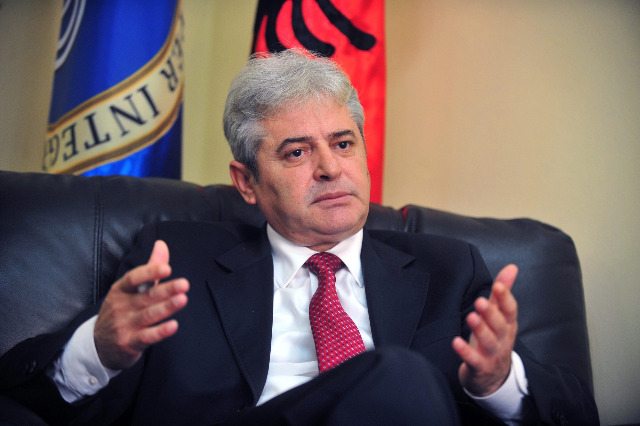
The Chairman of the Democratic Union for Integration in North Macedonia, Ali Ahmeti, has stated that without reconciliation between Kosovo and Serbia, there will be no calm and peaceful Balkans.
The Chairman of the Democratic Union for Integration in North Macedonia, Ali Ahmeti, has stated that without reconciliation between Kosovo and Serbia, there will be no calm and peaceful Balkans.
“All our strategic partners are interested in the Balkans being calm and experiencing lasting peace. They have also supported us in the effort to guide the Balkans into a permanent and historical trajectory of establishing peace and securing the future,” underlined Ahmeti.
He also emphasized that the only force that could potentially disrupt the tranquility in the Balkans is the Kremlin. Ahmeti cited that North Macedonia, as a member of NATO, wants to become part of the EU and desires a stable Balkans.
“To achieve a stable Balkans, we need reconciliation. Do you know how the process of reconciliation between France, Germany, and Italy began? The initiative was taken by the coal and steel corporations; this is where it started. However, the essence was not to unite the corporations, but the essence was reconciliation. Without reconciliation, any subsequent agreement is unsustainable and destined for failure. Albanians and Serbs must come to an agreement or decide whether they will resort to conflict,” added Ahmeti.
He expressed that during this period, Albanians should act wisely and place trust in the international community.
“We must be astute enough to allow space for the elders. In our case, the elders are Washington, Brussels, and NATO, as the US and NATO, without a Security Council decision, aligned with us and bombed Serbia. In my 23 years, I have never been disappointed by the promises made by Washington, Brussels, and NATO, and I trust them. Is there a disparity in the nuances of trust between Brussels and Washington? Certainly, because Brussels involves decisions from 27 countries, while Washington makes decisions independently in Washington,” stressed Ahmeti.
/m.ll/
Të ngjashme


Latest News





Most read







 RTI
RTI