
 English
 Français
 Deutsch
 Italiano
 Turkish
 Greek
 Serbian
Albanian caves luring foreign tourists




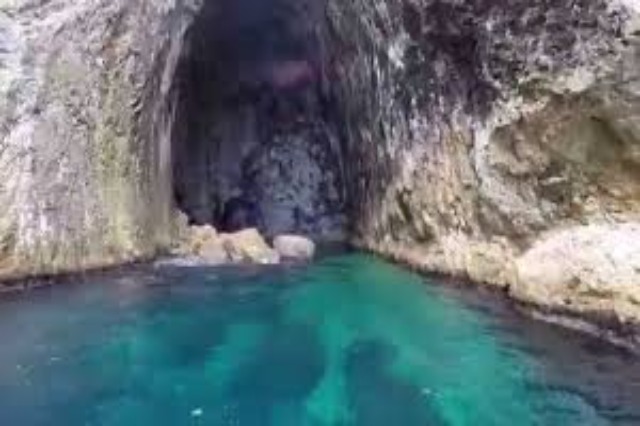
Caves all around the world lure millions of tourists and fans of great outdoor activities, nature and history. Even in Albania cave tours are turning into a great option for adventure-seekers. Albania is home to numerous caves both underground and underwater, that can serve for tourism purposes. More than 30 large caves are found only in Shkodra region. Other caves are found in Tirana,Vlora, Prespa, etc.
Some other caves found in Albania are Leke Peta’s cave in Kurvelesh, Neziri Cave in Mat, Kreshmoi Cave in Konispol, Doshi Cave in Miredita, the Black cave in Nikaj Mertur and many others. Most of these locations can be visited by tourists, but there is much to be done in terms of infrastructure and touring guides. Many caves are not completely explored while others need roads and specialized guides.
However, there are many tour operators that organize visits to caves all over Albania and try to promote them among Albanian and international Tourists.
The Cave of Pëllumbas is a karstic cave in central Albania, located in the Skorana Gorge close to the village of Pëllumbas in Tirana County. It is also known as the Black Cave. It is an archaeological site situated 25km away from Tirana, on the left side of Erzeni River canyon. It lies about 500 m above the Adriatic, on the slopes of Dajti, a mountain chain that rises to an elevation of 1,613 m .The cave is one of the six karstic caves that exist in Europe.
The cave has a length of 360 m with a width which can vary between 10–15 m and a vertical range of 45 m. Despite its small size it is regarded as one of the country’s most beautiful caves and attracts numerous visitors. The cave is located within the boundaries of Dajti National Park and has been recognized as a natural monument of national and international importance by the Ministry of Environment. The importance lies in the fact that remains of ancient human traces which belong to the Paleolithic area. The cave was inhabited by the extinct cave bear, which lived between 10,000 and 400,000 years ago.
The Cave of Haxhi Ali is a karstic cave formed in limestone cliffs in southwestern Albania, located in the Karaburun Peninsula near the Cape of Gjuhëz in Vlorë County. The cave was named after Haxhi Aliu, a prominent Albanian warrior and sailor from Ulcinj who fled with his son in this cave. Several archaeological objects has been found, that prove that this cave was used by traders and passers during the ancient times. The cave has a length of 30 m (98 ft) with a width which can vary between of 10–12 m (33–39 ft) and a height of 18 m.
Despite its strategic location on the Karaburun Peninsula within the Albanian Riviera it is regarded as one of the country’s most beautiful caves and attracts numerous visitors. Notably it has been recognized as a natural monument of national importance by the Ministry of Environment and is part of the Karaburun-Sazan Marine Park.
The Cave of Treni is a cave in southeastern Albania, located on the shore of the Lake Prespa close to the villages of Treni and Devoll in Korçë County. The cave has a length of 20 m with a width which can vary between of 10–12 m. It is a two storey-cave. It dates back from the early Neolithic to the Iron Age. There is a very large bat colony there. There are scientific geological, geo-morphological, biological, didactic, aesthetic, tourist values.
The Gajtan cave is a natural monument in Gajtan, Shkodër, Albania. Its entrance is vertical. Next to this cave, there is a fortified Illyrian dwelling of Iron Age, but in the cave there are remains of ancient people.
Pirrogoshi Cave is the largest cave in Albania. Pirrogosh Cave is definitely a natural monument. This cave is located just 3 kilometers from the town of Çorovodë on the right side of the Gradec canyons. It has lured foreign and domestic researchers for years. It is 1252 meters long, 30 meters wide and 5 meters high. It has the shape of an underground labyrinth, with narrow galleries, wells and bathtubs with water. On its ceilings there are plenty of eye-catching stalactites and stalagmites.
/Klara Ruci/
Të ngjashme








Most read










 RTI