
 English
 Français
 Deutsch
 Italiano
 Turkish
 Greek
 Serbian
Albanian Folklore




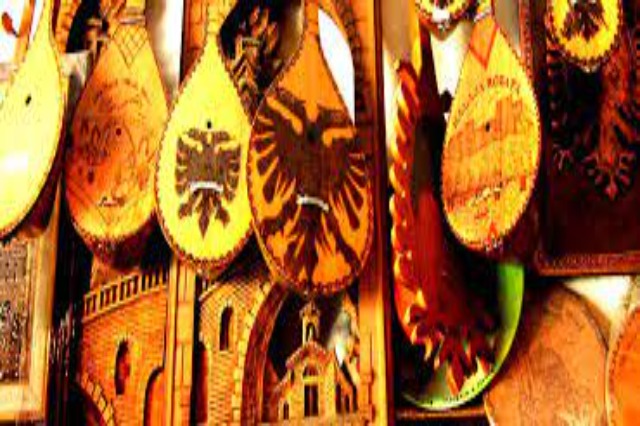
Albanian folklore is one of the most important fields, showing the evolution of different Albanian traditions, customs or beliefs. It is rich, diverse, with outstanding ideological and artistic values, it is a precious treasure inherited from the past, but which continues to be alive even in our days.
In Albanian Folklore we distinguish: Literary Folklore (poetry, fairy tales, legends or legends, anecdotes, proverbs, popular riddles); Musical folklore; Choreographic folklore (folk dances) and dramatic folklore (see). In terms of content and artistic form, Albanian folklore creations belong to three main genres: epic (legendary and historical epics), lyrical (lullabies, wedding songs, songs of love, exile, social lyrics, etc.), epic- lyrical (mainly ballads,
One of the most important constituent parts is the folk epic, cultivated through its various categories.
In the legendary epic, the “Kreshnik Cycle” is mentioned, a cycle of songs in the center of which are the brothers Muji and Halili. These songs are reflective of the historical clashes of Albanians with their neighbors, where they glorify resistance and bravery in the face of great and seemingly insurmountable challenges. Meanwhile, folklore is also filled with epic historical songs, where they are sung to well-known historical figures, among which National Hero Gjergj Kastriot Skënderbeu occupies a primary place.
Parts of folklore are also legends, which occupy an important place in the collective imagination of Albanians. Among them, the most famous are the Legend of Rozafa, which is built on the basis of the legend of the wall that is found everywhere in the Balkans, or the legend of the Besa of Constantine or Gjergj Elez Alia, which are built on the cult of the Besa, which is also considered as the moral testament of the Albanians. Some of the most popular motifs of the legends are those of meeting brother with sister, brother with brother, protecting sister’s honor, etc.
Albanian fairy tales are also part of folklore, where good always triumphs over the evil in the end. Some of the well-known figures of Albanian fairy tales are the Beauty of the earth, Fairies, Shtojzovallet mythological figures, Karkangjolli, Qerosi, etc.
Albanian folklore is also known for popular music, where vocal polyphony occupies an important place. Without the presence of musical instruments, a men’s or women’s choir of two, three or four voices creates an emotional vocal polyphony that deals with patriotic or family and romantic themes. Even Albanian Saze, songs and dances with Albanian instrumental music have attracted the attention of the world public with their authenticity.
Our folklore is distinguished for its popular and national character. It reflects the struggle, the work, the efforts, the thoughts, the feelings, and the way of life, the customs and characteristics of the Albanians, all the great problems that have arisen throughout history of the people, of the Albanian nation.
/k.s/
Të ngjashme
Latest News









Most read










 RTI