
 English
 Français
 Deutsch
 Italiano
 Turkish
 Greek
 Serbian
Albanian Foreign Minister Reaffirms Commitment to Diaspora Support




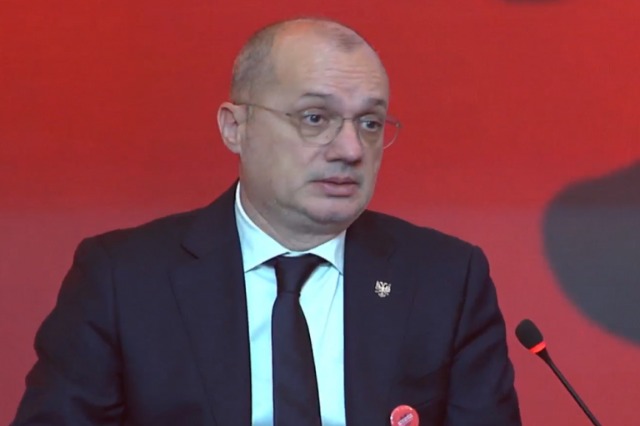
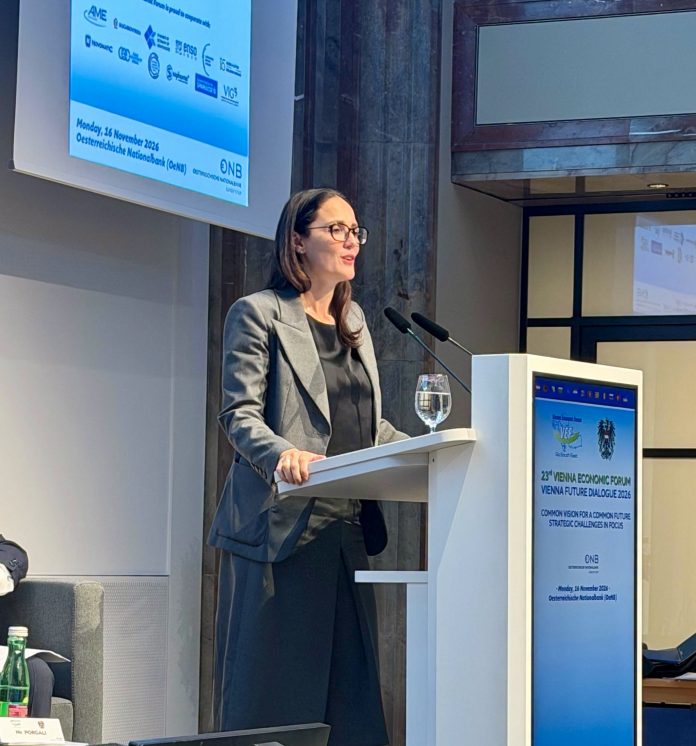
Minister for Europe and Foreign Affairs, Igli Hasani, reaffirmed the Albanian government’s unwavering commitment to supporting the Diaspora during a panel discussion on The Albanian Language in the Diaspora.
Hasani highlighted a collaborative pilot project with the Ministry of Education to promote Albanian language teaching in Greece. He noted that this initiative was formalized through regulatory acts earlier this year and underscored the active involvement of government officials in expanding these efforts to preserve the linguistic and cultural identity of Albanian children in Greece.
He further elaborated on cooperation with the Republic of Kosova, emphasizing a shared initiative to identify and support schools and institutions where Albanian is taught. Hasani stressed that the goal is not only to maintain these opportunities but to actively enhance them for children of Albanian descent.
Targeting Key Diaspora Hubs
The Minister stated that the government’s efforts are primarily directed toward countries with large Albanian communities, including Greece, Italy, Germany, Switzerland, the UK, and the US. He acknowledged that these countries host thousands of Albanian families who contribute to their local communities while maintaining a deep connection to their homeland.
Hasani outlined the government’s existing structures supporting the diaspora, such as the National Diaspora Agency and the Center for Arbëresh Studies and Publications. Additionally, he introduced a newly created directorate within the ministry, focused on addressing the needs of Albanians in the region. This directorate, he explained, would support projects related to education, healthcare centers, libraries, and scholarships, while fostering closer ties with Tirana.
Achievements and Expanding Infrastructure
The Minister shared several concrete achievements, including the provision of 36 fully funded university scholarships for students from the Presheva Valley through partnerships with Albanian universities. He also announced the establishment of two new General Consulates this year—one in Struga-Ohrid and another in Ulcinj, Montenegro—with plans for additional consulates in areas with high concentrations of Albanians.
Strengthening Cultural and Educational Ties
Hasani reported that 719 teachers are currently engaged in teaching Albanian to around 20,000 children in Diaspora schools. Over the past two years, the government has distributed more than 55,000 textbooks, highlighting the growing demand for educational resources and the commitment to meeting these needs.
Future Plans: A Development Agency
Looking ahead, Minister emphasized the need to establish a Development Agency dedicated to supporting Albanians worldwide. This agency, he explained, would go beyond policy and strategy to implement concrete projects, such as building schools, libraries, healthcare facilities, and infrastructure that directly benefit Albanian communities.
Preserving Arbëresh Heritage
Hasani underlined the importance of preserving the Arbëresh language and culture, describing this community as a vital part of Albania’s historical and national identity. He called for continuous support to ensure the Arbëresh traditions, safeguarded for centuries despite geographical distance, are maintained for future generations.
A New Era for Albania and Its Diaspora
In closing, Hasani reflected on Albania’s progress since the challenges of 1990s. He highlighted the country’s transformation and readiness to meet the evolving needs of Albanians abroad, fostering stronger connections while ensuring their voices and values remain integral to the national fabric.
With these initiatives, Hasani reaffirmed the government’s vision to engage, empower, and support Albanians everywhere, keeping the homeland’s bond with its diaspora stronger than ever.
/a.p./
Të ngjashme
Latest News



Most read










 RTI