
 English
 Français
  Deutsch
 Italiano
 Turkish
 Greek
Greek Serbian
Albanian painter, Simon Rrota




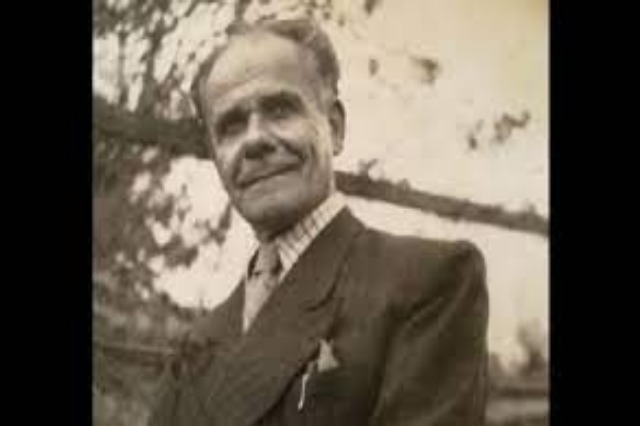
Simon Rrota was an Albanian teacher and painter. He was born in Shkodër, the son of Gjush and Marie Vjerdhë in 1887. He was the second among the brothers Kola, Justin and Gjon. He took his first lessons at the Franciscan primary school and then at the Italian craft school with teacher Saverio Polaroli, while also following painting courses with Kola Idromenos. He works as an apprentice at Ndrek Mini until he is called under arms by the Turkish army, which he avoids by emigrating to Montenegro, from where he finds refuge as a political refugee in Bari, Italy. With the help of Polarol, he enrolled in the Brera academy in Milan, where he studies with master Kampestrini. During his studies, he made friends with the painter Mario Karminati, his future brother-in-law. In that period he visited France and Austria, and in 1914 he returned to Albania.


He first worked in Lushnja as a photographer for his brother Gjon Rrota who was also a teacher, then as a decorator in the cultural societies of Shkodra. In 1922, he was appointed a drawing teacher at the State High School, from where he left only after 40 years. During this period, he participates in all the exhibitions of the country as well as in some international activities.
In Italy Simon Rrota came into contact with pure classicism. Genius painters such as Raphael, Veronese, Tintoreto, Caravaggio and even the most prominent left their mark on him. Raphael’s drapery technique is felt quite well in the portrait of S. P. Pistuli. While in the portrait of his wife, Karla, the play of light and shadows alongside the Raphaelian softness tells us of affinity with the Caravaggios.
In love with nuances, with soft and warm tones, the artist conveys to generations the image of the most expensive creature of his life. Karla, this Milanese girl, leaves her position as a stenographic secretary in the famous pharmaceutical firm Montekatini towards an uncertain future after her Albanian Simon. The unusual output (700 works) as well as the painter’s unceasing inspiration would have been impossible without the faithful Karla.
The healthy romanticism as well as the peaceful bucolic scenes, are kept under the control of the serious professional by Simon. For example, in the “Middle Bridge” painting, the author does not intend to show the architecture of a cultural monument. The great and heavy bow is partly rendered, so that with its shadow it circles the horizon, the waters, the light and the cattle, leaving aside the grass immersed in a contemplative solitude of an abandoned life. His fabrics are constructed simply and are simply perceived. Restrained and warm, sometimes it refreshes the palette with cold tones, as in the modest landscape “Snow near Pasha’s Nut”
His creativity consists of a number of oil paintings such as Catholic weddings of citizens of Shkodra, traditional robes made for the Shkodra town hall in the 1930s, the portrait of Kara Mahmud Pasha, etc. Simon Rrota passed away in 1961. Posthumously, he was awarded the title “Painter of Merit” and in 1999 “Painter of the People”.
/Klara Ruci/
Të ngjashme
Latest News
Most read




 RTI
RTI