
 English
 Français
  Deutsch
 Italiano
 Turkish
 Greek
Greek Serbian
Albanian soprano Marije Kraja, the taboo-breaking diva




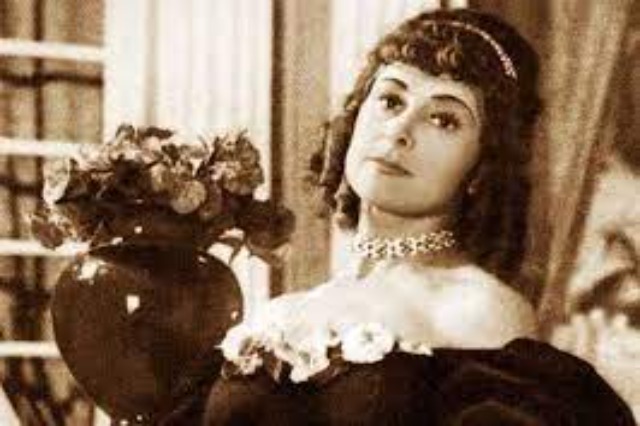
Marie Kraja or Marie Paluca was an Albanian opera singer who is particularly known for her delivery of Albanian folk songs. Kraja was born in 1911 in Zadar, Kingdom of Dalmatia, then part of Austria-Hungary, in a Roman Catholic family. She was a relative of Mother Teresa.
When she was six, her family moved to Shkodra. Although she was an immigrant, her family was by Albanian orignine and she had lived in a small Albanian community in Zadar. In Albania she learnt local wedding and love songs. In 1930 she started her singing studies at the Singschule (now University of Music and Performing Arts Graz), which she completed in 1934. After graduation she started to teach at a secondary school in Shkodra, then at the Queen Mother Women’s Institute in Tirana. She started making appearances in Tirana with Tonin Guraziu as accompanying pianist. Kraja represented Albania at an “Evening of Nations” hosted in Vienna. When studying in Austria, Marije Kraja sometimes performed the compositions of Beethoven, Brunker, Vanger, Puccini, Verdi and Mozart. These masterpieces made her great and professional, a star of national music.
At the Graci Conservatory, she defended her doctorate with the lyrical songs “Thank god you are pretty” and “The mole on your forhead”, which was a contribution to Albanian music to take on an international character. She brought a new canto tradition to Shkodra alongside other progressive women in music such as Tefta Tashko Koço. She was one of the progressive women who broke the taboo when poverty prohibited women for everything.
She could very well be called very emancipated as was the whole of Shkodra with its distinguished culture. She was a woman of a kind of Albanian Hollywood where you bow down with respect.
Just like the famous soprano and her colleague Tefta Tashko Koço, both of them worked hard together to bring a repertoire of traditional Albanian folk songs and they succeeded. This tradition is still strong today in instrumentalists and classical musicologists.
When she sang, her flowing voice burst forth like a rare gem of music. In 1936, she was a lecturer at the “Nana Mbretneshë” Women’s Institute, which contributed to the rise of a new generation with a different opinion about culture and music.
In 1946, she worked at Radio-Tirana and the “Jordan Misja” Artistic High School. In 1962, she became a teacher at the State Conservatory of Tirana, where she continued until she finished her full career and retired in 1966.
She is one of the cornerstones of operatic and singing music in Albania and one of the rarest voices. With the establishment of TOB, Marie Kraja becomes one of the first soloists in the first premiere of this institution. She also participates in the first Albanian opera “Mrika”.
Her activity outside Albania is dense and rich where, among others, she goes to the big stages of Italy, Austria, Germany, China, Korea, Germany, Italy, Czechoslovakia, Hungary, Bulgaria, the Soviet Union.
She grew up, was protected and collaborated with a large group of artists who were all musical divas such as Kristaq Antoniu, Mihal Ciko, Jorgjie Truja, etc.
He participated on behalf of Albania in Vienna in the “Evening of Nations” with the interpretations of two folk songs “O nightingale, poor nightingale” and “Flowers in full bloom”.
Her concert activity began in 1934 together with professor and pianist Tonin Guraziu, in a concert they gave in Tirana. This professor was known for his collaboration with all the famous singers of the time.
Some of the main roles of the artistic works that she developed with a high professionalism are in the Albanian operas, such as “Mrika”, “The Flower of Memory”, as well as in a number of foreign works such as “Rusalka”, “Ivan Susain”, “The Sold Bride”, “La Traviata”, “Jollanda”, “The Marriage of Figaro”, etc.This extraordinary woman of Albanian opera was a vocal choach of many artists.
Her great passion was the collection and folk songs, where 300 folk songs are distinguished, especially from the northern Albania, collected from the cities of Peja, Gjakova, Shkodra, Korça, Berati, Elbasani, Tirana, etc., where they were stored in the institution of Radio-Tirana as Albanian cultural heritage fund.
Maria also had a peripepsis in relation to the communist system where she was targeted as an exponent who came as you say from that time with a “bad biography” where you think that her family had connections with exponents of Nazism to be found a way to crucify yourself artistically, and a way to demigrate.
However, a pride of the Albanian song and a world-class professional in the way of interpretation always remained in the heart of the public. A virtuoso singer who honored Albania.
In Tirana, events such as the “Marie Kraja International Opera Vocal Competition” have been organized with the participation of vocalists from different countries of the world. She holds the highest artistic title “People’s Artist”, holds the first class “Naim Frashëri” Order, the “Great Master of Work” medal and the First Class Republic Award Laureate.
She passed away in Tirana earlier on November 21, 1999, leaving behind a great name that is always honored and remembered with respect.
Maria Kraja came as a miracle of Albanian song in a difficult time for Albania, and as a dear and warm person for all art lovers who have a lot in her repertoire, she was a star of classical music. She left as a great diva.
Kraja passed away in Tirana in 1999. She was awarded the title”People’s Artist of Albania”.
/Klara Ruci/
Të ngjashme
Latest News
Most read




 RTI
RTI