
 English
 Français
  Deutsch
 Italiano
 Turkish
 Greek
Greek Serbian
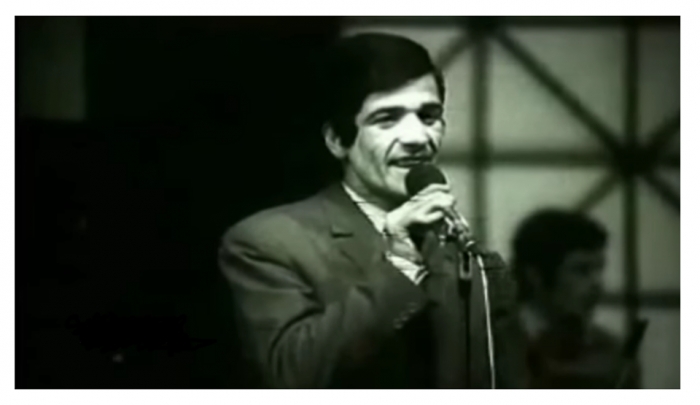
“Albanian Tchaikovsky,” composer Nikolla Zoraqi




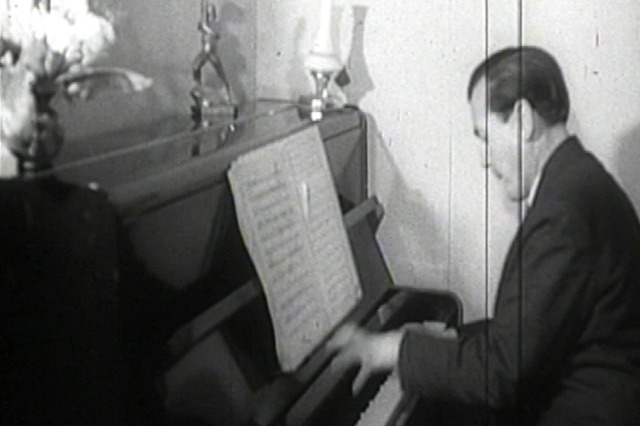
Considered as the “Albanian Tchaikovsky,” Nikolla Zoraqi contributed a great deal in the short time he lived. He knew how to appreciate and make the most of his creative work time. His creative opus, consisting of over a hundred works of various forms and genres of music, attests to this, making him one of the most significant voices in Albanian music during the second half of the 20th century.
On the occasion of the commemoration of his 95th anniversary, several artistic events have taken place, with more scheduled throughout the year. Nikolla Zoraqi studied at the Artistic Lyceum of Tirana during the years (1946-1950), where he distinguished himself, among other things, for his diligence and dedication to studying. Thanks to the talent bestowed upon him by nature, he grew and developed as a violinist.
Nikolla Zoraqi appeared both as a violinist and a conductor, simultaneously composing small pieces for the violin. Due to his outstanding achievements, after completing his secondary studies, Nikolla Zoraqi worked for a short time as a teacher at the “Jordan Misja” school.
In the years 1950-51, Zoraqi performed military service with the Popular Army Ensemble, initially playing the first violin in the orchestra directed by Gaqo Avrazi, and later as an assistant conductor to the latter. He remained in the ensemble until 1958 when his first creations became known.

In 1955, the Army Ensemble went to China to perform concerts. There, the Albanian delegation was asked for a cantata to celebrate Albanian-Chinese friendship, and the creation of the piece was proposed to Nikolla. Without any hesitation, he dedicated himself to the work and managed to write the piece in a day, which he orchestrated and conducted himself. Despite persistent work and long hours of study on the instrument, his dream of becoming a violinist was shattered, as he was not granted the right to study the violin but composition at the “P.I. Tchaikovsky” Conservatory in Moscow. The journey to Moscow, brought a new and important stage to Nikolla’s life.
After returning to Tirana, various responsibilities were entrusted to Nikolla Zoraqi. He worked as a music director at the Central House of Popular Creativity (1961-64), as the head of the music department at Radio-Tirana (1966-71), and contributed to the Higher Institute of Arts as an external teacher (until 1983), and from 1971 until the end of his life, he was a composer in free creation.
Nikolla Zoraqi has written hundreds of pages of music, defining him as one of the most productive composers in Albanian music. In his works, he explored all musical genres, ranging from simple songs, chamber music, to concert, symphonic, and even large scenic genres like opera and ballet. The years 1960s and 1970s can be considered decisive in his development as a composer, now in a mature phase. During this time, he composed approximately 30 compositions, songs, and romances, each with various poetic inspirations, from strong heroic or march-like sounds to passionate lyricism or the presence of intonations from the urban folk music of middle Albania.
Among them stands out one of the distinguished achievements of Albanian song, “Gift for a Birthday,” with lyrics by poet Fatos Arapi. Noteworthy major achievements of Zoraqi in this mature creative phase include the famous among the six overtures, “Festive Overture” (1968). Nikolla Zoraqi passed away on September 9, 1991, leaving behind a rich artistic legacy for all generations of future musicians to come.
/k.s/
Të ngjashme
Latest News
Most read






 RTI
RTI