
 English
 Français
  Deutsch
 Italiano
 Turkish
 Greek
Greek Serbian
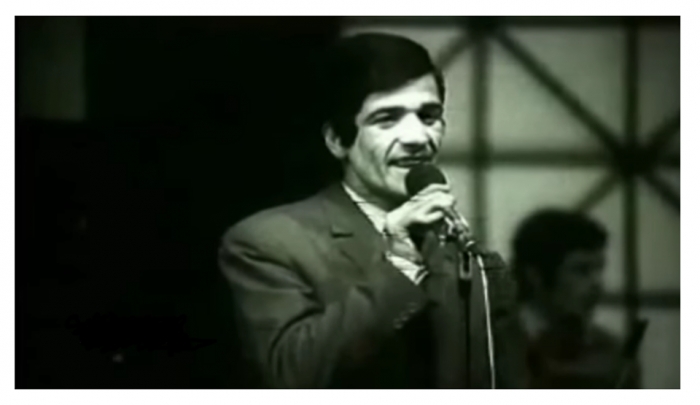
Albert Vërria – Icon of Albanian Stage and Screen




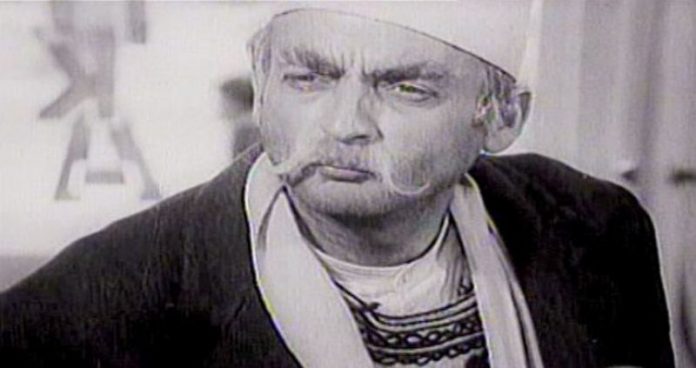
Today, we remember Albert Vërria, one of the greatest names in Albanian art. Although he passed away in 2015, his acting legacy remains vivid. He never separated theater from cinema. He believed theater provides direct contact with the audience, while cinema secures a permanent place in memory. Albert Vërria remains a symbol of art and the era he represented.
Born on 3 September 1936 in Fier, Vërria chose the arts as a child. He grew up among performances and a passion for drama. He completed primary and secondary education in Fier and developed an early interest in art. Fascinated by archaeological digs in ancient Apollonia, he absorbed the essence of ancient drama.
After finishing high school, he studied zootechnics and worked for two years in Kukës. He then became a teacher at the agricultural school in Fier. Yet, his artistic calling remained strong. Intellectual surroundings and discussions on opera, ballet, and theater with cultured mentors fueled a fire that never died. In 1959, when the Aleksandër Moisiu Higher School of Acting opened in Tirana, Vërria competed successfully for a place among its first class of actors (1959–1963). After graduation, he joined the “Petro Marko” Theater in Vlora, committing fully to stage and screen.
From 1963 until his retirement in 1991, Vërria performed over 110 roles in theater, variety shows, TV series, and feature films. He also worked as a director. He stood out on stage as Vehip in The Fisherman’s Family [Familja e peshkatarit] (1963), the moneylender in The Roots \[Rrënjët] (1969) by Kujtim Spahivogli, Halil Shkoza in The Second Face [Fytyra e dytë] by Dritëro Agolli, the drunkard in Why Does This Drum Beat? [Përse bie kjo daulle] (1969), and Bakalli in When a Day Dawns [Kur zbardhi një ditë] (1971).
His characters always displayed unique originality and interpretive depth. He preserved each role’s distinct nature and blended it organically with the work’s theme, the story’s timeline, and the dramatic rhythm. This skill naturally led to the iconic role of Uncle Sulo in The Captain [Kapedani] (1971). Uncle Sulo became both a signature role for Vërria and a figure etched into the collective memory of the Albanian public. He then played Hiluk in Operation Fire [Operacioni zjarri] (1973), Adem’s father in Furrows [Brazdat] (1973), and Uncle Kasem in Explosion [Shpërthimi] (1974).
Even when not in lead roles, his performances achieved full artistic fulfillment. This was thanks to his measured, credible, and compelling acting. Each character carried his signature: seriousness, finesse, and dedication. From Jani Ferra in Paths of War [Shtigje të luftës] (1974), Corporal Pelegrini in At the Start of Summer [Në fillim të verës] (1975), Lec Kabashi in The Call [Thirrja] (1976), to Sali in The Third [I treti] (1978) and Ibish in From the Midst of Darkness [Nga mesi i errësirës] (1978), Vërria’s work became ever more consolidated. It showed powerful interpretive impact.
He reached the heart of every character and brought them to the screen with fluidity and credibility. Every figure was “another Albert”: a demonstration of his ability to convey emotion and deep experience to the audience. Each role, small or large, carried his spirit and bore the mark of a master actor. He never saw a part as incidental, but as a mission. Vërria gave his characters soul, energy, and presence, making them tangible, relatable, and enduring.
More than 20 films carry his indelible mark. He was not just an actor, but a master of transformation, an alchemist of emotion. He turned each role into a piece of his spirit and that of the audience. Albert Vërria left Albanian art a lasting legacy, firmly anchored in the memory of generations. In 1979, he received the highest title: People’s Artist.
/a.p./
Të ngjashme
Latest News
Most read






 RTI
RTI