
 English
 Français
 Deutsch
 Italiano
 Turkish
 Greek
 Serbian
Ali Pasha Mill in Tepelena still grinds wheat like 200 years ago




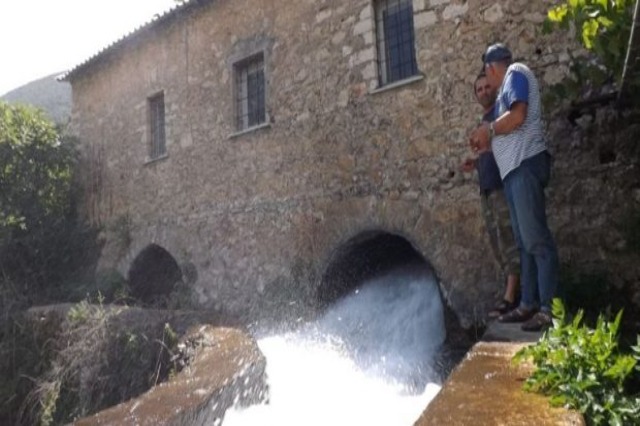
The 200-year-old mill known to the locals as that of Ali Pasha, reconstructed during the time of the Pasha, retains the same functions as before. Centennial grindstones grind corn and wheat to meet the needs of more than 5,000 area residents, while part of the water tank at the exit of the mill still serves to wash the wool of the livestock of this area.
“It has worked since it was first made, 230 years ago. “When the cooperative broke down, I bought it and kept it with flesh and blood, because it is an irreplaceable work”, says Lefter Bleta.
Lefter Bleta restored it and continues to keep it afloat with great sacrifice. The mills that are still preserved in Albania are few. They date from the eighteenth and nineteenth centuries, best testify to the relationship between people and the natural environment, for the special way of using resources.
The positioning of the mills depends only on the strength of the water currents: the mills were built where the current is not very strong, providing a stable source of energy for powering the mill wheels.
Neshat Hadëri, born in Tepelena, remembers that even during his childhood this object aroused curiosity and was always functional.
“When I was a child, this mill used to grind wheat and corn. This is an object of great value. “When you put sheepskin into the water, it is a pleasure to see them clean,” says Haderi.
Adelina, the woman who deals with skin washing, says the tradition is inherited and almost nothing has changed in the style of sheep skin treatment and heavy winter coverings.
“We use the water to wash carpets, shepherds’ guns, etc. Many people come here “, says Adelina Bleta.
Ali Pasha’s mill has been discussed many times to give it the status of a cultural monument, but despite the history it carries, it represents an ordinary object.
/Klara Ruci/
Të ngjashme







Most read










 RTI