
 English
 Français
  Deutsch
 Italiano
 Turkish
 Greek
Greek Serbian
Archaeological Discoveries in Qesarat Shed Light on Ancient Life in Tepelena




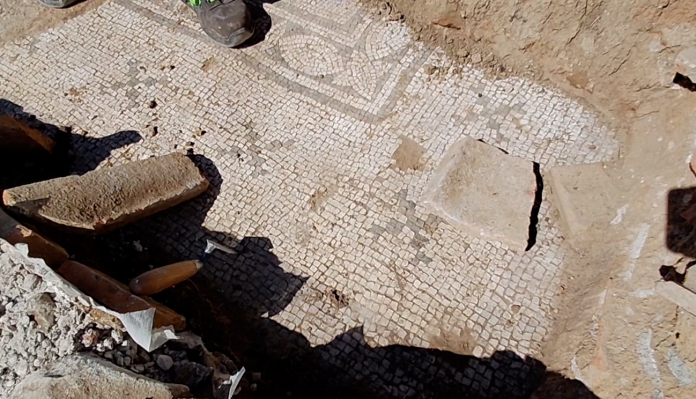
Archaeological excavations in Qesarat are uncovering new evidence about the ancient past of the Tepelena area. Specialists have identified traces of a complex with residential spaces and two partially damaged mosaics believed to date back to antiquity.
Prime Minister Edi Rama shared images today from the ongoing excavations in Qesarat.
“Archaeological excavations continue in Qesarat, Tepelena, as part of the ‘Landscape Archaeology in the Memaliaj-Tepelena Area and Surroundings 2026’ project. The work has revealed residential spaces and two partially damaged mosaics, which are believed to date back to the third century.
Specialists are documenting, cleaning and conserving these discoveries. They shed light on the way people lived and the history of this area in antiquity,” Rama said.
The discoveries provide important evidence about the development of the settlement and the communities that lived in the area during antiquity.
Currently, specialists are documenting the structures and materials they have uncovered. They are also cleaning and conserving the mosaics to protect them and support further research.
Moreover, the work will help specialists determine the function of the newly discovered spaces and better understand the archaeological context in which they were built.
The Qesarat excavations form part of broader efforts to document and highlight the archaeological heritage of the Memaliaj-Tepelena area. The territory holds significant historical and cultural potential.
Meanwhile, each new discovery adds to researchers’ knowledge of the region’s past. It also creates opportunities for further scientific research and for promoting the area as a cultural heritage destination.
/a.c/
Të ngjashme



Latest News



US media Tri-City Herald recommends Tirana for autumn visits


Most read










 RTI
RTI