
 English
 Français
 Deutsch
 Italiano
 Turkish
 Greek
 Serbian
Archaeological Treasure: Saranda’s Synagogue Basilica Highlights Ancient Jewish Presence




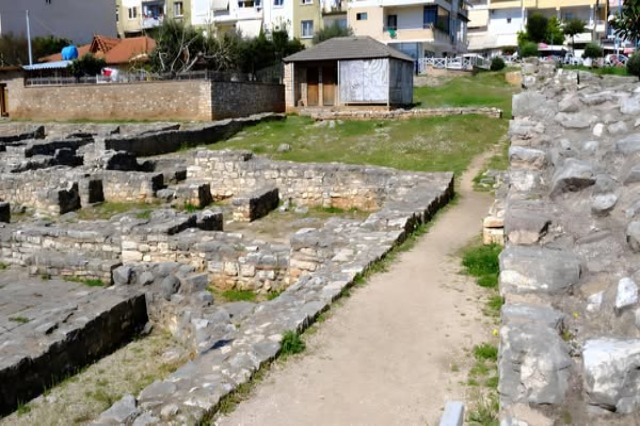
The Synagogue Basilica of Saranda is one of the most important archaeological monuments discovered in the city of Saranda, located in the southern region of Albania.
This ancient structure dates back to the late Roman period and stands as one of the largest synagogues uncovered in the region. Discovered during recent archaeological excavations, the synagogue is renowned for its grand design and the stunning mosaics found within its walls.
It is believed that Jewish communities arrived in Albania during four distinct periods, beginning in the 2nd century. They even established a city named Jericho, later known as Orikum.
The Saranda synagogue is thought to have been built by the descendants of Jews who settled along Albania’s southern coastline around 70 AD. However, by the 6th century, the synagogue was replaced by a church.
During the 11th and 12th centuries, Orikum, then referred to as Jericho, was part of a Byzantine province that also included Kanina and Vlora. This province, known as Jericho et Caninon, is mentioned in an imperial decree granted to Venice in 1198 by Emperor Alexios III Angelos.
Today, the synagogue is one of the most visited historical sites by both local and international tourists, as it stands as a key monument of the region’s cultural heritage.
Additionally, organized school visits are conducted, where specialists from the Regional Directorate of Cultural Heritage in Vlora offer detailed explanations of the monument’s history and significance.
/a.c/
Të ngjashme




Latest News










Most read










 RTI