
 English
 Français
 Deutsch
 Italiano
 Turkish
 Greek
 Serbian
Archaeologists from Albania, France, and Poland Shed Light on Shkodra’s Hidden Medieval and Ancient Heritage




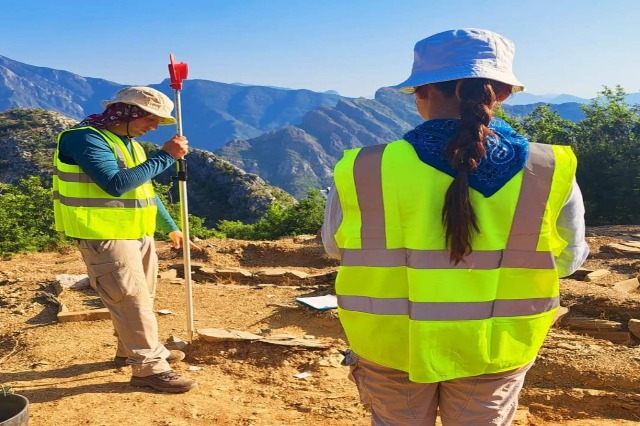
Shkodra remains one of the most significant regions for scientific archaeological research in Albania, attracting foreign research missions that devote themselves with great dedication to fieldwork year after year.
The Regional Directorate of Cultural Heritage Shkodër reports that the Albanian-French mission, led by Dr. Etleva Nallbani from CNRS Paris and Dr. Elvana Metalla from the Institute of Archaeology, Tirana, continues important archaeological investigations at two representative Early Medieval settlements: the medieval city of Sarda on the island of Shurdhah and the Koman settlement, as part of the “Drin Valley Project.”
Meanwhile, the Albanian-Polish archaeological research mission, led by Professor Piotr Dyczek, archaeologist and director of the Center for Research on Antiquity in Southeastern Europe at the University of Warsaw, Poland, Professor Saimir Shpuza from the Institute of Archaeology, Tirana, and Helidon Sokoli, archaeologist at DRTK Shkodër, continues excavations in the Bushat area, where, year after year, an unknown ancient city from the 4th–2nd centuries BC is being uncovered.
On International Archaeology Day, DRTK Shkodër expresses its gratitude for the tireless work in gathering data on the culture, urbanization, development, population movements, rituals, and the stages reached by these settlements.
/a.c/
Të ngjashme

Latest News










Most read










 RTI