
 English
 Français
 Deutsch
 Italiano
 Turkish
 Greek
 Serbian
Awaiting inclusion in UNESCO, Kumbe speaks about measures taken to preserve Jubleta at risk of extinction




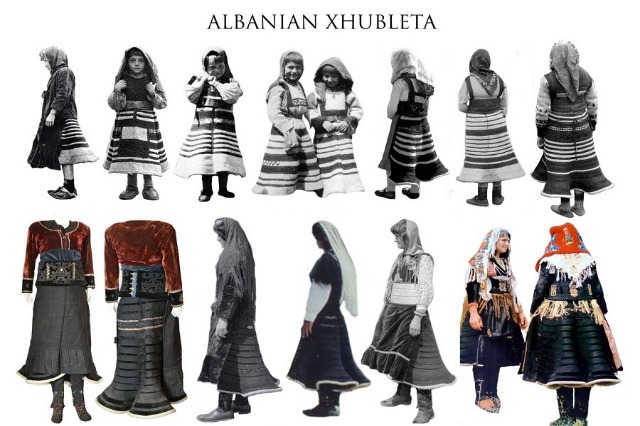
The Deputy Minister of Culture Meri Kumbe recounts the role of the National Register of Cultural Assets in the identification of heritage phenomena at risk of extinction. She says that Jubleta, whose file has passed the first stage to be recognized by UNESCO, is the biggest challenge and talks about the measures that have been taken for its preservation.
The Ministry of Culture planned the National Register of Cultural Assets, as one of the protective strategies for cultural heritage with its objects and rare occurrences. While today efforts are being made to recognize ‘Tropoja Dance’, Kreshniks’Epos’, Jubleta and Transhumanca, as World Heritage of Humanity in UNESCO. The Deputy Minister of Culture explains whether the phenomena that are at greater risk of extinction in the country have been identified or not.
“The realization of the National heritage register has given us all the opportunity to document these phenomena, since a very large work was done in the field and, as I told you, it was a comprehensive work, so there was also the participation of students. So, from the phenomena that we have submitted to UNESCO, jubleta has been selected as an endangered phenomenon and we have applied together with a plan of measures that is known by the international name ‘Save Garding Plan’, to have it, to raise it and to be a phenomenon to continue to pass it from generation to generation”, says Deputy Minister of Culture Meri Kumbe.
Jubleta has survived for at least 4,000 years, and its traces are still found in the areas of the Shkodra Highlands, up to the Black Mountains and around Cursed Mountains. Kumbe, confesses what are the difficulties to keep this phenomenon alive.
“It is a very big global challenge, because the very development of human society, the very dialectical movements of the population, whether in internal or external migration, often violate certain elements of the intangible heritage. Undoubtedly, the role of the state in policy-making to create the comfortable terrain to maintain it, is significant, but on the other hand, the will of the community members is definitely needed”, adds Kumbe.
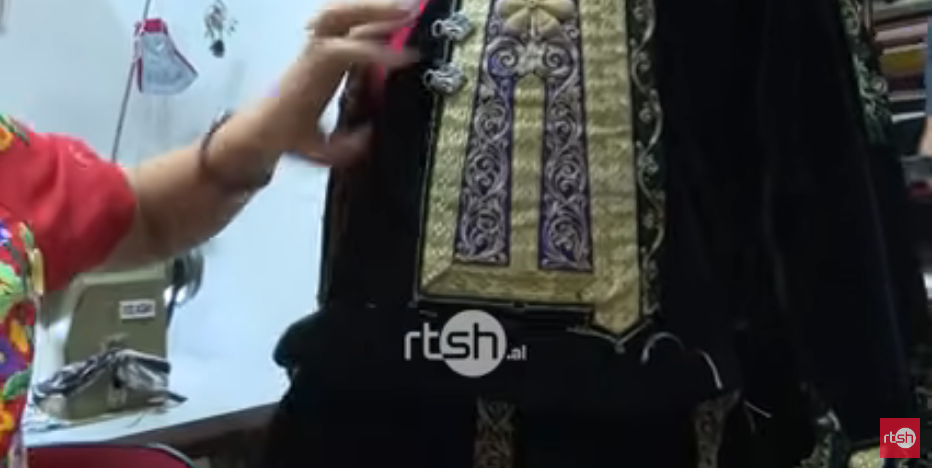
Jubleta is the first file that has been included into the process to be accepted at UNESCO (last March). After passing the first stage of administrative control, as Kumbe says, it is expected that the committee will make a decision in December. According to ethnographers, the tradition of jubleta production has been fading since the 1920s-1930s, so a century later we are facing a risk of extinction and the Jublet File has been submitted to UNESCO as an endangered phenomenon. Although they do not belong only to the local heritage, the Albanian jublets are unique in their construction, in the harmonization of a series of elements such as the shirt, the collar, the sleeves, the mouthpiece, the belt, the apron, one that is worn in front and one that is worn behind, vest, socks, opinga and metal ornaments such as earrings, silver rings, necklace and belt with chains to hold tools, bags, etc.
The other international phenomenon for which the Ministry of Culture explains that it has taken a series of measures to preserve and develop it, is Transhumanca, i.e. the ancient Ritual of Cattle Migration”, which as an international file (submitted this March) UNESCO has been seen with priority.
/Klara Ruci/
/Klara Ruci/
Të ngjashme



Latest News







Most read










 RTI