
 English
 Français
  Deutsch
 Italiano
 Turkish
 Greek
Greek Serbian
Bajram Curri, the patriot and freedom fighter is commemorated today




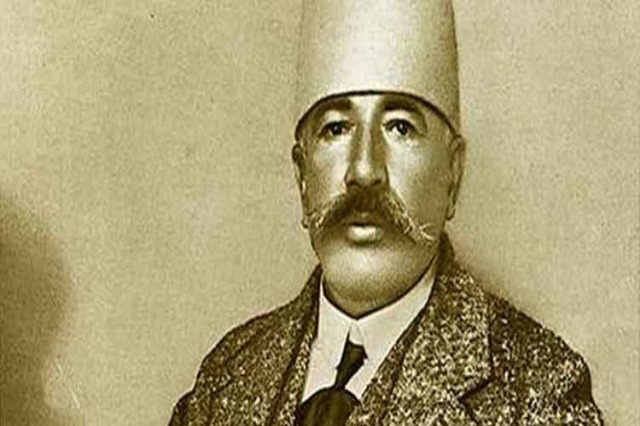
On March 29, 1925, Bajram Curri passed away.
He was born in Krusha e Madhe, a village between Gjakova and Prizren. He was one of the organizers of the Albanian League of Peja from 1899-1900. He helped establish patriotic clubs and Albanian schools in Kosova, as well as defended the Albanian language alphabet of the Congress of Manastir. In 1908 he was elected vice-president of the Patriotic Club “Bashkimi” /The Union/ of Shkup/Skopje. In May 1912, he joined the decisions of the Assembly of Junik.
He participated in the General Armed Uprising of 1912, where he stood out as one of the most skilled commanders in the battle with the Ottoman armies in the Qafa e Prushit, as well as in the Kosova Plain. After 1912, he worked for the Defense of the independent Albanian state, as well as for the issue of Kosova, which was left out of Albania.
Bajram Curri did not agree with the unjust decisions of the Conference of Ambassadors in London in 1913, which left Kosova and other Albanian lands outside the borders of the Albanian state. He fought for their union with Albania. In September 1913, he was one of the leaders of the popular armed uprising in Kosova against the Serb-Montenegrin forces. In 1918, he was elected one of the leaders of the “National Defense of Kosova” Committee. On behalf of this Committee, Bajram Curri, together with other Albanian patriots of Kosova, sent a protest to the Peace Conference in Paris in 1919, in which they demanded that the rights of Albania and the Albanian population in Kosova be recognized and Albania should be given the right to freely express its national aspirations. In the Lushnja Congress of 1920, he was elected a member of the National Council. This council charged him with the duty of minister without portfolio and commander-in-chief of the Armed Forces. He stood out in the Albanian political and social life, especially during the years 1920-1924, where alongside the struggle for liberation and national unification, the effort to consolidate and democratize the Albanian state also stood out. On March 29, 1925, Bajram Curri was murdered in Dragobi, Tropoja, by the counter-revolutionary forces, after the failure of the Bourgeois Democratic Revolution of June 1924.
/a.p./
Të ngjashme
Latest News
Most read




 RTI
RTI