
 English
 Français
 Deutsch
 Italiano
 Turkish
 Greek
 Serbian
Butrint: Albania’s Hidden Archaeological Treasure Beyond the Crowded Mediterranean




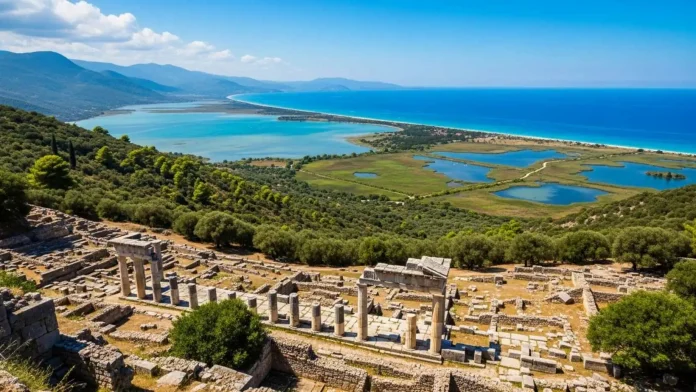
Most Mediterranean tourists visit Italy’s crowded coastlines. Few realize they are missing one of archaeology’s greatest secrets — Butrint National Park — according to an article in Journée Mondiale.
Where else can you stand among Greek theatres, Roman baths, Byzantine basilicas, and Venetian fortresses — all within walking distance — while turquoise waves crash on empty beaches beyond ancient walls?
This Albanian archaeological site dates back 2,500 years. It reveals continuous human life through every civilization that shaped Western culture.
Butrint’s position between freshwater wetlands and the Ionian Sea created a natural fortress. It attracted settlers from Homer’s time to Napoleon’s campaigns.
Unlike Italy’s crowded ruins, where entry costs more than 25 euros, Butrint welcomes curious travelers at a much lower price.
What makes this destination unique is not only its history, but also the harmony between nature and antiquity.
Flamingos stroll through lagoons where ancient trade ships once anchored. Sea turtles nest on beaches watched by Byzantine walls.
You can walk through four empires without leaving the archaeological zone.
The Greek theatre, carved into limestone around 300 BC, still tells stories. Last summer, a local troupe performed Euripides there. The acoustics remain flawless after 2,300 years.
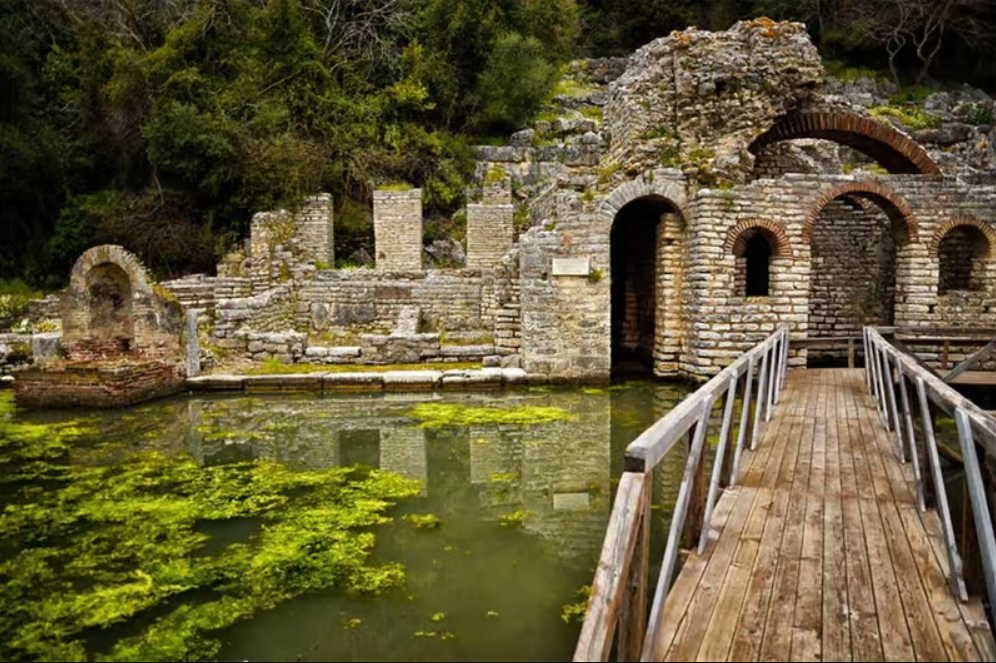
The Roman baths display engineering brilliance still studied by architects today. Their mosaic floors show animals and geometric designs made from thousands of colored stones.
When afternoon light filters through ancient doors, the mosaics shimmer as if newly laid.
Byzantine Christians built their baptistery over pagan foundations.
Its round shape and untouched mosaics make it one of Albania’s most photographed monuments.
Venetian fortifications crown the highest points, offering panoramic views across the wetlands toward the distant mountains of Corfu.
The wetland ecosystem rivals any natural reserve in Southern Europe. Butrint National Park covers 9,400 hectares of protected land rich in biodiversity.
More than 246 bird species migrate here every year, including Dalmatian pelicans and rare glossy ibises.
You may spot wild boar tracks on forest paths or see otters fishing in channels that once served as ancient waterways.
Lake Butrint connects to the Vivari Channel, creating brackish waters that sustain unique marine life. Local fishermen still cast wooden-boat nets at dawn, using techniques passed down through generations.
Their catch — seabass, mullet, and carp — tastes remarkably fresh in nearby seaside taverns. A grilled fish meal costs around eight euros, compared to thirty-five in Positano or Amalfi.
The coastal climate differs from inland Albania.
Sea breezes bring warmth, while surrounding mountains block humidity, creating lush vegetation. Wild figs and pomegranates grow among the ruins, a sign of the land’s enduring fertility.
Shakespeare knew of this place when most Europeans had forgotten it. Literary historians debate whether he ever visited Albania, but Twelfth Night clearly mentions Butrint.
In the 16th century, Italian writer Giovanni de’ Bardi and European scholars still recognized the site’s historical importance.
Venetian cartographers mapped it carefully, understanding its strategic position between the Adriatic and Ionian trade routes.
Modern excavations began in the 1920s under Italian teams. They uncovered the Greek theatre and Roman forum.
UNESCO’s 1992 recognition encouraged further preservation efforts.
Today, visitors can explore newly opened areas, including a Roman villa with untouched frescoes. The site welcomes about 60,000 visitors each year.
Nearby Ksamil village offers pristine beaches with Caribbean-blue waters and white sand. Four small islands lie just offshore — reachable by kayak or even swimming for only five euros.
Seaside hotels range from 25 to 40 euros per night, breakfast included.
The contrast between ancient ruins and modern beach culture creates a rare travel experience — authenticity without crowds, history without commercialism.
/a.c/
This UNESCO heritage site costs 80% less than Amalfi Coast trips with better beaches
Të ngjashme

Latest News










Most read










 RTI