
 English
 Français
 Deutsch
 Italiano
 Turkish
 Greek
 Serbian
Cape of Rodon Offers a Unique Blend of Sea, History, and Culture




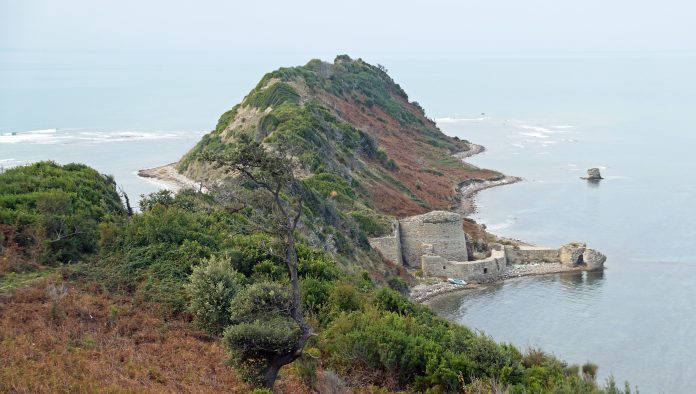
Cape of Rodon is a tourist gem in Durrës. It combines coastal and historical tourism. Visitors can feel history, explore culture, and enjoy beautiful nature.
The area blends greenery, sea breeze, and the Adriatic with ancient landmarks. Notably, it hosts Skanderbeg’s Castle, built in the 15th century, and St. Ndou’s Church from the late 13th century.
This coastal spot offers stunning beaches and rich cultural heritage. Skanderbeg’s Castle stands in the northeast of the cape, also called Cape of Muzhi by locals. It overlooks both the Adriatic Sea and the bays of Patok and Shëngjin. The fortress dates back to the 14th century. It had a 100-meter defensive wall stretching from one end of the cape to the other.
Moreover, St. Ndou’s Church is another cultural landmark. It reflects Romanesque-Gothic architecture from the 13th century. It holds great meaning for Christian believers.
Thanks to EU support through the EU4Culture Albania program, the church reopened to worshippers and tourists. The restoration followed the 2019 earthquake.
Historically, the church was well known during the Middle Ages. It became even more significant due to Skanderbeg’s constructions in the area during the 15th century. Builders used the Byzantine clausonage technique. However, the church also features Romanesque and Gothic elements like pointed arches.
Some wall painting fragments have survived. One shows a double-headed eagle in the lower central part of the eastern apse. Nearby, there is a young, beardless knight and two birds.
Because of its architectural value, historic importance, and stunning landscape, St. Ndou’s Church remains one of the most visited sites by both local and foreign tourists.
/a.c/
Të ngjashme




Latest News










Most read










 RTI