
 English
 Français
 Deutsch
 Italiano
 Turkish
 Greek
 Serbian
Chambéry hosts Albania’s Medieval Masterpieces in landmark cultural exchange




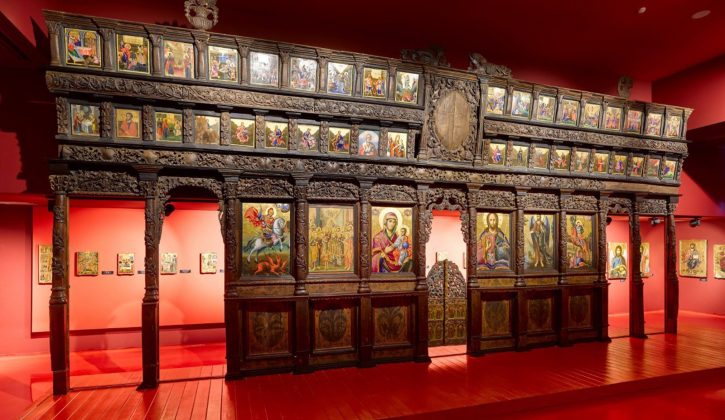
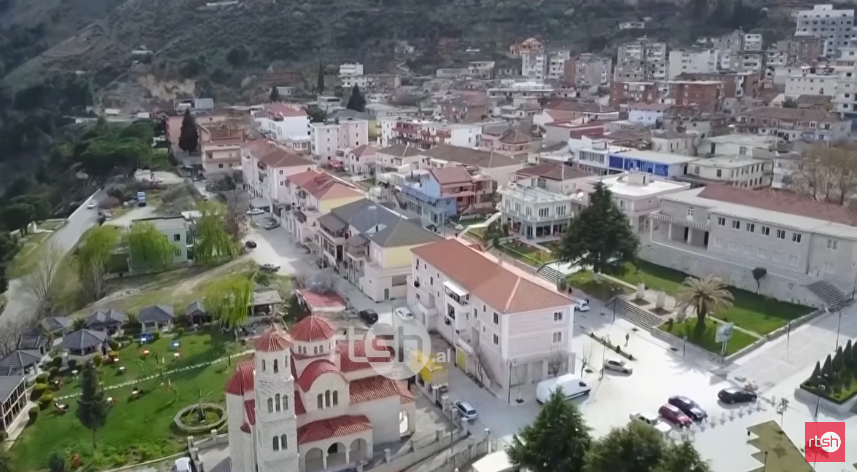
After signing a cooperation agreement between the municipalities of Korçë and Chambéry (France), the Chambéry Museum of Fine Arts will open an international temporary exhibition with the Korçë National Museum of Medieval Art.
Meanwhile, the director of the Korçë museum, Fjoralba Prifti, shared details with ATSH. She explained that the project reflects a joint commitment to European openness and intercultural dialogue.
The exhibition, titled “Icons of Albania, Treasures of the Korçë National Museum of Medieval Art,” will run from June 12 to November 15, 2026, at the Chambéry Museum of Fine Arts. Moreover, it will display about 45 selected Albanian icons from the museum’s collection.
In addition, the exhibition presents a chronological overview of icon production in the Orthodox region of Korçë and beyond. Specifically, it covers the 14th century to the early 20th century. Therefore, visitors will explore Byzantine and post-Byzantine painting traditions, iconography, and artistic evolution.
The earliest works come from the rock churches of Prespa and date to the 14th century. As a result, they highlight Paleologan aesthetics, featuring harmonious colors and elegant lines.
Next, icons from the 16th, 17th, and 18th centuries illustrate diverse post-Byzantine trends in Albania. They combine respect for traditional canons with formal innovations. Most pieces come from Korçë, Kolonja, Berat, Pogradec, Gjirokastër, and other regions.
Prifti also emphasized that the exhibition will give special attention to great masters, led by the renowned Onufri, whose most important collection is preserved at the Korçë museum.
Furthermore, visitors will see works by Master Konstantin of Vithkuq, Konstantin Hieromonaku, Konstantin of Shpat, and the Zografi brothers’ workshop.
In addition, the exhibition introduces the French public to an underappreciated artistic heritage. It also highlights the exceptional quality of these works, which survived destruction during institutional atheism in the 20th century.
Finally, “Icons of Albania” will show artistic exchanges between Orthodox icon traditions and medieval and Renaissance religious art in Italy. Consequently, the Chambéry museum collections illustrate these connections.
Moreover, the influence of Byzantine art appears in early Italian pre-Renaissance works. Therefore, visitors can compare it with artists such as Bartolo di Fredi, Grifo di Tancredi, Domenico di Michelino, and Bernardino Fungai.
Të ngjashme


Latest News




Most read










 RTI