
 English
 Français
 Deutsch
 Italiano
 Turkish
 Greek
 Serbian
Chief Negotiator Dhuka: 2026 Draft Budget Supports Albania’s EU Accession Aspirations




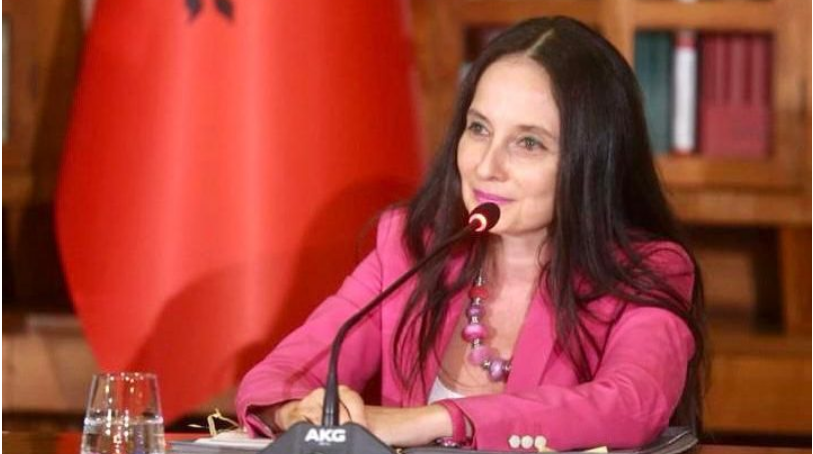
State Minister and Chief Negotiator Majlinda Dhuka said today that the 2026 draft budget supports Albanians’ EU membership aspirations. Moreover, it helps meet EU accession criteria within this decade.
During the presentation to the Parliament’s Foreign Affairs Committee, Dhuka noted that Albania is advancing steadily and systematically in its EU negotiations. In particular, she highlighted progress over the past year.
“Within one year, Albania opened negotiations in five key areas, at a pace of one every two months. Next, on November 17, we will start negotiations for the final cluster of chapters on agriculture and food safety. With the Intergovernmental Conference in Brussels, Albania will complete the opening phase for 33 chapters in roughly one year,” she said.
Dhuka called this progress unprecedented for Albania on its EU path. Therefore, it reflects the country’s strong commitment.
She added that Albania is implementing an economic growth plan. Specifically, it includes reforms in the rule of law and economic convergence. These reforms prepare the country to enter the EU single market. Furthermore, in the past eight months, Albania has made good progress on key reforms. Additionally, it secured initial financial support of €163 million, out of a possible €922 million available by 2027.
According to Dhuka, the 2026 budget guarantees key priorities for Albania’s EU path. It also ensures alignment of standards across all economic sectors with EU norms.
She highlighted that the budget prioritizes further consolidation of justice reform. In addition, it supports the judicial system and strengthens the fight against organized crime. This remains the top priority in the negotiation process. Consequently, Albania must meet key conditions before moving to the closing phase.
Dhuka noted significant progress this year in fighting crime.
The second major priority focuses on preparing the Albanian economy for EU integration. It targets sectors such as energy, transport, agriculture, the digital economy, and communications. Therefore, the aim is to boost competitiveness and increase exports.
“The EU market is one of Albania’s main sources of economic growth. Moreover, the prospect of EU membership has positively influenced growth. We achieved up to 4% growth and fiscal stability. We are also raising living standards through higher pensions, wages, minimum wage, support for farmers, Albanian products, and start-ups,” she said.
Dhuka stressed that 75% of Albania’s exports go to EU countries. Thus, the EU is Albania’s main trading partner.
She also highlighted the investment package linking Albania to the EU. This includes European corridors, Balkan and European networks, and digital connectivity. Finally, implementation will start with improvements in customs, taxation, and the strengthening of administrative capacities in Albania.
Të ngjashme



Latest News







Most read










 RTI