
 English
 Français
 Deutsch
 Italiano
 Turkish
 Greek
 Serbian
CoE: National minorities in Albania, mutual respect and intercultural dialogue




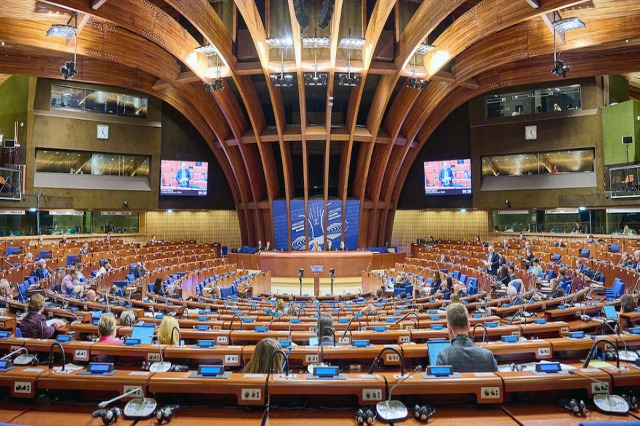
The Advisory Committee on the Framework Convention for the Protection of National Minorities (FCNM) has published its fifth opinion on Albania, where it assesses the prevailing atmosphere of mutual respect and intercultural dialogue in Albania, especially in terms of interreligious tolerance.
However, the lack of reliable and disaggregated data on national minorities, ranging from census figures to hate speech and hate crime monitoring, presents significant challenges in assessing their situation and in designing targeted policies, especially considering the thresholds provided in the Law on National Minorities.
“The legal framework in force is generally strong, but lacks specificity,” says the FCNM Advisory Committee, adding that Albania faces several challenges, including immigration to Western Europe and internal migration to the capital.
The issue of human trafficking also affects national minorities disproportionately. These phenomena particularly affect rural areas, where the poverty rate is particularly high.
Furthermore, rapid growth in the tourism industry is transforming parts of the country, affecting the ability of national minorities to preserve their cultures and participate in economic and social life.
A by-law regarding the collection of data for the formal identification of national minorities has not been approved. The report finds that the proposed draft relies on what are considered objective criteria based on unreliable historical data. It recommends that the authorities prioritize the subjective choice of individuals to identify with a national minority instead of relying exclusively on objective criteria.
The report states that the population census in October 2023 is crucial.
The changes have removed administrative fines for incorrect answers, which is a positive development. However, the report emphasizes the need for the census to be participatory and for national minorities to be well informed and have confidence in the process.
It is further noted that the Roma and Egyptian minorities are recognized as separate national minorities in law, but the authorities often confuse the two in policy documents. Disaggregated data is essential to assess and address their particular needs.
Housing conditions for Roma and Egyptian minorities are also of concern, including segregation and discrimination in the private rental market, irregular property status and the threat of forced evictions. The FCNM Advisory Committee finds that school segregation is a systemic problem throughout Albania, affecting especially the Roma and Egyptian minorities, as also found by the European Court of Human Rights.
Language rights remain accessible only in some areas of the country and only for the Macedonian and Greek minorities. Therefore, the Committee recommends that the thresholds for accessing such rights be reviewed and that the authorities take an active approach to raise awareness of access to language rights protected by the Framework Convention.
National minorities have limited opportunities for political participation, especially at the national level, and the report notes that the Committee for National Minorities, which is intended to serve as the voice of minorities within government, is often perceived by minority individuals to have not achieved much. Therefore, the Advisory Committee recommends reviewing its procedures to ensure that it has the means to effectively protect minority rights.
The Advisory Committee urges the Albanian authorities to organize a follow-up event to review the observations and recommendations in this report.The Committee is ready to support the authorities in implementing these recommendations.
The Framework Convention for the Protection of National Minorities is one of the most comprehensive treaties designed to protect the rights of persons belonging to national minorities.
/k.s/
Të ngjashme

Latest News


Most read










 RTI